





1. Executive Summary and Market Overview
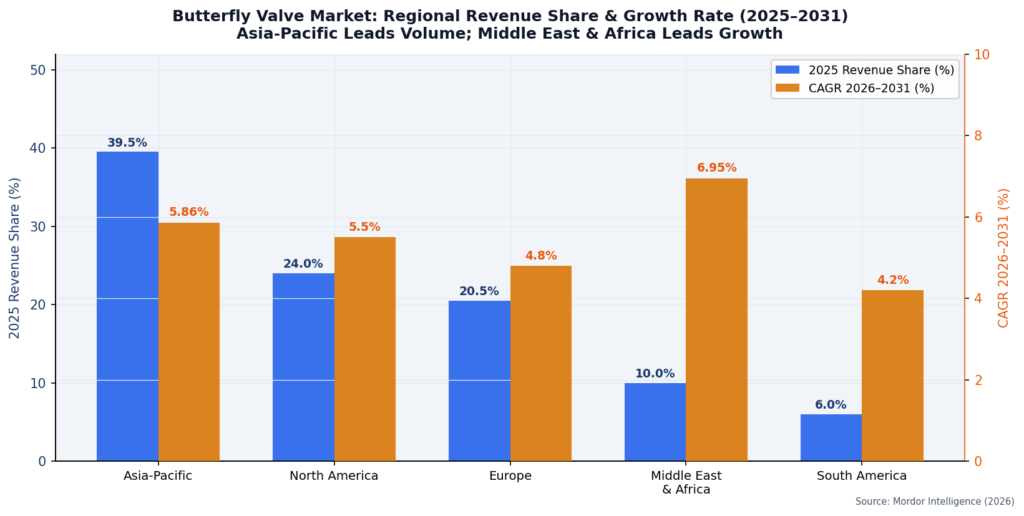
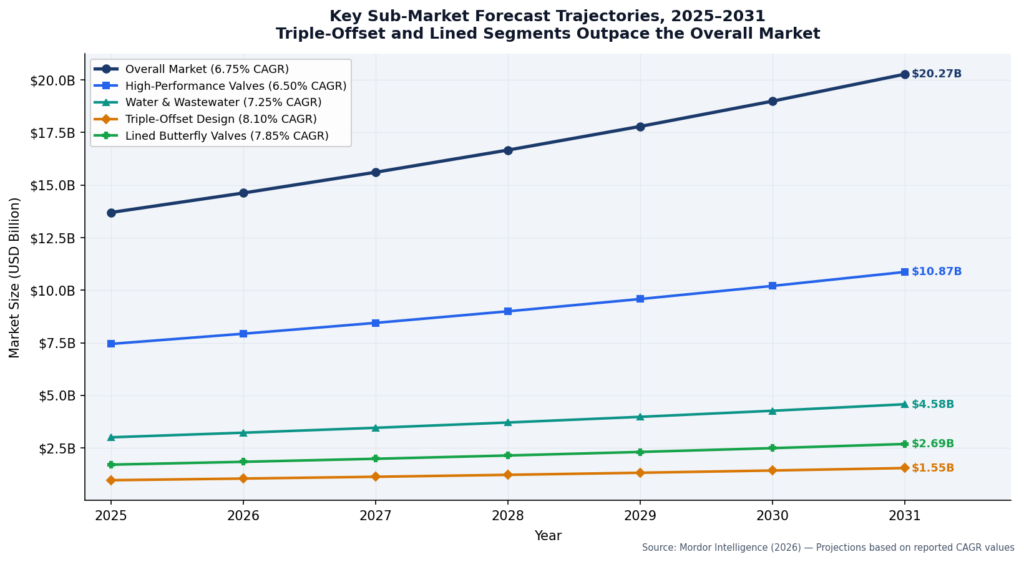
The global butterfly valve market is experiencing steady and resilient growth, transitioning from a value of approximately USD 13.7 billion in 2025 to an estimated USD 14.62 billion in 2026, and is projected to reach over USD 20 billion by 2031 at a Compound Annual Growth Rate (CAGR) of approximately 6.75% . For stakeholders considering entering or expanding their footprint in this industry, the answer is a definitive yes. The market is not only growing but also evolving, driven by an intricate mix of legacy infrastructure upgrades and new energy transition projects.
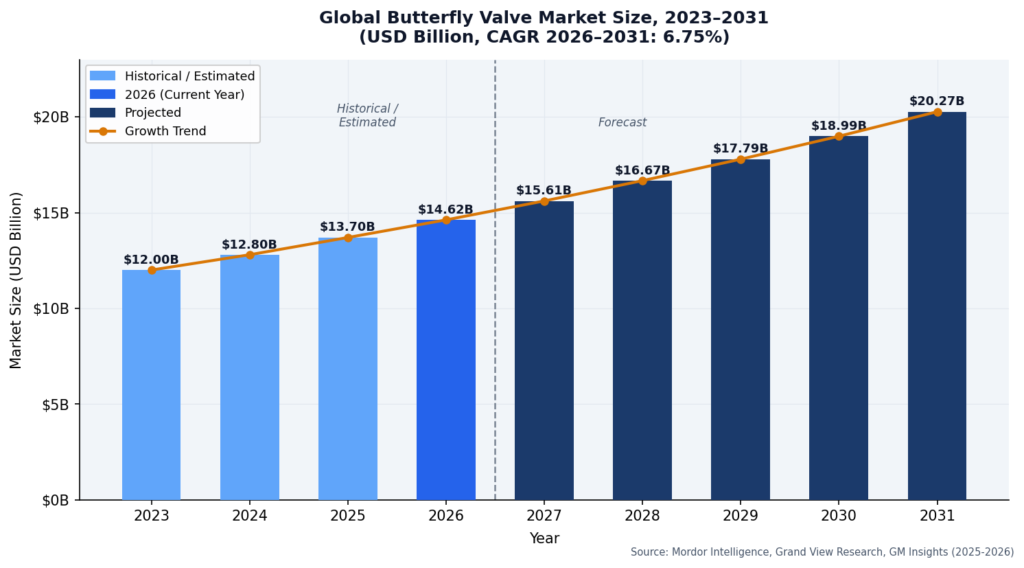
For strategic positioning, the highest growth opportunities lie in the water and wastewater treatment sectors (fueled by massive municipal upgrades in North America and Europe) and the burgeoning green energy sectors, specifically hydrogen electrolyzers and LNG . Conversely, the oil and gas sector remains the largest volume consumer, demanding high-reliability isolation valves for extensive cross-border pipelines and refinery operations .
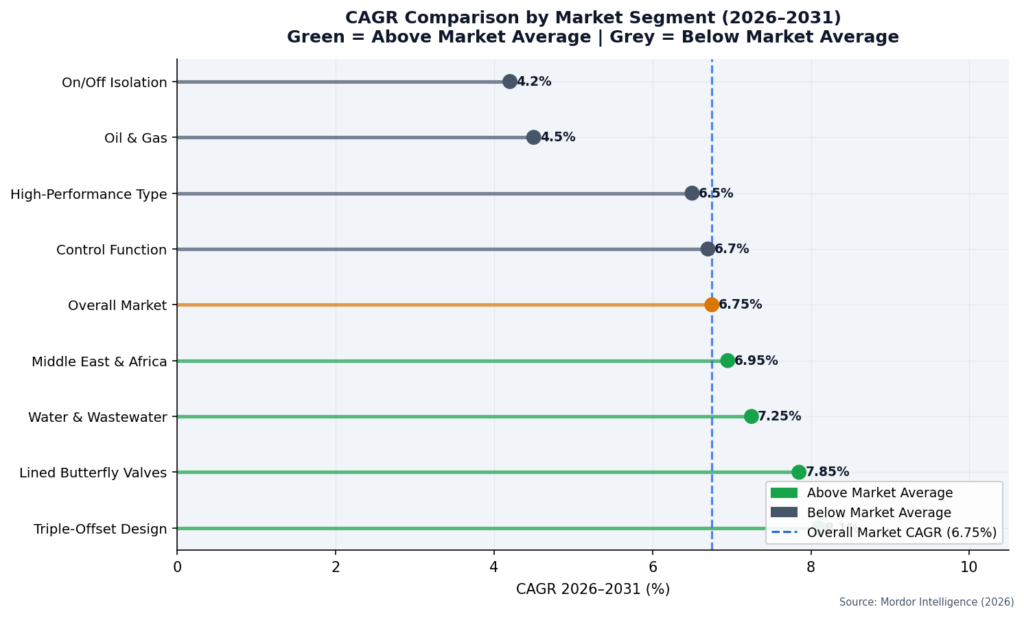
When deciding what products or technologies to focus on, the shift is unequivocally toward high-performance and severe-service solutions. While commodity valves face intense price competition, specialized designs—such as those offering zero-leakage, high-temperature resilience, and smart automation—command premium pricing and robust aftermarket revenues.
2. Core Market Drivers
The expansion of the butterfly valve market is underpinned by several macro-economic and industry-specific drivers. Understanding the causal logic behind these drivers is crucial for aligning product portfolios with future demand.
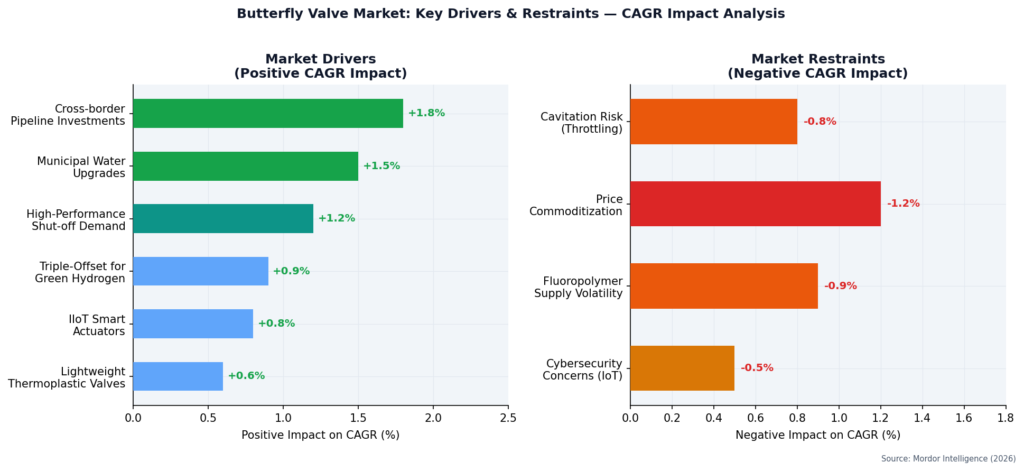
2.1. Expansion of Municipal and Industrial Water Infrastructure
Industry Background: Aging municipal water systems in developed nations, combined with rapid urbanization in emerging economies, have prompted massive public funding initiatives. For example, the U.S. has allocated billions in federal infrastructure funds for pipe rehabilitation and sewer compliance .
Impact on Valve Demand: These large-scale projects require thousands of reliable, cost-effective flow control devices for isolation and flow regulation.
Impact on Product Type: This drives immense volume for General Service Butterfly Valves featuring resilient seats (like EPDM or PTFE). Furthermore, stringent potable water regulations mandate NSF/ANSI-certified, lead-free alloys, pushing manufacturers to innovate in material science while maintaining cost-efficiency.
2.2. The Energy Transition and Green Hydrogen Economy
Industry Background: Global decarbonization efforts are accelerating the deployment of green hydrogen electrolyzers and expanding LNG infrastructure as a bridge fuel.
Impact on Valve Demand: Hydrogen is a highly volatile, low-molecular-weight gas that easily escapes through microscopic pathways, and LNG requires handling at extreme cryogenic temperatures (-162°C) .
Impact on Product Type: This creates a critical need for advanced High Performance Butterfly Valves and Triple Offset Butterfly Valves. The demand for zero-leakage, bidirectional shut-off, and materials that resist hydrogen embrittlement or cryogenic thermal shock is skyrocketing, creating a highly profitable niche for specialized manufacturers.
2.3. Stringent Environmental Regulations and Fugitive Emissions Control
Industry Background: Regulatory bodies worldwide (such as the EPA and European environmental agencies) are enforcing stricter limits on fugitive emissions (e.g., VOCs) from chemical processing and petrochemical plants. Standards like API 624 and ISO 15848-1 are becoming baseline requirements .
Impact on Valve Demand: Plant operators must upgrade legacy flow control systems to eliminate leaks that could result in fines or safety hazards.
Impact on Product Type: This directly fuels the adoption of High Performance Butterfly Valves equipped with advanced packing systems and live-loaded stems. Furthermore, it accelerates the transition toward metal-to-metal seated valves that can maintain tight shut-off without degrading under chemical attack.
2.4. Digital Transformation and Industry 4.0 (IIoT)
Industry Background: Industrial plants are increasingly adopting digital twins, SCADA systems, and predictive maintenance protocols to reduce unplanned downtime and optimize operational expenditures (OpEx).
Impact on Valve Demand: Valves are no longer just mechanical barriers; they are critical data nodes within the plant’s nervous system.
Impact on Product Type: There is a surging demand for butterfly valves integrated with smart electric or pneumatic actuators. These intelligent units provide continuous diagnostics on torque signatures, stem friction, and seat wear, driving a shift from purely mechanical procurement to integrated mechatronic solutions .
3. Market Segmentation
To navigate the market effectively, it is essential to understand the butterfly valve types and their specific butterfly valve applications.
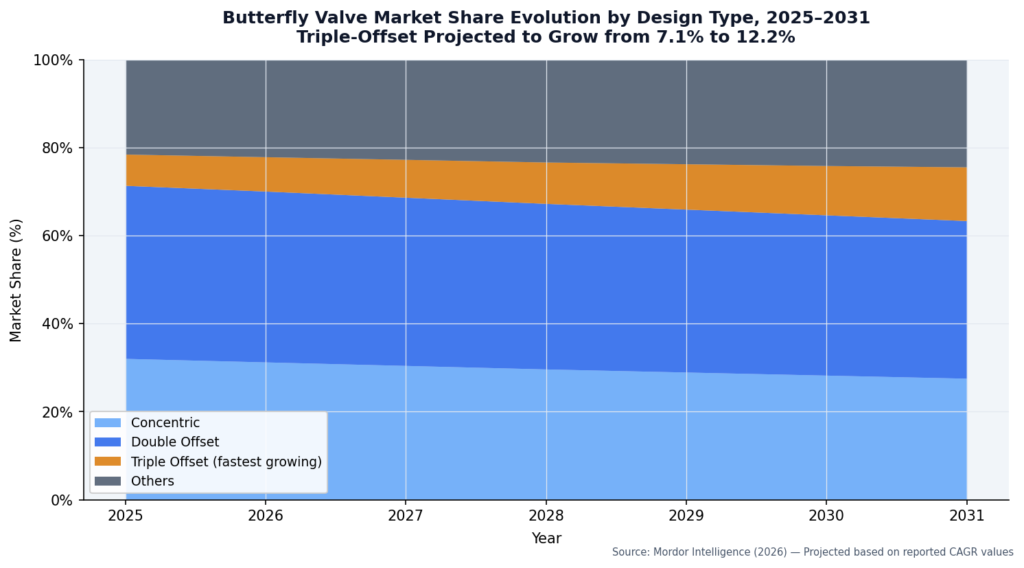
3.1. Segmentation by Product Type
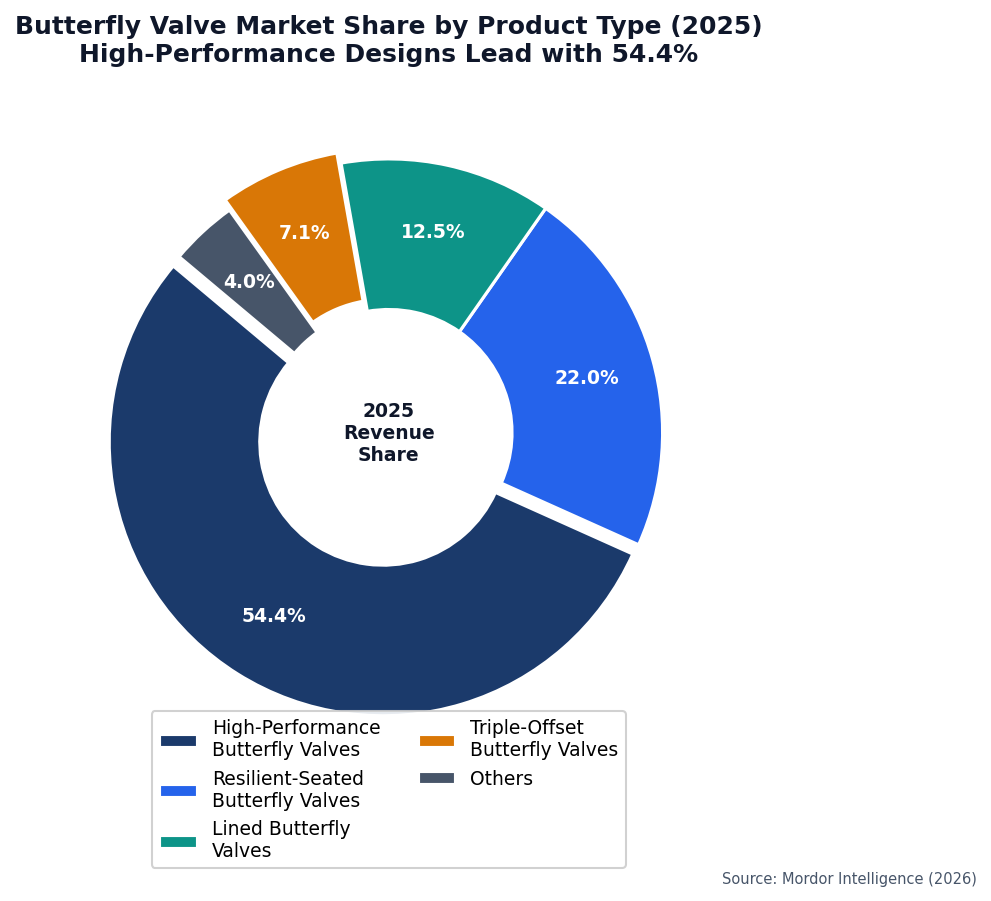
| Product Type | Application Scenarios | Technical Characteristics | Market Demand Rationale |
| Concentric / Resilient Seated | HVAC, municipal water distribution, low-pressure air/gas lines. | The stem is centered in the disc. Uses elastomeric seats (EPDM, NBR) for sealing. Limited to moderate temperatures and pressures. | High volume, cost-effective solution for benign fluids where tight shut-off is required but extreme conditions are absent. |
| Double Offset (High Performance) | Chemical processing, district heating, moderate-pressure steam, refined petroleum. | The stem is offset from the disc center and the pipe centerline. Uses polymeric (PTFE/RPTFE) or metal seats. Reduces seat friction during operation. | Bridges the gap between basic valves and expensive specialized valves. Offers superior longevity and higher pressure/temperature ratings than concentric designs. |
| Triple Offset | High-pressure steam, severe chemical service, LNG, offshore oil & gas platforms. | Adds a third offset (conical seating angle). Features metal-to-metal sealing, ensuring zero rubbing during the entire 90-degree rotation. | Essential for applications requiring bubble-tight, zero-leakage shut-off under extreme thermal shock or highly abrasive conditions where elastomers would instantly fail. |
| Lined Butterfly Valves | Highly corrosive chemical manufacturing, pharmaceutical production, semiconductor fabs. | The entire wetted area (body and disc) is encapsulated in fluoropolymers (PTFE, PFA). | Provides ultimate chemical resistance against aggressive acids and bases without the cost of exotic solid alloys like Hastelloy or Titanium. |
3.2. Segmentation by Application Industry
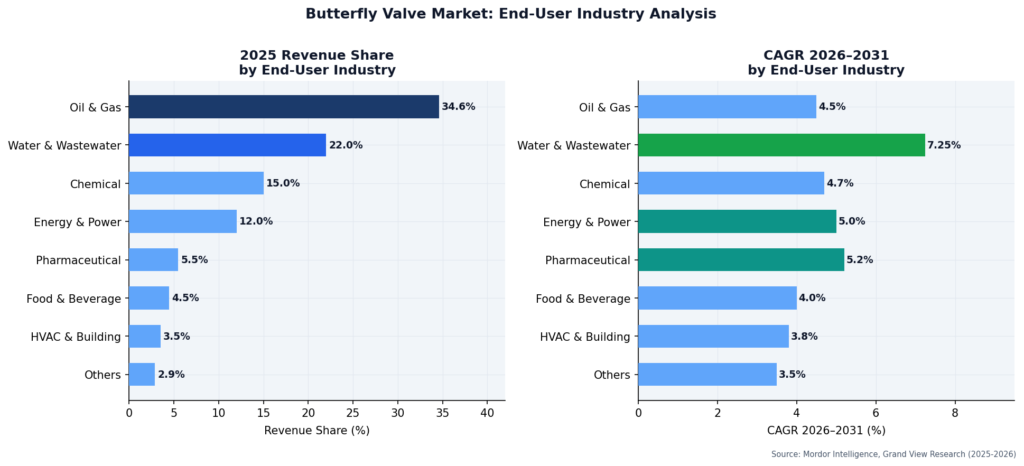
| Application Industry | Application Scenarios | Technical Characteristics | Market Demand Rationale |
| Water and Wastewater | Pumping stations, desalination plants, sewage treatment networks. | Large-bore sizes, resilient seating, corrosion-resistant coatings (e.g., fusion-bonded epoxy), NSF/ANSI certification for drinking water. | Driven by global population growth, urbanization, and government infrastructure spending. Requires durable, low-maintenance isolation. |
| Oil and Gas | Cross-country pipelines, refinery fractionation, tank farm isolation. | High pressure classes (ASME 300/600+), fire-safe designs, sour gas (NACE) compliance, robust metal seating. | Critical for safety and environmental protection. Demand is sustained by both legacy infrastructure maintenance and new mega-projects in the Middle East and APAC. |
| Chemical and Petrochemical | Reactor isolation, corrosive fluid transfer, volatile organic compound (VOC) handling. | PTFE/PFA lining, advanced stem packing for fugitive emission control, high-cycle durability. | Driven by the need to handle aggressive media safely while complying with increasingly stringent environmental regulations regarding leaks. |
| Power Generation | Cooling water circuits, steam turbine isolation, flue gas desulfurization (FGD). | High-temperature tolerance, large diameters, ability to handle abrasive slurries (in FGD). | As global energy demand rises, both traditional thermal plants and new renewable/nuclear facilities require massive, highly reliable flow control systems. |
4. Buyer Decision Logic: The Engineer and Procurement Perspective
When engineers and procurement managers select butterfly valves, their decision is a calculated balance between capital expenditure (CapEx), operational expenditure (OpEx), and system safety. They do not buy “features”; they buy reliability and risk mitigation.
4.1. Key Selection Criteria
•Sealing (Leakage Class): Engineers define exact allowable leakage rates (e.g., API 598, ANSI Class VI). For critical isolation, “zero leakage” is mandatory. Procurement looks for certified testing documentation to ensure compliance .
•Torque: The operating torque directly dictates the size and cost of the required actuator. A valve with high breakaway torque requires a larger, more expensive actuator, driving up the total package cost. Engineers seek designs that minimize friction to optimize actuator sizing .
•Temperature: Fluid temperature dictates material selection. Elastomers (EPDM, Nitrile) are restricted to lower temperatures. As temperatures rise (e.g., >200°C), engineers must specify PTFE or transition to metal-seated designs, which significantly impacts procurement budgets .
•Cost (Total Cost of Ownership – TCO): While procurement may initially focus on the purchase price, sophisticated buyers evaluate TCO. A cheaper valve that requires frequent seat replacements or causes plant downtime will have a vastly higher TCO than a premium, engineered valve .
4.2. Common Selection Mistakes
1.Under-specifying the Seat Material: Selecting a standard EPDM seat for a process that experiences occasional high-temperature steam purges. The seat quickly degrades, leading to catastrophic leakage and unexpected downtime .
2.Ignoring Actuator Safety Factors: Sizing an actuator based solely on clean-water testing data. In real-world applications with sticky or abrasive media, the breakaway torque increases. An undersized actuator will fail to open or close the valve during an emergency .
3.Misapplying Concentric Valves in Throttling: Using a basic resilient-seated valve for continuous fine-throttling at low opening angles. This causes severe cavitation, eroding the disc and seat rapidly, leading to premature failure .
4.3. Real-World Decision Logic
The true decision logic follows a risk-based matrix:
“What is the fluid, and what happens if it leaks?”
If the fluid is benign cooling water, the buyer defaults to the most cost-effective General Service Butterfly Valve from a reputable supplier.
If the fluid is highly corrosive, flammable, or at extreme temperatures, the buyer shifts focus entirely to technical compliance, specifying a High Performance or Triple Offset valve. In these severe service scenarios, the initial cost becomes secondary to the valve’s proven ability to maintain zero leakage over thousands of cycles, thereby preventing millions of dollars in potential plant shutdown costs or environmental fines.
5. Integrating the Product Portfolio
Understanding the market demands allows for the natural alignment of specific valve architectures with industrial applications.
General Service Butterfly Valve
Application Scenario: A municipal water treatment facility requires hundreds of valves to isolate different filtration tanks. The media is ambient temperature water, and the pressure is relatively low (under 150 psi).
Technical Need: The facility needs a cost-effective, lightweight solution that provides reliable bubble-tight shut-off without the need for complex maintenance.
Solution Fit: The General Service Butterfly Valve (concentric design with an elastomeric seat) is the perfect fit. Its simple, robust design ensures easy installation, while the resilient seat provides reliable sealing for benign fluids, optimizing the plant’s CapEx.
High Performance Butterfly Valve
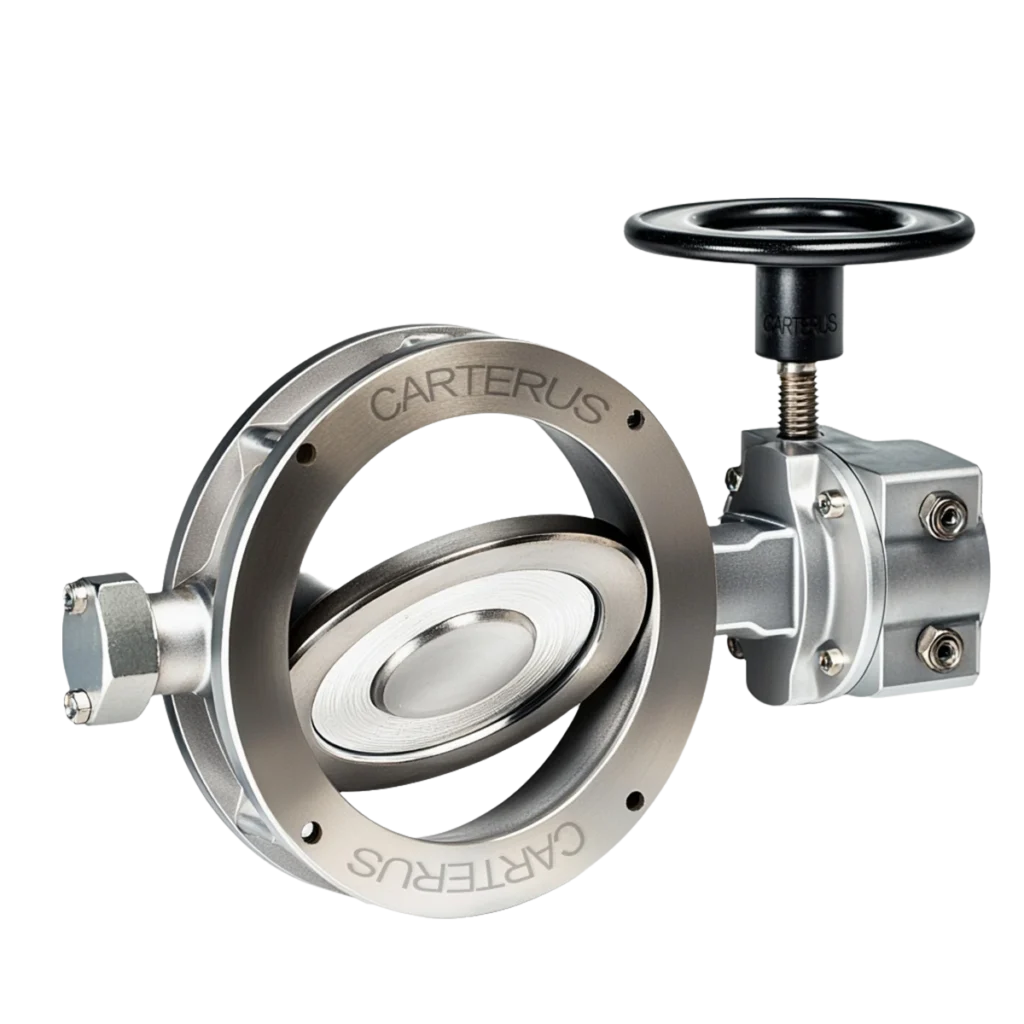
Application Scenario: A chemical processing plant is transferring heated solvents and requires isolation valves that will be actuated multiple times a day.
Technical Need: The temperature and chemical nature of the solvent would quickly destroy standard rubber seats. Furthermore, the high cycle rate requires a design that minimizes friction to prevent premature wear.
Solution Fit: The High Performance Butterfly Valve (double offset design) addresses this by utilizing a PTFE or RPTFE seat and an offset disc geometry. This design lifts the disc off the seat immediately upon opening, drastically reducing friction, extending cycle life, and safely handling the elevated temperatures and aggressive chemicals.
Six-Eccentric Butterfly Valve
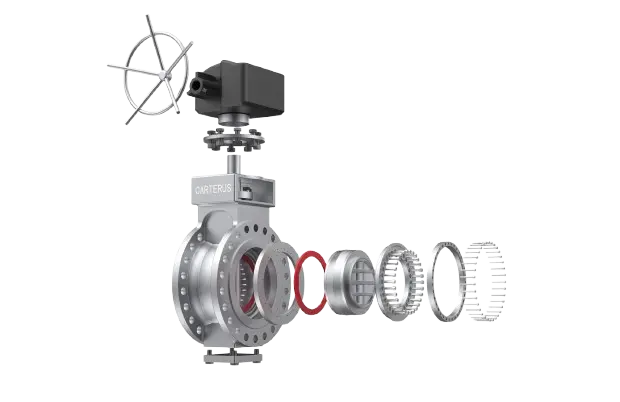
Application Scenario: A cryogenic LNG terminal or a high-temperature catalytic reforming reactor requires absolute critical isolation. The system experiences massive thermal gradients, causing standard metal components to expand and contract aggressively.
Technical Need: Traditional triple-offset valves may still experience micro-binding or torque variations under such extreme thermal cycling. The plant requires a valve that guarantees zero-leakage, repeatable shut-off without any seat interference, regardless of temperature fluctuations.
Solution Fit: The highly engineered Six-Eccentric Butterfly Valve is deployed here. By building upon the triple offset foundation and adding further geometric refinements, it minimizes seating torque and completely eliminates seat wear over repeated cycles. It provides the ultimate mechanical reliability for the most hostile, severe-service environments where failure is not an option .
6. Technology Trends in the Butterfly Valve Industry
The industry is undergoing a technical renaissance, shifting from purely mechanical components to advanced, integrated systems.
6.1. Triple Offset Geometry
•Technical Principle: Utilizes three distinct offsets (shaft behind the seat, shaft off-centerline, and a conical seat angle) to ensure the disc only contacts the seat at the final degree of closure, achieving metal-to-metal zero leakage without friction .
•Application Scenario: LNG liquefaction trains, high-pressure steam isolation, and green hydrogen electrolyzers.
•Why it matters: It provides the tight shut-off characteristics of a globe or gate valve but in a fraction of the weight and footprint, drastically reducing piping support costs and space requirements in complex facilities.
6.2. Metal-Seated Innovations
•Technical Principle: Replacing soft elastomers with hardened metal alloys (e.g., Stellite overlay, Inconel) precision-machined to exact tolerances to create a mechanical seal .
•Application Scenario: Refinery fluid catalytic cracking units (FCCU), geothermal power plants, and abrasive slurry transport.
•Why it matters: Soft seats melt, deform, or extrude under high heat (>250°C) or abrasive conditions. Metal-seated technology ensures the valve survives and functions in environments that would destroy standard valves in hours.
6.3. Low Leakage / Fugitive Emission Packing
•Technical Principle: Advanced stem sealing systems utilizing live-loaded Belleville springs and specialized graphite or PTFE chevron packing sets to maintain constant pressure on the stem seal, preventing microscopic gas escape .
•Application Scenario: Petrochemical processing, toxic chemical manufacturing, and natural gas pipelines.
•Why it matters: With global environmental regulations (like API 624) strictly limiting VOC emissions to under 100 ppm, these technologies are legally mandated to protect the environment and plant personnel from toxic exposure.
6.4. Automation and IIoT Integration
•Technical Principle: Equipping pneumatic or electric actuators with smart positioners and sensors that monitor valve stroke time, torque profiles, and acoustic emissions, transmitting this data via industrial networks (HART, Profibus, WirelessHART) to central control systems .
•Application Scenario: Remote offshore platforms, massive municipal water networks, and automated chemical batch processing.
•Why it matters: It shifts plant maintenance from a reactive model (fixing a broken valve) to a predictive model. By analyzing data trends, operators can identify a failing seat or a sticking stem weeks before an actual failure occurs, preventing costly unplanned shutdowns.
7. Key Industry Challenges
Despite robust growth, manufacturers and end-users face significant hurdles that impact operational efficiency and profitability.
7.1. Sealing Integrity Under Extreme Temperature Cycling
•The Problem: In applications like molecular sieve regeneration, valves are subjected to rapid, extreme temperature swings. This causes the metal components of the valve body, disc, and seat to expand and contract at different rates, potentially warping the sealing interface.
•Impact on Customers: This thermal distortion can lead to the loss of zero-leakage capability, allowing dangerous gases to bypass the isolation point, creating severe safety hazards and forcing premature, costly valve replacements .
7.2. The Total Cost of Ownership (TCO) Disconnect
•The Problem: Procurement departments are often incentivized to reduce immediate capital expenditure, leading them to purchase lower-cost, commodity valves for applications that border on severe service.
•Impact on Customers: These cheaper valves fail quickly under stress. The customer saves 20% on the initial purchase but spends 500% more over the next three years on continuous maintenance, replacement parts, and the devastating cost of lost production during unplanned outages .
7.3. Complex Sizing and Selection Errors
•The Problem: Modern process systems involve complex fluid dynamics (multi-phase flows, non-Newtonian fluids). Engineers sometimes fail to accurately calculate the dynamic torque requirements or the cavitation potential when using butterfly valves for throttling.
•Impact on Customers: An undersized actuator will stall, leaving a valve stuck partially open during a critical process phase. Alternatively, severe cavitation will literally eat away the metal of the valve body within months, requiring complete system shutdown for repair .
8. Conclusion
The 2026 Global Butterfly Valve Market is defined by a clear bifurcation: a high-volume, cost-competitive segment driven by municipal infrastructure, and a high-value, highly engineered segment driven by the energy transition and severe industrial processes. Success in this market requires a nuanced understanding of buyer risk logic. By aligning the right technology—from reliable General Service models to advanced High Performance and Six-Eccentric designs—with the precise application demands, manufacturers can provide critical solutions that safeguard operations and optimize lifecycle costs for industrial operators worldwide.
References
[2] Global Market Insights. (2025 ). Butterfly Valve Market Size 2025-2034, Global Trends Report.
[3] Grand View Research. (2025 ). Butterfly Valve Market Size And Share, Industry Report, 2030.
[4] Intel Market Research. (2026 ). LNG Cryogenic Butterfly Valve Market Outlook 2026-2034.
[5] Valve Magazine. (2022). Fugitive Emissions Standards for Valves.
[6] Flowlink. (2026). Smart Valve Automation & Remote Monitoring: Trends & Benefits.
[7] Carter Valves. (2026). Butterfly Valve Selection Guide for Critical Isolation & Severe Service.
[8] Valmet. (2013 ). 8 ways to lower the total cost of valve ownership.
[9] Emerson. (2026). Triple Offset Valve Technology-critical-isolation/
[8] Valmet. (2013). 8 ways to lower the total cost of valve ownership.
[9] Emerson. (2026). Triple Offset Valve Technology. https://www.emerson.com/en-us/automation/brands/vanessa/triple-offset-valve