





Steam is the lifeblood of industrial processing, power generation, and refining. However, it is also one of the most punishing media for isolation valves. The combination of high temperatures, rapid thermal cycling, and high-velocity flow causes traditional soft-seated valves to fail rapidly. While gate and globe valves have historically been used for steam isolation, their heavy weight, large footprint, and slow operation present significant engineering challenges.
The Triple Offset Valve (TOV) has emerged as the premier solution for steam service. By combining the compact, lightweight profile of a butterfly valve with the ruggedness of metal-to-metal sealing, the TOV delivers bi-directional, zero-leakage performance even in extreme conditions. If you are unfamiliar with the mechanics behind this design, we recommend reading our previous breakdown on How Triple Offset Geometry Eliminates Seat Wear to understand its frictionless operation.
In this article, we will explore how to properly specify a triple offset butterfly valve for steam service, focusing on ASME B16.34 pressure classes, body material selection, and advanced seat designs.
Understanding Steam Conditions: Saturated vs. Superheated
Before specifying a valve, it is crucial to understand the type of steam it will handle. Steam applications generally fall into two categories, each presenting distinct challenges for valve materials and sealing mechanisms.
Saturated Steam exists at the boiling point corresponding to its pressure. As pressure increases, the temperature of saturated steam also increases predictably. It is widely used in industrial heating, sterilization, and process applications. The primary challenge with saturated steam is the potential for condensation and “flashing,” where high-velocity water droplets can erode valve internals.
Superheated Steam is created by heating saturated steam beyond its boiling point. This dry, high-energy steam is primarily used to drive turbines in power generation facilities. Superheated steam can reach temperatures exceeding 595°C (1100°F). The extreme heat causes significant thermal expansion in piping systems and requires valve materials that resist creep, oxidation, and thermal shock.
Because temperature and pressure are inextricably linked in steam systems, selecting the correct valve requires a careful analysis of both parameters against established engineering standards.
Navigating ASME B16.34 Pressure Classes for Steam
The pressure-containing capability of a valve is defined by its pressure class. For flanged and butt-weld end valves, the governing standard is ASME B16.34. This standard establishes the maximum allowable non-shock pressure a valve can withstand at a given temperature, based on its construction material.
A critical concept in ASME B16.34 is the inverse relationship between temperature and pressure. A valve rated for ASME Class 300 can hold significantly less pressure at 300°C than it can at ambient temperature. When specifying a triple offset butterfly valve for steam service, engineers must consult the specific pressure-temperature rating tables for the chosen body material.
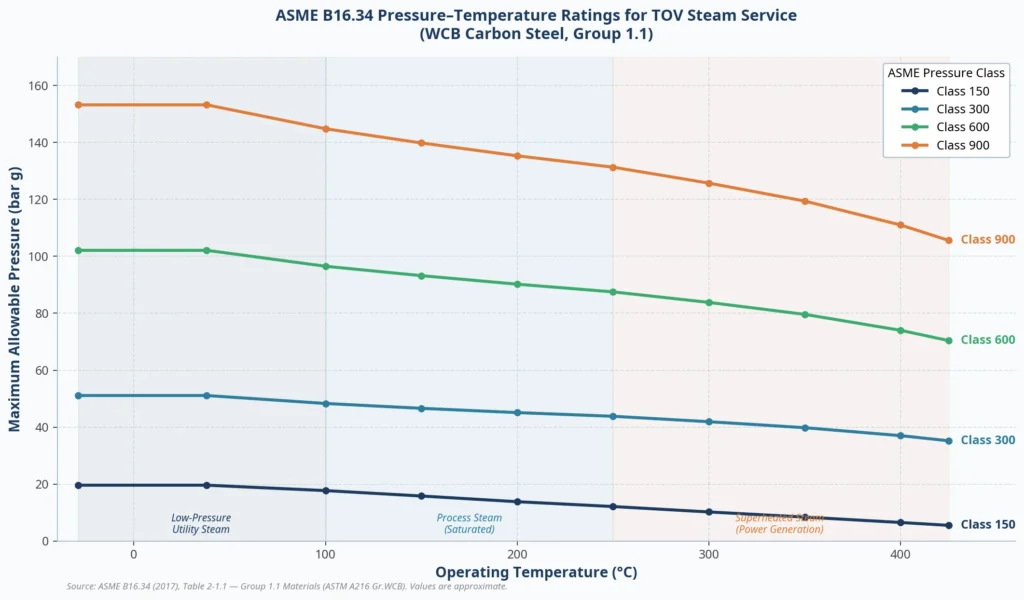
Figure 1: Pressure-temperature derating curves for ASTM A216 Gr.WCB carbon steel valves across different ASME classes. Notice how the maximum allowable pressure drops significantly as steam temperature increases.
Here is a general guide for matching ASME pressure classes to steam applications:
- Class 150: Typically used for low-pressure utility steam, HVAC systems, and low-temperature process heating.
- Class 300: The standard choice for medium-pressure process steam in chemical plants, refineries, and general manufacturing.
- Class 600: Required for high-pressure steam headers, boiler isolation, and high-temperature refinery processes.
- Class 900 and Above: Reserved for ultra-high-pressure superheated steam lines, primarily in power generation facilities.
For applications demanding extreme pressure containment, Carter Valves offers the Ultra High-Pressure Triple Offset Butterfly Valve (CVS-288), engineered specifically for critical isolation in severe environments.
Body Material Selection for High-Temperature Steam
The structural integrity of the valve body is paramount in steam service. As temperatures rise, the mechanical strength of steel decreases. Therefore, the choice of body material is dictated entirely by the maximum operating temperature of the steam.
Carbon Steel (ASTM A216 Gr.WCB / WCC)
Carbon steel is the most common and cost-effective material for general steam service. It provides excellent strength and durability for saturated steam applications. However, standard carbon steel is susceptible to graphitization (a loss of structural strength) at prolonged high temperatures. Consequently, ASME B16.34 limits the use of WCB carbon steel to approximately 425°C (800°F).
Alloy Steels (ASTM A217 Gr.WC6 and WC9)
When steam temperatures exceed 425°C, engineers must specify alloy steels containing chromium and molybdenum. These elements enhance the steel’s resistance to creep and high-temperature oxidation.
- WC6 (1.25Cr-0.5Mo): Suitable for high-temperature steam up to approximately 540°C (1000°F). It is widely used in refinery processes and intermediate power generation.
- WC9 (2.25Cr-1Mo): Designed for superheated steam applications, WC9 can safely operate at temperatures up to 595°C (1100°F). It is the standard choice for main steam lines in power plants.
Stainless Steel (ASTM A351 Gr.CF8M)
While alloy steels handle heat better, 316 stainless steel (CF8M) is often specified for “clean steam” applications in the pharmaceutical and food industries, or in environments where external chloride stress corrosion is a concern.
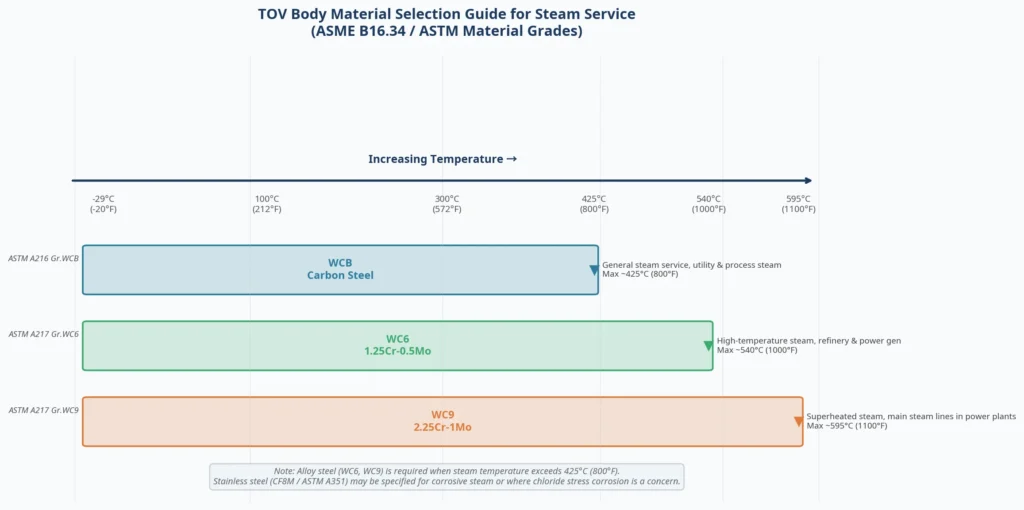
Figure 2: Material selection guide for TOV bodies in steam service. Upgrading to alloy steels (WC6, WC9) is mandatory as steam transitions from saturated to high-temperature superheated states.
For a broader understanding of how material choices impact valve performance across different industries, refer to our comprehensive guide on Metal-to-Metal Seated Butterfly Valves.
The Critical Role of Seat Design and Hardfacing
The true test of a steam valve lies in its seating mechanism. Elastomers (like EPDM) and polymers (like PTFE) will quickly melt, deform, or extrude when exposed to high-pressure steam. Therefore, a triple offset butterfly valve for steam service must utilize a metal-to-metal seating design.
However, bare metal rubbing against bare metal under high pressure and temperature will cause galling—a form of severe adhesive wear that destroys the sealing surfaces. The TOV solves this through two critical engineering features: its non-rubbing geometry and advanced material hardfacing.
Stellite 6 Hardfacing
To ensure long-term, bubble-tight shutoff, the body seat of a high-quality steam TOV is typically overlaid with Stellite 6. Stellite is a cobalt-chromium alloy renowned for its exceptional hardness (HRC 38-45) and resistance to wear, galling, and erosion at elevated temperatures.
When high-velocity steam or condensate flashes across the valve seat during opening or closing, the Stellite hardfacing protects the base metal from wire-drawing and erosion. It maintains its structural integrity and hardness at temperatures up to 650°C (1200°F), making it indispensable for steam service.
The Laminated Seal Ring
The disc of the TOV carries the dynamic seal. In steam applications, this is typically a laminated seal ring composed of alternating layers of stainless steel (or Inconel for extreme temps) and flexible graphite.
This laminated design is ingenious. The metal layers provide the rigidity required to withstand high pressure and create a mechanical seal against the Stellite seat. Meanwhile, the graphite layers provide micro-resilience, allowing the seal ring to adapt to minute changes in the seat profile caused by thermal expansion. This combination ensures bi-directional zero leakage (API 598 Class VI) even as the valve heats up and cools down during thermal cycling.
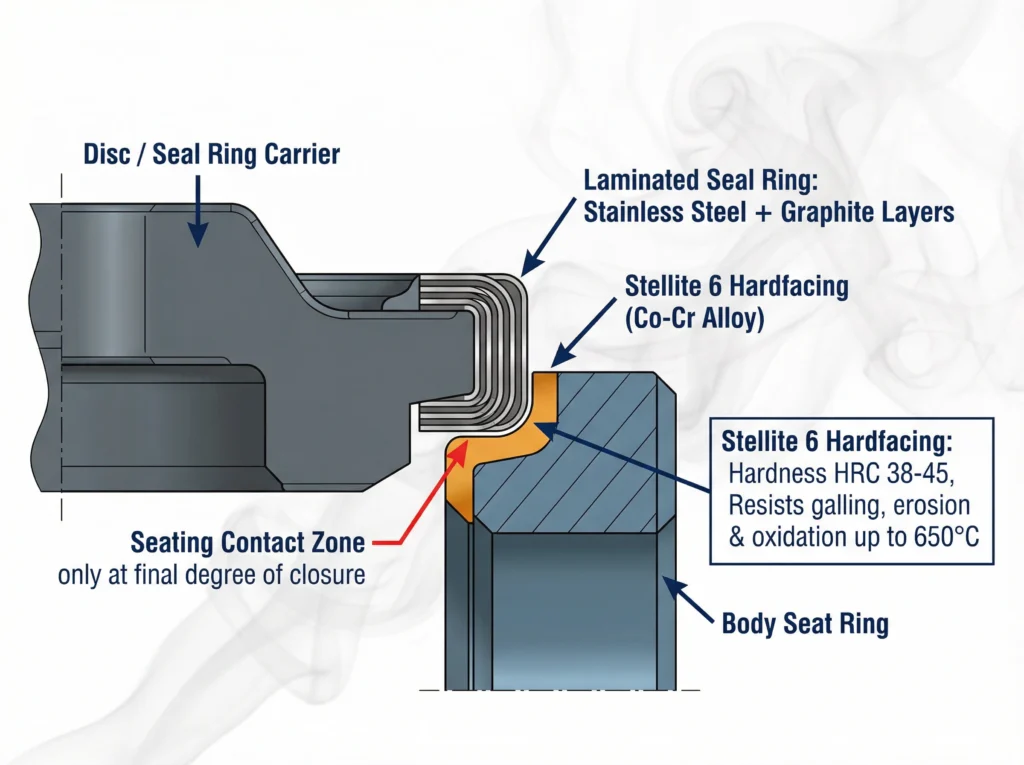
Figure 3: Cross-section of a TOV seat engineered for steam service. The Stellite 6 hardfacing prevents erosion, while the laminated seal ring accommodates thermal expansion to maintain zero leakage.
Carter Valves: Your Partner in Steam Isolation
At Carter Valves, we understand that steam isolation is a critical safety and operational requirement. A leaking steam valve not only wastes expensive energy but also poses a severe safety hazard to plant personnel.
With decades of engineering expertise, we manufacture high-performance isolation solutions designed specifically for the rigors of steam service. Our triple offset valves are engineered to meet strict ASME B16.34 pressure-temperature ratings and are rigorously tested to API 598 and ISO 5208 standards to guarantee zero leakage.
For the most demanding superheated steam applications, our advanced Hexa (Six-Eccentric) Butterfly Valves represent the pinnacle of isolation technology. This platform optimizes contact stress distribution, reducing operating torque while maintaining true zero-leakage performance at temperatures up to 1100°C. To see how this compares to traditional designs, read our technical breakdown: Six-Eccentric vs Triple Offset Butterfly Valve.
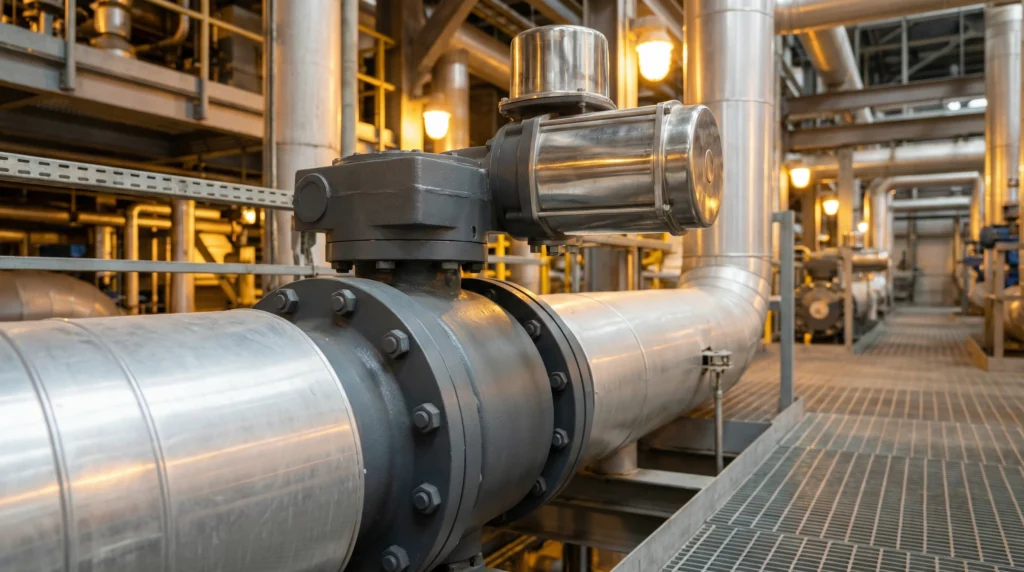
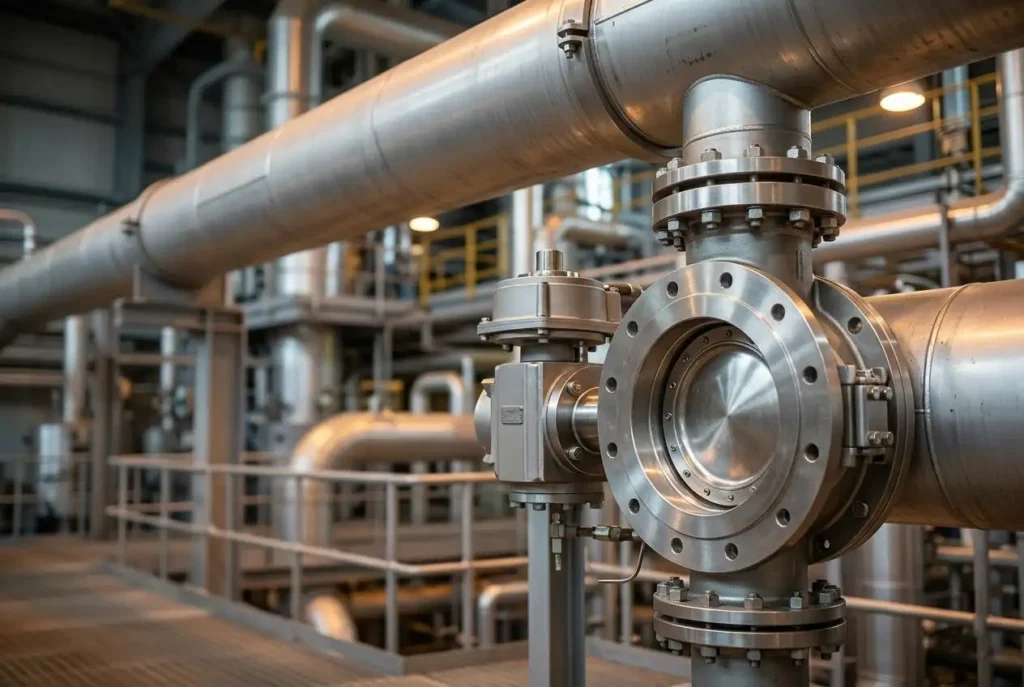
Figure 4: A heavy-duty triple offset butterfly valve installed on a high-pressure steam header. The compact, lightweight design of the TOV significantly reduces structural support requirements compared to traditional gate valves.
Whether you are upgrading a low-pressure utility steam system or specifying valves for a new supercritical power plant, our Services & Capabilities team is ready to assist with material selection, actuator sizing, and lifecycle support.
Ready to optimize your steam systems? Contact our engineering team today to discuss your specific pressure and temperature requirements, or explore our full range of Isolation Valves.
Frequently Asked Questions
Can a triple offset butterfly valve replace a gate valve in steam service?
Yes, and it is highly recommended. TOVs offer the same bi-directional, zero-leakage shutoff as gate valves but at a fraction of the weight and size. This reduces installation costs, requires less structural support for the piping, and allows for much faster operation. Additionally, the non-rubbing design of the TOV prevents the seat galling that frequently plagues gate valves in high-temperature steam. For a detailed comparison of valve types, see our guide on Butterfly Valve Selection for Critical Isolation.
What happens if I use a standard resilient-seated butterfly valve for steam?
Standard resilient-seated (rubber-lined) butterfly valves should never be used for high-pressure steam. The high temperatures will quickly melt, harden, or degrade the elastomer seat (such as EPDM or NBR), leading to catastrophic leakage and potential safety hazards. Steam service requires metal-to-metal seating.
How does thermal expansion affect the sealing of a TOV?
Thermal expansion is a major challenge in steam systems. The TOV addresses this through its laminated seal ring (alternating layers of metal and graphite). The graphite provides a slight resilience that allows the seal ring to flex and maintain tight contact with the seat, compensating for the thermal expansion of the valve body and disc without jamming.
Is Stellite hardfacing always required for steam service TOVs?
While not strictly mandatory for very low-pressure, low-cycle utility steam, Stellite hardfacing is highly recommended for any industrial steam application. It provides essential protection against wire-drawing, erosion from flashing condensate, and high-temperature galling, significantly extending the valve’s service life.
What is the maximum temperature a triple offset valve can handle?
Standard TOVs with carbon steel bodies (WCB) are limited to about 425°C (800°F). By upgrading the body material to alloy steels (WC6, WC9) or specific stainless steels, and utilizing Inconel/graphite laminated seals, high-performance TOVs can handle superheated steam up to 595°C (1100°F). Advanced designs like Carter Valves’ Hexa platform can operate in extreme environments up to 1100°C.
References
American Society of Mechanical Engineers. ASME B16.34: Valves—Flanged, Threaded, and Welding End. New York: ASME, 2020. https://www.asme.org/codes-standards/find-codes-standards/b16-34-valves-flanged-threaded-welding-end
American Petroleum Institute. API Standard 609: Butterfly Valves — Double-flanged, Lug- and Wafer-type. 8th ed. Washington, D.C.: API Publishing Services, 2021. https://www.api.org/products-and-services/standards/important-standards-announcements/standard-609
American Petroleum Institute. API Standard 598: Valve Inspection and Testing. 10th ed. Washington, D.C.: API Publishing Services, 2016. https://www.api.org/products-and-services/standards
Wermac.org. “Valve pressure classes ASME B16.34.” Accessed March 17, 2026. https://www.wermac.org/valves/valves_B16_34.html
Spirax Sarco. “Types of Steam.” Steam Engineering Tutorials. https://www.spiraxsarco.com/learn-about-steam/steam-engineering-principles-and-heat-transfer/types-of-steam