





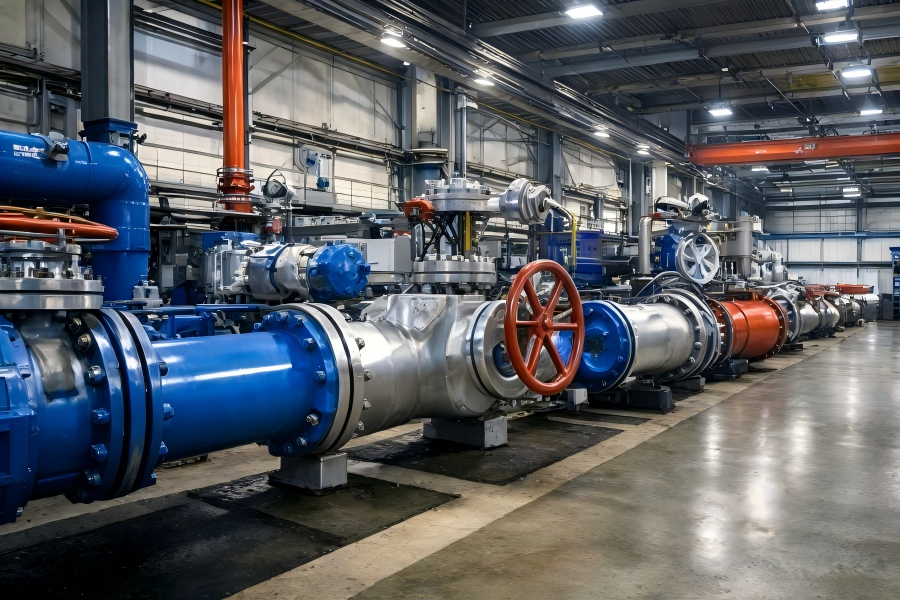
Metal-to-metal seated butterfly valves are typically specified when soft seats cannot survive the service: high temperature, abrasive media, pressure cycling, or fire-safe requirements. Among the available geometries, the six-eccentric (often grouped with advanced multi-offset designs) butterfly valve is intended to provide predictable shut-off behaviour with controlled contact between the sealing surfaces.
This article explains how a six-eccentric butterfly valve achieves metal-to-metal sealing, how that differs from concentric, double-offset (high performance), and triple-offset designs, and when specifying this type of valve is technically justified. The focus is on engineering selection and verification, not marketing claims.
1. Why Metal-to-Metal Sealing Exists in Butterfly Valves
Most butterfly valves rely on an elastomer or polymer seat. In clean, moderate-temperature services, that approach is simple and effective. Problems arise when the service includes one or more of the following:
- Sustained high temperature where soft seats creep, harden, or degrade
- Abrasive or particulate-laden media that erodes or cuts soft materials
- High differential pressure combined with frequent cycling
- Fire-safe or post-fire isolation requirements
- Chemical environments that attack elastomers
In these cases, a metal-to-metal seat is often selected. The trade-off is clear: metal seats tolerate heat and wear better, but they require precise geometry and controlled contact to achieve stable shut-off without excessive torque or rapid wear.
This is where offset and multi-eccentric geometries become relevant.
2. From Concentric to Multi-Offset: What the Offsets Actually Do
A butterfly valve disc rotates 90 degrees from open to closed. The way the disc approaches the seat determines whether the disc rubs the seat, how contact pressure builds up, and how sensitive the valve is to wear and misalignment.
- Concentric (resilient-seated): The disc rotates in line with the seat. The disc slides against the seat during part of the stroke. This is acceptable for soft seats, but unsuitable for metal-to-metal sealing due to wear and high torque.
- Double offset / High Performance: The shaft is offset from the seat and from the pipe centreline. This reduces rubbing and allows the disc to cam into the seat near closure. Commonly used with reinforced soft seats and in some moderate metal-seat applications.
- Triple offset: Adds a conical seat geometry. The disc moves away from the seat quickly and contacts it mainly at the final closing angle, producing a cam-like closing action with minimal sliding.
- Six-eccentric (advanced multi-eccentric): Further refines the spatial relationship between shaft, disc, and sealing surfaces. The goal is not only to control when contact occurs, but also how contact pressure is distributed and stabilised.
Industry standards such as API 609 and MSS SP-67 define the general design frameworks for butterfly valves, including high-performance and metal-seated configurations.
For the user, the practical outcome is more important than the number of offsets: a closing motion that avoids seat scraping and produces a repeatable metal-to-metal seal.
3. How a Six-Eccentric Design Achieves Metal-to-Metal Sealing
A six-eccentric butterfly valve is designed so that:
- The disc is fully clear of the seat during most of the stroke
This minimises sliding contact and reduces wear on both sealing surfaces. - Contact occurs only near the final closing angle
The disc approaches the seat along a controlled cam path rather than a simple circular arc. - Sealing force is generated by geometry, not elastic deformation
In a metal-to-metal design, there is little or no material compliance. The sealing load comes from the wedging or camming action created by the geometry. - Contact stress is distributed over a defined sealing band
Properly designed, this avoids point contact that would lead to rapid galling or local damage. - Thermal growth is considered in the geometry
In high-temperature services, both disc and body expand. Multi-eccentric layouts can be designed so that thermal expansion does not drive uncontrolled overloading of the seat.
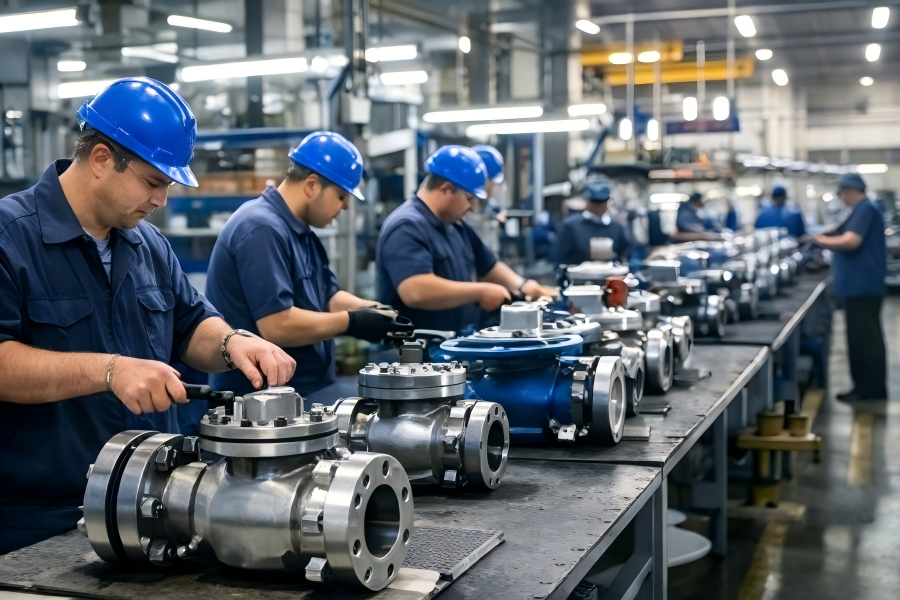
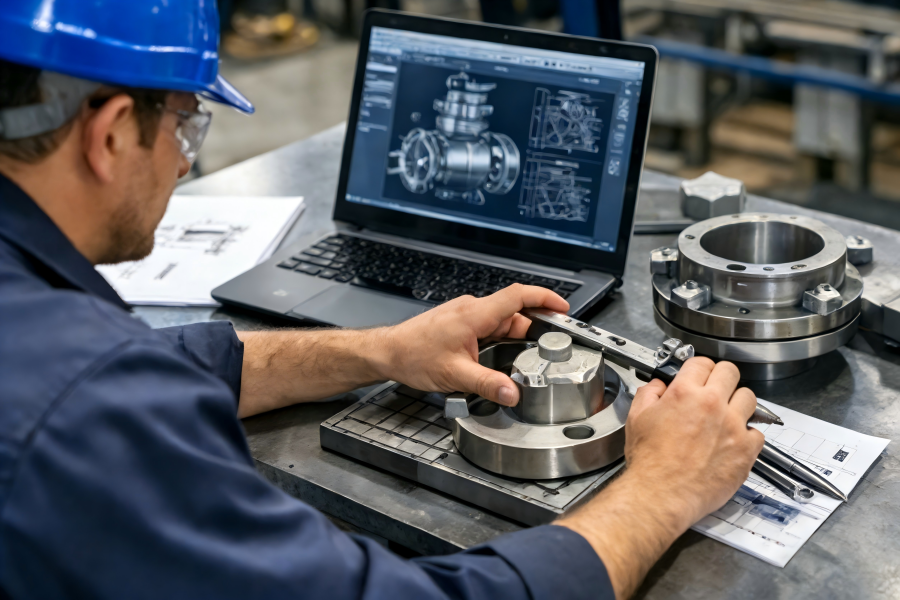
In practice, this means the valve behaves more like a precision mechanical seal than a resilient-seated shut-off device. Performance depends on machining accuracy, surface finish, and correct actuator sizing, not only on the nominal valve type.
4. Metal-to-Metal Sealing Does Not Automatically Mean “Zero Leakage”
A critical specification point is that metal-to-metal seated butterfly valves are not automatically bubble-tight.
Leakage performance depends on:
- Disc and seat materials and hardness pairing
- Surface finish and contact geometry
- Actual contact stress achieved at the seat
- Test standard and test conditions (pressure, direction, medium)
- Manufacturing tolerances and assembly quality
Some designs are qualified to specific leakage classes under defined standards. Others are intended for high-temperature or abrasive isolation where a small, defined leakage rate is acceptable.
When “zero leakage” is specified, it must be tied to a standard and a test method under stated conditions. Without this, the requirement is ambiguous and not technically verifiable.
More reading about the importance of “zero leakage” .
Leakage performance must always be defined against a recognised test standard such as API 598, ISO 5208, or EN 12266-1, with stated test pressure and medium.
5. Where Six-Eccentric Designs Are Typically Justified
A six-eccentric butterfly valve is usually considered when service conditions exceed the practical limits of soft-seated or simpler metal-seated designs.
5.1 High-Temperature Services
Examples include hot gas lines, thermal oil systems, or refinery process units. In these cases, soft seats may creep or degrade, and sealing performance must be assessed at temperature, not only at ambient conditions.
5.2 Abrasive or Particle-Laden Media
Services involving catalyst fines, dust-laden gas, or similar media can quickly damage soft seats. A controlled metal-to-metal interface tolerates erosion better, provided materials and surface treatments are selected for the specific duty.
5.3 High Cycling with Elevated Differential Pressure
Where valves operate frequently under load, reduced sliding contact and stable contact geometry help maintain more consistent torque and sealing behaviour over time.
5.4 Fire-Safe or Post-Fire Isolation Requirements
Metal-to-metal seating is often part of a fire-safe concept because it does not rely on elastomers. Actual performance must still be demonstrated by testing to an applicable standard.
5.5 Severe-Service Process Units
Applications such as high-temperature FCCU service, molecular sieve-related duties, or critical isolation points in LNG and gas processing are typical cases where engineers evaluate advanced multi-eccentric designs.
6. How Six-Eccentric Compares with Other Butterfly Valve Types
- High Performance (double offset): Often suitable for higher pressure and temperature than concentric designs, especially with reinforced soft seats. Limited for sustained very high temperatures or abrasive services.
- Drievoudige offset: Widely used for metal-seated applications and offers a balance between performance and complexity.
- Six-Eccentric (advanced multi-offset): Intended to further refine contact mechanics, load distribution, and long-term stability of sealing performance in more demanding services.
Selection should be based on service conditions, required leakage class, expected cycling, and life-cycle considerations, not on the number of offsets alone.
7. Key Specification Points to Clarify
When specifying a six-eccentric metal-to-metal butterfly valve, engineers should define:
- Leakage class and test standard
- Disc and seat materials, including surface treatment
- Operating temperature range and validation conditions
- Required torque and actuator sizing margins
- Expected cycling duty and maintenance strategy
- Manufacturing and quality control assumptions
Because metal-to-metal sealing is sensitive to geometry and surface quality, these points directly influence real-world performance.
8. Positioning Within Carter Valve’s Portfolio
Within Carter Valve’s engineered butterfly valve range, the six-eccentric design is positioned as a severe-service isolation option alongside high-performance, triple-offset, and metal-to-metal seated valves. The intent is to provide a technically appropriate solution where service conditions justify a more controlled and robust sealing concept, rather than to replace other designs universally.
Local manufacturing and service capability can be relevant in these applications because lead time, documentation, and technical support affect project risk in critical services.
9. When You Do Not Need a Six-Eccentric Valve
This type of valve is usually unnecessary for:
- Clean, moderate-temperature services without fire-safe requirements
- Applications where soft seats can provide the required shut-off performance
- Systems where simplicity and low initial cost outweigh severe-service considerations
In such cases, a high-performance or even a concentric butterfly valve may be the more appropriate engineering choice.
10. Summary
A six-eccentric butterfly valve achieves metal-to-metal sealing by controlling disc movement and contact pressure so that sealing occurs only at the final stage of closure, with minimal sliding and predictable load distribution. This makes it suitable for high-temperature, abrasive, high-cycle, or fire-safe-driven isolation duties.
However, geometry alone does not guarantee performance. Leakage criteria, materials, manufacturing quality, and actuation must all be specified and verified against the actual service conditions.
More reading: USA Carter Valve Inc. Lanceert CARTERUS zes-excentrische vlinderklep voor kritische toepassingen
Now Contact Us
Now contact us to discuss your specific application and verification requirements for six-eccentric, triple offset, or metal-to-metal seated butterfly valves. Carter Valve’s engineering team can support you with valve concept selection, leakage class definition under stated test conditions, torque and actuator sizing, material pairing, and suitability for high-temperature or severe-service isolation duties.