




Vlinderkleppen behoren tot de meest gebruikte kwartslagkleppen in moderne proces- en utiliteitsleidingen. Hun populariteit is te danken aan een eenvoudig mechanisch principe - een roterende schijf op een stang - en een aantal praktische voordelen: compact omhulsel, relatief lage massa voor een bepaalde diameter, snelle werking en eenvoudige automatisering. Bij grote diameters, waar schuifafsluiters of klepafsluiters omvangrijk en duur worden, bieden vlinderkleppen vaak een voordeliger en eenvoudiger te onderhouden alternatief.
Toch is “vlinderklep” niet één uniform product. In de praktijk zijn er verschillende constructiefamilies, verschillende verbindingsstijlen, meerdere afdichtingsconcepten en een breed scala aan materialen en bedieningsopties. Elk van deze keuzes heeft gevolgen voor de drukklasse, de temperatuurbestendigheid, de lekkageprestaties, de onderhoudsintervallen en de kosten over de gehele levensduur. Dit artikel geeft een overzicht van de belangrijkste soorten vlinderkleppen, legt uit hoe ze verschillen en schetst de minder voor de hand liggende technische overwegingen die er vaak toe doen bij echte projecten.
1. Het fundamentele werkingsprincipe
De verschillende soorten vlinderkleppen begrijpen
Een vlinderklep bestaat uit een ronde schijf op een stang die door het klephuis loopt. Door de stang ongeveer 90 graden te draaien, wordt de schijf verplaatst van een positie parallel aan de stroming (open) naar een positie loodrecht erop (gesloten). Omdat de schijf in het stromingstraject blijft, zelfs wanneer de klep volledig open is, is er altijd wat drukverlies, maar de obstructie is meestal bescheiden in vergelijking met veel andere kleptypes.
De eenvoud van deze opstelling verklaart waarom vlinderkleppen gebruikelijk zijn in waterbehandeling, HVAC, chemische verwerking, energiesystemen en veel algemene industriële diensten. Het verklaart ook waarom ontwerpdetails, zoals hoe de schijf de zitting ontmoet of hoe de spindel is gebogen, een onevenredige invloed hebben op prestaties en levensduur.
2. Indeling naar schijf- en stengelgeometrie
2.1 Concentrische vlinderkleppen (zonder offset)
Bij een concentrisch ontwerp bevindt de stang zich op de middellijn van zowel de schijf als de klepbehuizing. De schijf dicht af tegen een zachte, veerkrachtige zitting - meestal een elastomeer of een polymeer. Wanneer de klep sluit, drukt de schijf deze zitting samen om een strakke afsluiting te verkrijgen.
Waar ze passen:
- Diensten met lage tot gemiddelde druk
- Gematigde temperaturen
- Niet-schurende, niet-agressieve media
- Toepassingen zoals waterdistributie, koelcircuits en algemene nutsvoorzieningen
Voordelen en beperkingen:
Concentrische kleppen zijn mechanisch eenvoudig en kosteneffectief. Omdat de schijf tegen de zitting wrijft tijdens het openen en sluiten, is slijtage echter onvermijdelijk. Dit maakt ze minder geschikt voor hoge temperaturen, hoge drukken of zeer frequente cycli, waarbij de levensduur van de zitting een belangrijk onderhoudsprobleem wordt.
2.2 Offsetontwerpen: Van enkele tot drievoudige offset
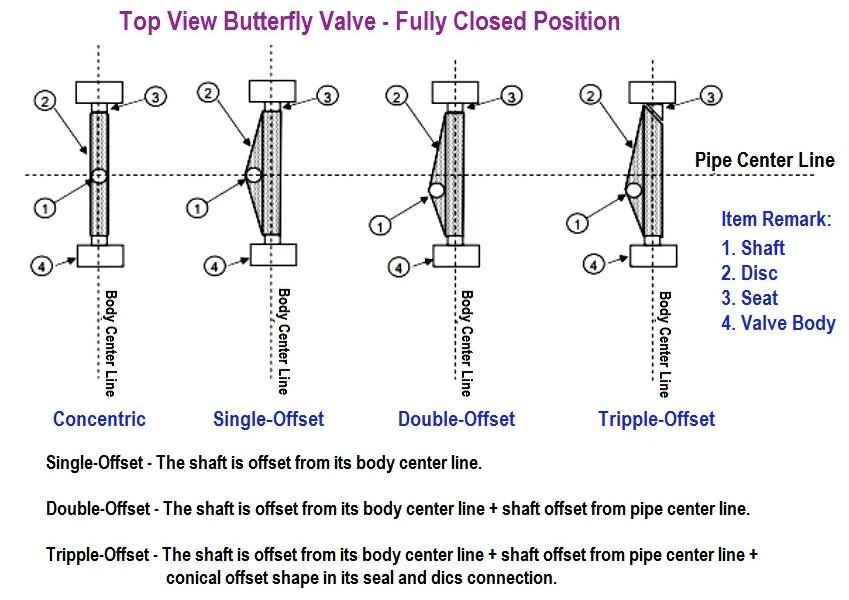
Om slijtage aan de zitting te verminderen en de prestaties te verbeteren, gebruiken veel moderne vlinderkleppen offset geometrieën, wat betekent dat de stang opzettelijk wordt verplaatst van de middellijn van de schijf en/of de behuizing.
Enkele offset
De stuurpen is iets achter de middellijn van de schijf verschoven. Dit vermindert het glijcontact tussen de schijf en de zitting, maar elimineert dit niet. De prestaties zijn beter dan bij een concentrische klep, maar nog steeds beperkt voor veeleisende toepassingen.
Dubbele offset (vlinderkleppen met hoge prestaties)
Hier is de stuurpen zowel ten opzichte van de middellijn van de schijf als ten opzichte van de middellijn van de body verschoven. Deze geometrie zorgt ervoor dat de schijf bij het openen snel van de zitting weg beweegt, wat wrijving en slijtage vermindert. Ontwerpen met dubbele offset worden vaak gecombineerd met versterkte zachte zittingen of halfmetalen zittingen.
Typisch gebruik:
- Matige tot hogere druk
- Groter temperatuurbereik dan concentrische kleppen
- Procesleidingen waar een langere levensduur en betere afsluiting vereist zijn
Drievoudige offset
Een klep met drievoudige offset voegt een derde geometrische offset toe: het afdichtingsoppervlak ligt op een conische of hellende as. Het resultaat is dat de schijf en de zitting bijna geen wrijvingscontact hebben tijdens de werking; ze ontmoeten elkaar alleen in de uiteindelijke sluitpositie. Dit maakt het gebruik van metaal-op-metaal zittingen en maakt veel hogere druk- en temperatuurwaarden mogelijk.
Typisch gebruik:
- Diensten onder hoge druk of hoge temperaturen
- Stoom, koolwaterstoffen en kritische procesisolatie
- Toepassingen waarbij voorspelbare, herhaalbare afdichting gedurende vele cycli essentieel is
2.3 Multi-excentrische (bijv. zes-excentrische) ontwerpen
In de afgelopen jaren hebben sommige fabrikanten complexere multi-excentrische geometrieën geïntroduceerd, soms aangeduid als zes-excentrisch ontwerpen. Deze zijn gebaseerd op hetzelfde principe als drievoudige offsetkleppen - het minimaliseren of elimineren van glijdend contact tussen afdichtingsoppervlakken - maar met verdere geometrische verfijningen om de drukverdeling te regelen en het bedrijfskoppel te verlagen.
Dergelijke ontwerpen zijn meestal gericht op extreme of gespecialiseerde taken, zoals zeer lage temperaturen (cryogene service), zeer hoge drukken of toepassingen waarbij lange onderhoudsintervallen en consistente afdichtingsprestaties van kritiek belang zijn.
3. Classificatie volgens behuizing en verbindingsstijl
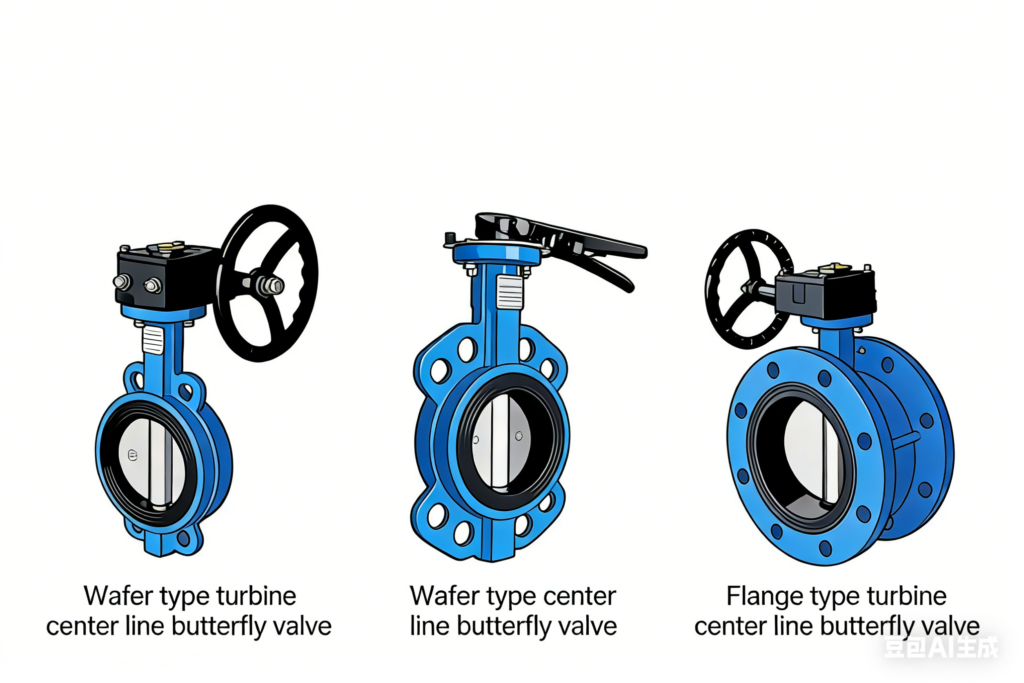
De manier waarop een vlinderklep in de pijpleiding wordt gemonteerd, heeft niet alleen invloed op de installatie, maar ook op het onderhoud en de operationele flexibiliteit.
3.1 Type wafer
Een wafelklep past tussen twee pijpflenzen en wordt op zijn plaats gehouden door de flensbouten die rond het huis lopen. Hij is compact en zuinig, maar meestal niet geschikt voor end-of-line (dead-end) service, omdat hij afhankelijk is van beide flenzen voor ondersteuning.
3.2 Lug Type
Lugkleppen hebben inzetstukken met schroefdraad (lugs) rond het huis. Hierdoor kan de klep op één flens worden vastgeschroefd terwijl de andere kant is losgekoppeld, waardoor hij geschikt is voor doodlopende isolatie en eenvoudiger sectioneel onderhoud.
3.3 Type met flens
Vlinderkleppen met flens hebben integrale flenzen die rechtstreeks op de pijpleiding worden geschroefd. Ze zijn mechanisch robuust en gemakkelijk uit te lijnen en worden vaak gekozen voor grotere afmetingen, hogere drukken of wanneer de pijpspecificatie volledig geflensde componenten vereist.
4. Bediening en besturing
Vlinderkleppen kunnen worden geleverd met verschillende bedieningsmechanismen:
- Handmatige bediening via een hendel of tandwielkast is gebruikelijk voor kleinere maten of zelden bediende kleppen.
- Elektrische aandrijvingen integratie in geautomatiseerde besturingssystemen en bediening op afstand mogelijk maken.
- Pneumatische aandrijvingen worden veel gebruikt in procesinstallaties waar een snelle, betrouwbare kwartslagbeweging nodig is.
- Hydraulische actuators worden meestal gereserveerd voor zeer grote kleppen of waar een uitzonderlijk hoog koppel nodig is.
Bij het specificeren van de aandrijving moeten ingenieurs niet alleen rekening houden met het vereiste koppel, maar ook met de bedrijfscyclus, het storingsbestendige gedrag, de omgevingsomstandigheden en de interface met de regelsystemen van de fabriek.
5. Materialen en afdichtingsconcepten
5.1 Materialen voor behuizing en schijf
Gangbare materialen zijn koolstofstaal, nodulair gietijzer en roestvrij staal. Voor corrosieve of gespecialiseerde media kunnen duplexstaal, nikkellegeringen of gecoate onderdelen nodig zijn. De keuze wordt bepaald door corrosiebestendigheid, temperatuurlimieten en mechanische sterkte.
5.2 Soorten zittingen en afdichtingen
- Zachte stoelen (elastomeren, PTFE) bieden een uitstekende dichtheid bij lage tot gemiddelde temperaturen, maar degraderen bij hitte en agressieve chemicaliën.
- Metalen zittingen zijn bestand tegen hoge temperaturen en drukken en zijn essentieel voor veel ontwerpen met drievoudige offset en multi-excentrische ontwerpen, hoewel ze meer afhankelijk zijn van nauwkeurige geometrie en oppervlakteafwerking om een strakke afsluiting te bereiken.
- Samengestelde of gelaagde afdichtingen poging om een evenwicht te vinden tussen veerkracht en duurzaamheid, vaak gebruikt in hoogwaardige dubbele offsetkleppen.
De informatie over ISO-druktests van kleppen kan je helpen.
6. De theorie toepassen op de vlinderklepseries van Carter Valves
De vlinderklepportfolio van Carter Valves biedt een nuttige illustratie van hoe deze theoretische categorieën zich vertalen in echte productfamilies. Op hun pagina met vlinderkleppencategorieën worden vijf verschillende series gepresenteerd:
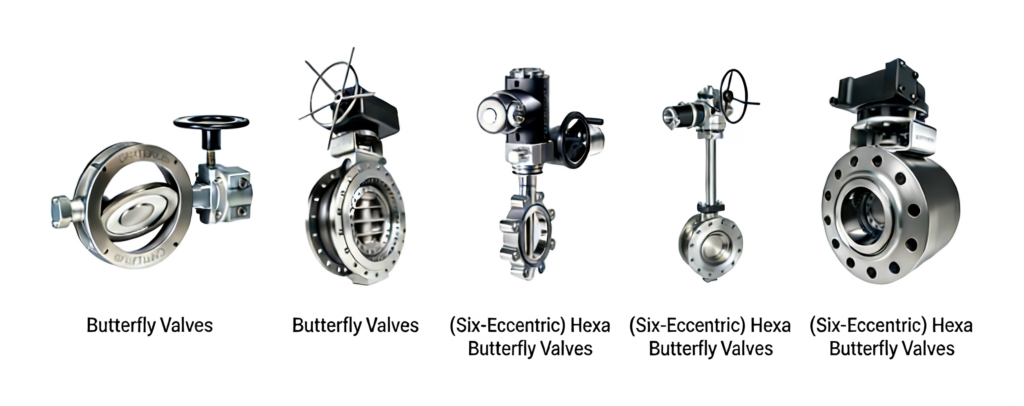
6.1 Vlinderklep voor algemene doeleinden (CVS-210)
Dit bereik komt overeen met de concentrisch ontwerp. Het is bedoeld voor standaard toepassingen zoals water, lucht en andere niet-agressieve vloeistoffen bij gematigde drukken en temperaturen. De nadruk ligt op eenvoud, onderhoudsgemak en geschiktheid voor utiliteitssystemen.
6.2 Hoge prestatie dubbele offset vlinderklep (CVS-250)
Zoals de naam al doet vermoeden, gebruikt deze serie een dubbele offset geometrie. Het is bedoeld voor procestoepassingen waar betere afdichtingsprestaties, minder slijtage van de zitting en een langere levensduur vereist zijn in vergelijking met concentrische ontwerpen. Typische toepassingen zijn industriële koelsystemen, algemene chemische diensten en energie-infrastructuur met gematigde bedrijfsomstandigheden.
6.3 Cryogene zes-excentrische vlinderklep (CVS-290C)
Deze klep vertegenwoordigt de multicentrisch concept toegepast op gebruik bij lage temperaturen. De geometrie is geoptimaliseerd voor het behoud van afdichtingsprestaties en een beheersbaar bedrijfskoppel in cryogene omstandigheden, zoals die voorkomen in LNG of andere systemen voor het hanteren van gas bij lage temperaturen.
6.4 Volgende generatie zes-excentrische vlinderklep (CVS-290)
Deze serie breidt het concept met zes excenters uit tot meer dan alleen cryogene toepassingen en richt zich op een breder druk- en temperatuurbereik. Het doel is om minimale slijtage van de afdichting te combineren met een consistente, herhaalbare afsluiting in veeleisende procesomgevingen.
6.5 Drievoudige offset vlinderklep voor ultrahoge druk (CVS-288)
Dit bereik komt overeen met de drievoudige offset, met metalen zitting categorie. Het is bedoeld voor hogedruk- en/of hogetemperatuurservices waar zachte zittingen niet geschikt zouden zijn en waar langdurige, voorspelbare afdichtingsprestaties vereist zijn, zoals in stoomsystemen, koolwaterstoffen met een hoge temperatuur of zware industriële procesleidingen.
Samen illustreren deze vijf families hoe vlinderkleptechnologie zich uitstrekt van basisfuncties tot zeer gespecialiseerde toepassingen voor zware toepassingen.
7. Minder voor de hand liggende technische overwegingen
Naast de hoofdcategorieën hebben verschillende subtielere factoren vaak invloed op de prestaties in de praktijk:
- Thermische cycli: Herhaaldelijk verwarmen en koelen kan de compressie van de zitting en de oppervlakteafwerking beïnvloeden, vooral bij kleppen met metalen afdichtingen.
- Asafdichting: Lekkage bij de spindelpakking kan moeilijker op te sporen zijn dan lekkage bij de flens, vooral bij gas.
- Installatierichting: Bij sommige diensten kan de montagerichting de opbouw van sediment of de belasting van de schijf beïnvloeden.
- Toegang voor onderhoud: Grotere vlinderkleppen kunnen een aanzienlijke speling nodig hebben voor het verwijderen van de schijf of het vervangen van de zitting.
Deze punten komen zelden voor in vereenvoudigde selectiegidsen, maar kunnen een grote invloed hebben op de betrouwbaarheid en de bedrijfskosten gedurende de levensduur van een installatie.
8. Het juiste type kiezen in de praktijk
Een gestructureerde selectiebenadering houdt meestal rekening met:
- Procesmedium (corrosief, schurend, schoon, vuil)
- Druk- en temperatuurbereik
- Vereiste dichtheid en lekkageklasse
- Bedrijfsfrequentie en automatiseringsbehoeften
- Installatiebeperkingen en onderhoudsstrategie
Een algemene koelwaterleiding kan bijvoorbeeld perfect worden bediend door een concentrische of dubbele offset klep, terwijl een hoge temperatuur stoomisolatiepunt vrijwel zeker een drievoudige offset, met metalen zitting, vereist. Op dezelfde manier brengt een cryogene transferleiding uitdagingen met zich mee die een speciale lage temperatuur, multi-excentrische oplossing rechtvaardigen.
Conclusie
Vlinderkleppen zijn veel diverser dan hun eenvoudige uiterlijk doet vermoeden. Van concentrische ontwerpen met zachte zitting voor nutsvoorzieningen tot triple offset en multi-excentrische kleppen voor extreme omstandigheden, elk type vertegenwoordigt een specifieke balans van geometrie, materialen en afdichtingsfilosofie. Inzicht in deze verschillen stelt ingenieurs, projectmanagers en inkoopteams in staat om de klepselectie af te stemmen op de procesvereisten, in plaats van te vertrouwen op algemene specificaties.
Het assortiment vlinderkleppen dat Carter Valves aanbiedt - van centrische en dubbele offset ontwerpen tot drievoudige offset en zes-excentrische varianten - laat zien hoe deze technologie zich heeft ontwikkeld om een uitzonderlijk breed spectrum van industriële toepassingen te bestrijken. In de praktijk blijft een zorgvuldige selectie in de ontwerpfase een van de meest effectieve manieren om betrouwbaarheid, veiligheid en voorspelbare prestaties tijdens de levensduur in elk leidingsysteem te garanderen.