





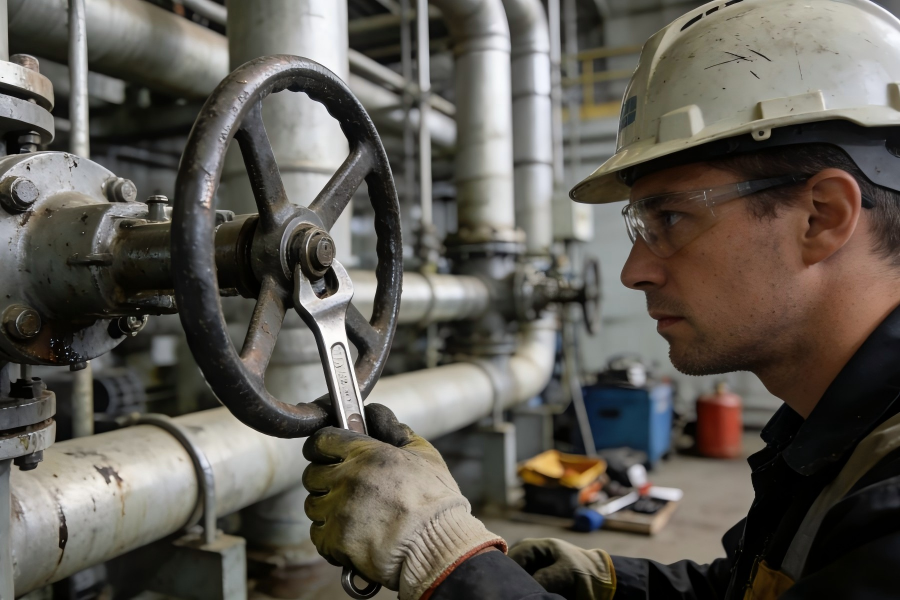
Butterfly valves are widely used in industrial piping systems because they combine a compact envelope with quarter-turn operation and relatively low installed weight for a given diameter. In large line sizes, they often provide a practical alternative to gate or globe valves, particularly where fast operation, automation, or space constraints matter.
However, “butterfly valve” is not a single, uniform solution. Concentric, high performance (double offset), triple offset, and multi-eccentric designs differ in how the disc approaches the seat, how contact stress is distributed, and how sealing is achieved. These differences become critical when the valve is applied to demanding services such as high temperature, high cycling, or tight isolation duties.
This article reviews the most common industrial applications for butterfly valves and explains how service conditions—pressure, temperature, media, and operating duty—should guide the selection of the appropriate valve concept, including high performance, triple offset, metal-to-metal seated, and multi-eccentric designs such as six-eccentric butterfly valves.
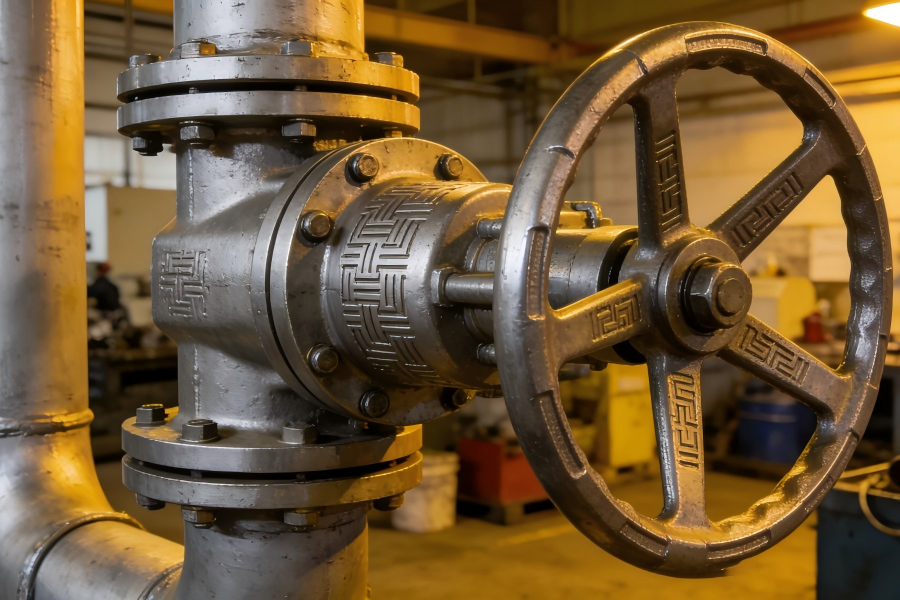
Why Butterfly Valves Are Chosen in Industrial Systems
From a mechanical perspective, a butterfly valve is a quarter-turn device in which a circular disc rotates within the flow path. This simple geometry leads to several practical consequences:
- Compact installation envelope compared with many linear-motion valves, especially in larger diameters.
- Relatively low mass for a given line size, which can reduce structural loads on piping and supports.
- Fast actuation, making the design well suited to automated or remote operation.
- Scalable design, with concepts that can be applied from utility services to severe-service isolation, provided the correct sealing and offset geometry is selected.
ASME B31.3 Process Piping Guide may help you.
At the same time, the disc remains in the flow path even when fully open, and sealing relies on controlled contact between the disc and the seat. This means that process conditions and duty cycle matter more for butterfly valves than for some other valve types. Application-driven selection is therefore essential.
Water and Wastewater Systems
One of the most common application areas for butterfly valves is water and wastewater treatment, including:
- Raw water intake and distribution
- Treated water transmission lines
- Pump station isolation
- Wastewater and sludge handling systems
In these services, the key drivers are typically large diameters, moderate pressures, and frequent operation. Butterfly valves are often selected because they provide:
- Economical solutions for large bore sizes
- Quick opening and closing for operational control
- Compatibility with electric or pneumatic actuators
For relatively clean water at moderate temperature, resilient-seated or high performance designs are often sufficient, provided that pressure and temperature remain within the seat material limits. Where the media contains solids, fibres, or abrasive particles, attention must be paid to seat wear mechanisms and the potential for debris to accumulate at the sealing interface.
In isolation duties that require more predictable long-term sealing under cycling, offset designs can reduce rubbing during opening and closing, which helps limit seat wear. The exact choice should be verified against the specific water quality, operating pressure, and temperature range.
Oil, Gas, and Refining Services
In upstream, midstream, and downstream oil and gas facilities, butterfly valves are commonly used in:
- Utility systems and auxiliary services
- Cooling water and firewater lines
- Certain hydrocarbon and process isolation duties
- Large-diameter low-to-medium pressure headers
In these environments, the process conditions vary widely. Some lines carry relatively clean utilities; others may see elevated temperatures, pressure fluctuations, or hydrocarbons with varying compositions.
For higher temperature or more demanding isolation duties, high performance and triple offset butterfly valves are frequently considered because their offset geometry changes how the disc engages the seat:
- The offset arrangement reduces sliding contact during most of the stroke.
- Sealing contact is more controlled and occurs mainly near the closed position.
- This can help manage wear and operating torque in services with frequent cycling or elevated temperatures.
Where soft seats are not suitable due to temperature or chemical compatibility, metal-to-metal seated designs may be used. In these cases, leakage performance must be evaluated against the applicable standard and test method, and the user should confirm what “tight shutoff” means in the context of the specific specification.
Leakage performance must be evaluated against the applicable standard and test method–API 598: Valve Inspection and Testing.
Power Generation and Utility Plants
Power plants—whether fossil-fired, nuclear, or renewable—use butterfly valves in a wide range of systems, such as:
- Circulating water and cooling systems
- Condensate and auxiliary water lines
- Flue gas or air handling systems
- Balance-of-plant piping networks
These applications often involve large diameters and continuous operation, with some systems exposed to elevated temperatures or cycling during start-up and shutdown. The selection focus typically includes:
- Reliability over long operating periods
- Predictable operating torque for actuator sizing
- Stable sealing behaviour under thermal expansion and contraction
In higher temperature services, or where thermal cycles are frequent, offset and multi-eccentric designs can help manage contact stress between disc and seat. Rather than relying on continuous rubbing, these geometries aim to separate the sealing surfaces during most of the stroke and bring them together in a more controlled manner near closure. The exact benefit depends on the detailed design and should be evaluated against the plant’s operating profile.
Chemical and Process Industries
Chemical and process plants apply butterfly valves across a broad spectrum of duties, including:
- Process isolation
- Utility distribution
- Transfer lines for liquids and gases
- Batch and continuous processing systems
Here, media compatibility becomes a central concern. The choice of seat and body materials must be aligned with:
- Chemical resistance of elastomers or metals
- Temperature limits of sealing components
- Potential for corrosion, erosion, or fouling
In some services, especially where temperatures are elevated or where aggressive chemicals are present, metal-to-metal seated or triple offset designs may be preferred over soft-seated valves. However, metal seating changes the nature of the seal: leakage performance must be assessed against the relevant standard, and expectations should be set based on test conditions rather than assumptions.
For applications with frequent cycling, the way the disc approaches the seat—whether through a double, triple, or multi-eccentric geometry—can have a measurable impact on wear patterns and maintenance intervals.
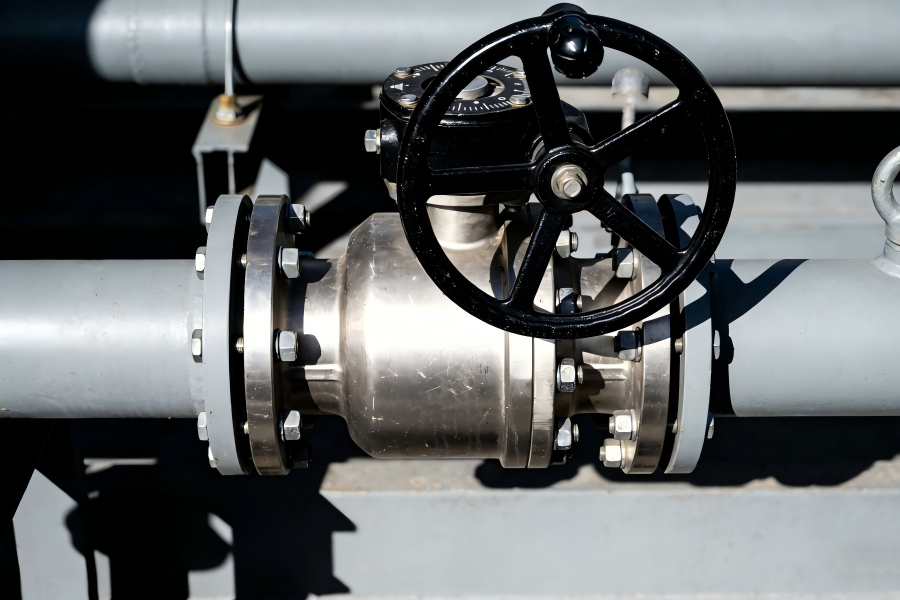
HVAC and Large-Diameter Building Services
In commercial and industrial buildings, as well as district energy systems, butterfly valves are commonly used for:
- Chilled water and hot water distribution
- Cooling towers and condenser water systems
- Air handling and ventilation systems
- Large-diameter low-pressure networks
In these services, the main advantages are compact size, low weight, and ease of automation. Pressures and temperatures are usually moderate, which allows a wide range of designs to be applied.
However, even in HVAC systems, issues such as seat wear, leakage, or actuator mismatch can appear if the valve is not selected with the actual duty cycle in mind. For example, a valve that is used for frequent throttling or modulating service will experience different stresses compared with a valve that is only used for occasional isolation.
Severe Service and Isolation Duties
Some applications fall outside the comfort zone of conventional butterfly valve designs. Examples include:
- High-temperature process lines
- Services with frequent thermal cycling
- Isolation duties where predictable shutoff behaviour is critical
- Applications such as molecular sieve service, FCCU high-temperature lines, or cryogenic isolation, where design details strongly influence performance
In these cases, offset geometry and sealing concept become central to the selection process. Multi-eccentric designs, including six-eccentric butterfly valves, are intended to further control how and where sealing contact occurs. By distributing contact over a defined path and managing the engagement sequence, such designs aim to:
- Reduce localised contact stress
- Improve stability of the sealing interface over time
- Provide more predictable torque characteristics during closure
Any claim regarding leakage performance or service life must be evaluated against the applicable test standard, operating conditions, and installation details. For critical isolation duties, it is common practice to specify acceptance criteria and witness testing rather than relying on catalogue descriptions.
How Application Drives the Choice of Valve Concept
High Performance vs. Triple Offset
High performance (double offset) butterfly valves introduce an offset in the shaft and seat geometry to reduce rubbing during operation. They are often used where higher temperature or higher cycling makes a concentric design less suitable.
Triple offset valves add a third geometric offset, typically creating a conical sealing surface. This changes the sealing mechanics further and is commonly applied in higher temperature or metal-seated services, where controlled, cam-like closure is beneficial.
The choice between these concepts should be based on temperature range, pressure class, cycling frequency, and the required leakage performance as defined by the relevant standard.
When Metal-to-Metal Seating Is Considered
Metal-to-metal seating is usually selected when soft materials cannot withstand the temperature, chemical environment, or wear mechanisms of the service. This approach shifts the focus from elastomer resilience to precision-machined surfaces and controlled contact stress.
In practice, users should:
- Define the acceptable leakage class according to a recognised standard
- Confirm the test method and conditions
- Evaluate how the valve will behave under actual operating temperatures and pressure differentials
More reading about Metal-to-Metal Seating.
Where Six-Eccentric Designs Fit
Six-eccentric butterfly valves represent a further development in controlling the sealing kinematics. By introducing additional geometric offsets, the design seeks to manage how the disc approaches, contacts, and loads the seat during closure.
Such designs are typically considered for demanding isolation services, where predictable sealing behaviour, controlled wear, and stable torque characteristics are required over long operating periods. As with any severe-service application, the final selection should be supported by a clear definition of duty conditions and, where appropriate, by qualification testing.
An Application-Driven Selection Checklist
When specifying a butterfly valve, the application should always come first. Key questions include:
- What are the pressure and temperature ranges, including start-up and upset conditions?
- What is the process medium, and how does it affect material selection and seat design?
- Is the valve used for on/off isolation, throttling, or frequent cycling?
- What leakage performance is required, and under which standard and test method?
- How will actuation and automation influence torque requirements and operating speed?
- What are the maintenance and inspection expectations over the plant life?
Answering these questions helps narrow the choice between concentric, high performance, triple offset, metal-seated, or multi-eccentric solutions and reduces the risk of premature wear or unexpected performance issues.
Conclusion
Butterfly valves serve a wide range of industrial applications, from water and wastewater systems to power plants, chemical processing, and severe-service isolation duties. Their compact form and quarter-turn operation make them attractive in many large-diameter and automated systems, but their performance depends strongly on how well the valve concept matches the service conditions.
Understanding the differences between high performance, triple offset, metal-to-metal seated, and multi-eccentric designs—including six-eccentric butterfly valves—allows engineers, EPC contractors, and procurement teams to make more informed, lower-risk selections. In critical services, this should always be supported by clearly defined specifications, applicable standards, and, where necessary, qualification testing under representative conditions. Contact us for customized solution.