





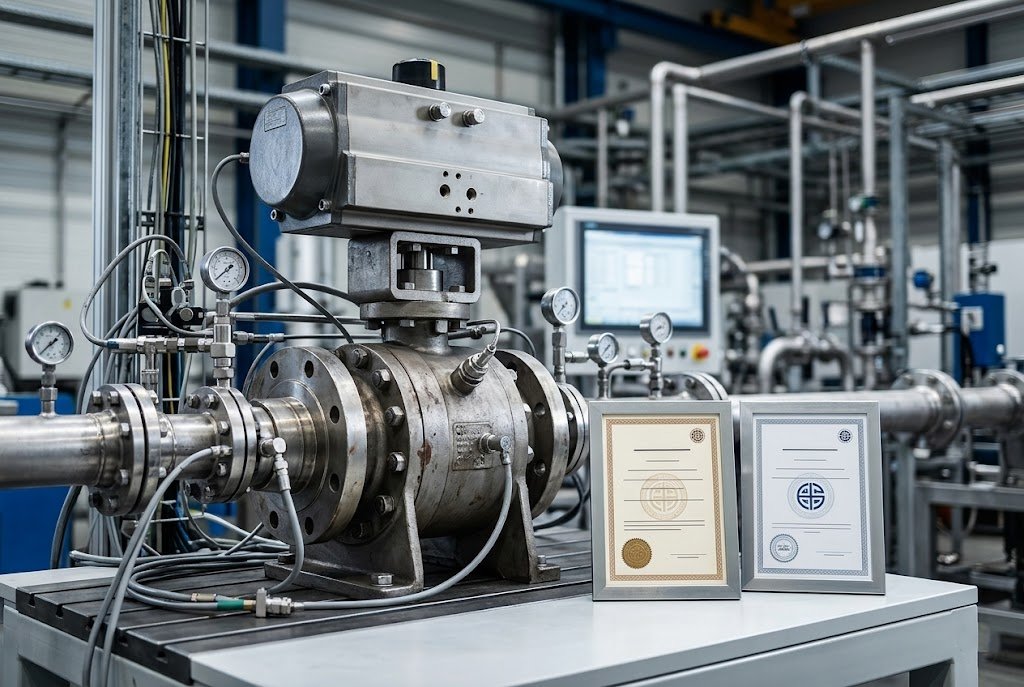
اختبار الصمامات الآمنة من الحرائق يثبت أن تصميم صمام معين يمكن أن يحد من التسرب الداخلي والخارجي، ويحتفظ بالقدرة على احتواء الضغط، ويفي بمتطلبات التشغيل المحددة أثناء وبعد اختبار التعرض للحريق المتحكم فيه. كما أنه لا إثبات أن كل صمام يتم شحنه مقاوم للحريق، أو أن كل حجم وفئة ضغط مغطاة، أو أن المشغل سينجو من حريق حقيقي في المصنع. المعياران الأكثر شيوعًا في الشهادات هما واجهة برمجة التطبيقات API 607 و API 6FA.
فيما يتعلق بالمشتري، ترتبط API 607 عادةً بصمامات ربع الدوران والصمامات ذات المقاعد غير المعدنية، بينما ترتبط API 6FA تاريخيًا بصمامات خطوط الأنابيب وصمامات الإنتاج API 6A/API 6D. ونظرًا لاختلاف مواصفات المشروع والإصدارات القياسية، يجب دائمًا التحقق من الشهادة مقابل تصميم الصمام الدقيق وحجمه وفئته ومواد المقعد/الحافة والخدمة.
تصف قائمة GlobalSpec's API STD 607 المعيار بأنه طريقة اختبار نوع الحريق لتأكيد قدرة الصمامات ذات ربع الدوران والصمامات الأخرى ذات التلبيس غير المعدني تحت الضغط أثناء اختبار الحريق وبعده. وتصف ملخصات الصناعة عادةً اختبار الحريق على النحو التالي 30 دقيقة من التعرض للهب بالقرب من 760 درجة مئوية / 1400 درجة فهرنهايت, مع مراقبة التسرب أثناء وبعد التبريد. تشرح هذه المقالة الفرق بين API 607 و API 6FA، وكيف يبدو تسلسل الاختبار، وكيف يجب على مشتري صمامات كارتر مراجعة شهادات الأمان من الحرائق قبل قبول صمام للمصفاة أو البتروكيماويات أو الغاز الطبيعي المسال أو مزرعة الصهاريج أو خدمة العزل الخطرة.
لماذا تعتبر عبارة “آمن من الحرائق” ادعاءً للأداء وليس علامة سحرية
العبارة صمام آمن ضد الحرائق قد تبدو مطمئنة، ولكن لا ينبغي التعامل معها على أنها عبارة تسويقية غامضة. شهادة السلامة من الحرائق هي دليل على أن تصميم الصمام قد تم اختباره بموجب معيار محدد، في ظروف محددة للضغط والتعرض للحريق، مع حدود التسرب المقاسة. إنها سجل أداء اختبار النوع-اختبار النوع, وليس وعدًا بأن الصمام سينجو من كل سيناريو حريق محتمل إلى أجل غير مسمى.
في المصفاة أو وحدة البتروكيماويات، يكون القلق واضحًا ومباشرًا. إذا تسبب الحريق في إتلاف المقاعد اللينة أو الموانع أو الحشوات أو الحشوات اللينة، فلا يزال الصمام بحاجة إلى احتواء الوسائط الخطرة أو القابلة للاشتعال لفترة كافية لدعم العزل والاستجابة للطوارئ. غالبًا ما تستخدم التصميمات الآمنة من الحرائق تعبئة من الجرافيت، وحشيات مقاومة للحريق، وتصميمات جذعية مضادة للانفجار، وأجهزة مضادة للكهرباء الساكنة، ومسارات إحكام ثانوية من المعدن إلى المعدن. تصف إرشادات صمامات SVF الآمنة من الحرائق هذه العناصر التصميمية وتشير إلى أن اختبار API 607 يعرض الصمام المضغوط للهب المباشر لمدة 30 دقيقة تقريبًا حوالي 1400 درجة فهرنهايت/ 760 درجة مئوية أثناء مراقبة التسرب.
بالنسبة لتطبيقات صمامات الفراشة، فإن صمام كارتر للصمامات دليل اختيار صمام فراشة العزل الحرج مورد مصاحب مفيد. إن شهادة السلامة من الحرائق هي إحدى طبقات المواصفات، ولكن يجب أيضًا مراجعة فئة التسرب والمواد ودرجة الحرارة والضغط وحجم المشغل وخدمة الخدمة.
API 607 مقابل API 6FA: الفرق العملي بين API 607 و API 6FA
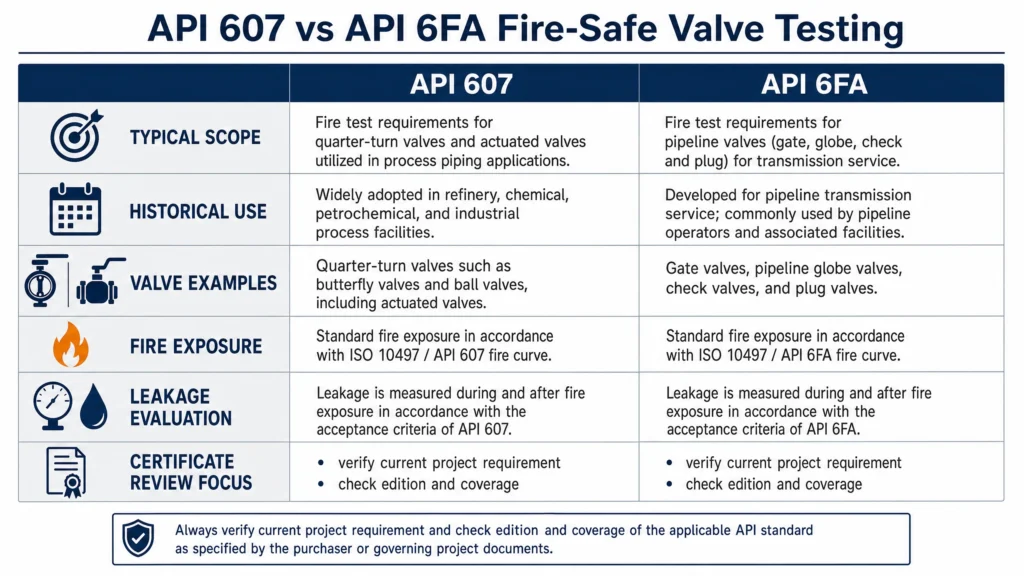
السؤال الأكثر شيوعًا للمشتري هو ما إذا كان ينبغي أن يكون الصمام مزودًا بمعيار API 607 أو API 6FA. والإجابة المختصرة هي أن المعيار الصحيح يعتمد على نوع الصمام، ومواصفات المشروع المعمول بها، ومتطلبات المستخدم النهائي، وحالة الإصدار المشار إليها في العقد.
تصف الملخصات العامة بشكل عام واجهة برمجة التطبيقات API 607 كاختبار حريق للصمامات ذات ربع الدوران مثل الصمامات الكروية وصمامات الفراشة والصمامات السدادة خاصةً في حالة وجود مقاعد أو موانع تسرب غير معدنية. تصف مصادر الصناعة API 6FA كاختبار حريق يستخدم تاريخيًا لصمامات API 6A وAPI 6D، بما في ذلك بعض الصمامات الكروية والبوابات والصمامات السدادة في خدمة الإنتاج أو خطوط الأنابيب. تشير بعض الملخصات الحالية إلى أن API 6FA قد تم سحبها أو تم دمج متطلباتها في ممارسة API 607 الأحدث، ولكن نظرًا لأن مواصفات المشروع قد لا تزال تشير إلى API 6FA، يجب على المشترين التحقق من حالة المعيار الرسمي ووثائق المشروع الحاكمة قبل رفض أو قبول شهادة.
| نقطة المقارنة | واجهة برمجة التطبيقات API 607 | API 6FA |
|---|---|---|
| الارتباط النموذجي | الصمامات ذات الربع دوران والصمامات ذات المقاعد غير المعدنية | تاريخياً صمامات الإنتاج وصمامات خطوط الأنابيب API 6A/API 6D |
| أمثلة الصمامات الشائعة | الصمامات الكروية والفراشة والصمامات السدادة؛ بعض الصمامات الأخرى ذات التجهيزات غير المعدنية | صمامات العزل الكروية، والبوابة، والسدادة، وصمامات عزل خطوط الأنابيب حسب المواصفات |
| هدف الاختبار | تأكيد القدرة على احتواء الضغط وأداء التسرب أثناء/بعد الحريق | تأكيد أداء اختبار الحريق للصمامات في سياق خطوط الأنابيب/الإنتاج |
| التعرض للحريق | يتم تلخيصها بشكل عام على أنها حوالي 30 دقيقة بالقرب من 760 درجة مئوية / 1400 درجة فهرنهايت | تتلخص عادةً في مدة التعرض للحريق ودرجة الحرارة المتشابهة |
| قلق المشتري | يجب أن تتطابق تغطية الشهادة مع نوع الصمام وحجمه وفئة الضغط ومواد المقعد/الحافة | يجب أن تتطابق أهمية الشهادة مع متطلبات المشروع وتصميم الصمام |
| تنبيه | تحقق من الإصدار والتغطية، وليس فقط الرقم القياسي | تحقق ما إذا كان المشروع لا يزال يتطلب ذلك وما إذا كانت الشهادة سارية/مقبولة |
الدرس المهم ليس أن إحدى العلامات هي الأفضل دائمًا. الدرس المهم هو أن يجب أن تتطابق الشهادة مع الصمام الذي تشتريه. لا يثبت اختبار الحريق على صمام كروي ناعم المقعد من الفئة 150 مقاس 6 بوصة تلقائيًا أن صمام فراشة من الفئة 600 مقاس 20 بوصة مع مادة مقعد مختلفة مؤهل.
تسلسل اختبار الأمان من الحرائق: ما يحدث في الاختبار
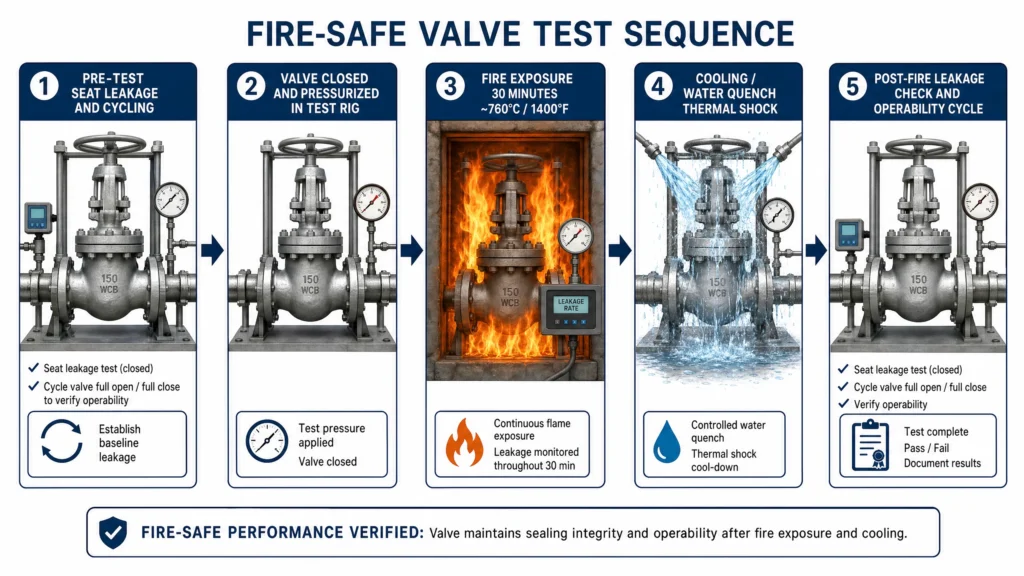
صُمم اختبار الحريق لمحاكاة حدث حراري شديد في ظل ظروف مضبوطة. ويعتمد الإجراء الدقيق ومعايير القبول على المعيار والإصدار، لذا يجب على المشترين تجنب الاعتماد على الملخصات العامة لاتخاذ القرارات التعاقدية. ومع ذلك، فإن التسلسل العام متسق بما يكفي لفهم ما تحاول الشهادة إثباته.
أولاً، يتم تجهيز الصمام وتدويره واختبار التسرب قبل التعرض للحريق. وهذا يحدد الأداء الأساسي. ثانيًا، يتم تركيب الصمام في جهاز اختبار، وعادةً ما يكون مغلقًا ومضغوطًا. ثالثاً، يتم تطبيق التعرض للهب لفترة محددة بينما يتم قياس التسرب. رابعًا، يتم تبريد الصمام، أحيانًا برذاذ الماء أو التبريد، مما يخلق صدمة حرارية. وأخيراً، يتم تقييم التسرب وقابلية التشغيل بعد الحريق.
| مرحلة الاختبار | ما الذي يتحقق منه |
|---|---|
| الفحص المسبق للاختبار والتدوير | يؤكد أن الصمام يبدأ في حالة عمل ويحدد التسرب الأساسي |
| التعرض للحريق المضغوط | يقيس ما إذا كان الصمام يحتوي على ضغط ويحد من التسرب أثناء التعرض للهب |
| مراقبة التسرب الخارجي | فحص وصلات الجسم، وموانع تسرب الساق، والتعبئة، والحشيات، ومسارات التسرب الخارجية الأخرى |
| مراقبة التسرب الداخلي أو المقعد | يفحص التسرب عبر مقعد الصمام المغلق أثناء ظروف الاختبار المحددة |
| تبريد أو إخماد أو إخماد | تحدي الصمام بالصدمة الحرارية بعد التعرض للحريق |
| عملية ما بعد الحريق | يؤكد إمكانية تشغيل الصمام كما هو مطلوب بموجب المعيار |
| فحص التسرب النهائي | التحقق من بقاء التسرب بعد الحريق والتبريد ضمن معايير القبول |
يلخص درفوس التمييز العملي بين ثلاث مطالبات: آمن من الحرائق حسب التصميم يعني أن الصمام مصمم بخصائص الأمان من الحرائق ولكن لم يتم اختباره بالضرورة; اختبار السلامة من الحرائق يعني أنه تم إجراء اختبار ولكن قد لا يكون معتمداً من طرف ثالث; معتمد ومعتمد من السلامة من الحرائق يعني إجراء الاختبار والاعتماد من قبل طرف ثالث معترف به وفقًا لمعيار مثل API 607 أو API 6FA أو ISO 10497. ويعد هذا التمييز من أكثر الأفكار المفيدة لفرق المشتريات.
ما الذي تثبته شهادة السلامة من الحرائق في الواقع
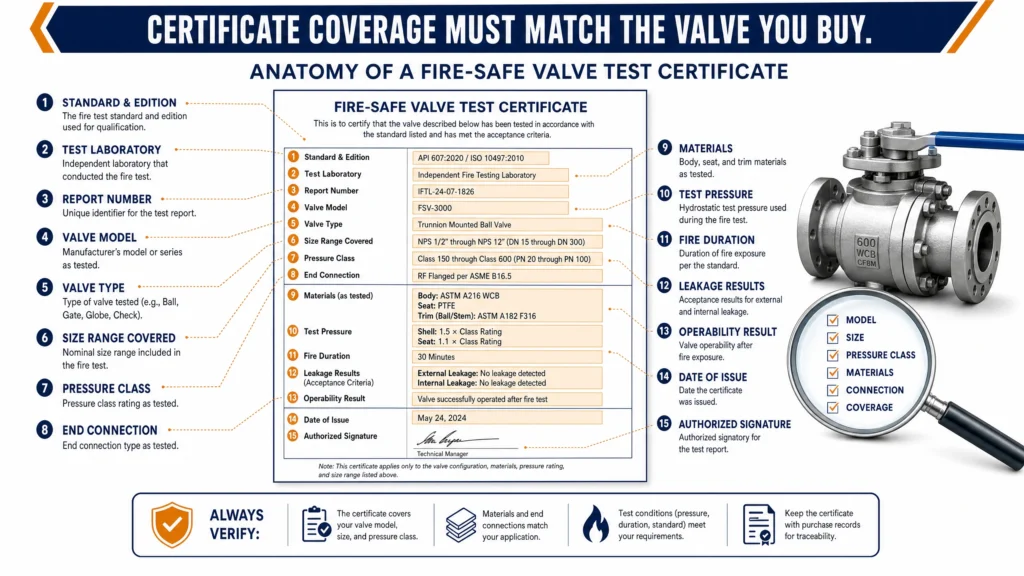
تثبت الشهادة الصالحة للسلامة من الحرائق أن تكوين الصمام المختبر قد استوفى معايير القبول الخاصة بالمعيار المشار إليه في ظل ظروف الاختبار المحددة. يجب أن تحدد نموذج الصمام، ونوع الصمام، والحجم أو نطاق الحجم، وفئة الضغط، والوصلة الطرفية، والمواد، وترتيب المقعد والقطع، وضغط الاختبار، ومدة الاختبار، ونتائج التسرب، ونتائج قابلية التشغيل، ومختبر الاختبار، ورقم التقرير، والإصدار القياسي.
| مجال الشهادة | لماذا يجب على المشترين التحقق من ذلك |
|---|---|
| المعيار والإصدار | يمكن أن تعتمد متطلبات API 607 و API 6FA وقبول المشروع على الإصدار |
| طراز أو سلسلة الصمامات | قد لا تنطبق شهادة لطراز آخر |
| نوع الصمام | الصمامات الكروية والفراشة والسدادة والبوابة والصمامات اللا ارتدادية غير قابلة للتبديل في التغطية |
| نطاق الحجم المشمول | لا تكون تغطية اختبار النوع غير محدودة دائمًا في جميع الأحجام |
| فئة الضغط | قد لا تكون أدلة الفئة 150 مؤهلة لخدمة الفئة 600 |
| خامات المقاعد والزخارف | يتغير سلوك الحريق عندما يتغير المقعد أو الختم أو التغليف أو مواد التغليف أو الزخرفة |
| نهاية الاتصال | يمكن أن تؤثر التوصيلات ذات الحواف أو الملولبة أو الملحومة أو العروة أو الرقاقة أو غيرها من التوصيلات على ملاءمة الاختبار |
| نتائج التسرب | يجب أن تُظهر الشهادة النتائج الفعلية المقاسة أو أساس النجاح/الرسوب |
| معمل الاختبار ورقم التقرير | أهمية التتبع بالنسبة لضمان الجودة والتدقيق وقبول المشروع |
هذا هو المكان الذي غالبًا ما يكتشف فيه المشترون المشاكل. قد تكون الشهادة حقيقية، ولكنها قد تغطي فئة ضغط مختلفة، أو مادة مقعد قديمة، أو وصلة طرفية مختلفة، أو نطاق حجم أصغر من الصمام الذي يتم توريده. هذه ليست تفاصيل ورقية؛ فقد تكون مشكلة في السلامة والقبول.
ما لا تثبته الشهادة
شهادة السلامة من الحرائق ذات قيمة، لكن حدودها لا تقل أهمية عن إثباتها. لا تعني الشهادة أن الصمام مقاوم للحريق إلى الأبد. فهي لا تثبت أن المشغل، أو الملف اللولبي، أو الملف اللولبي، أو جهاز تحديد الموضع، أو مفاتيح الحد، أو الكابلات ستعمل أثناء الحريق ما لم تكن هذه العناصر مشمولة في الاختبار ذي الصلة أو محمية بمقاييس تصميم منفصلة. تنص ملاحظة نطاق GlobalSpec's API 607 على أن المعيار لا يغطي متطلبات اختبار مشغلات الصمامات بخلاف علب التروس التي تعمل يدويًا أو الآليات المماثلة عندما تشكل جزءًا من مجموعة الصمامات العادية؛ قد تحتاج المشغلات الأخرى إلى حماية خاصة، واختبارها ضد الحريق خارج هذا النطاق.
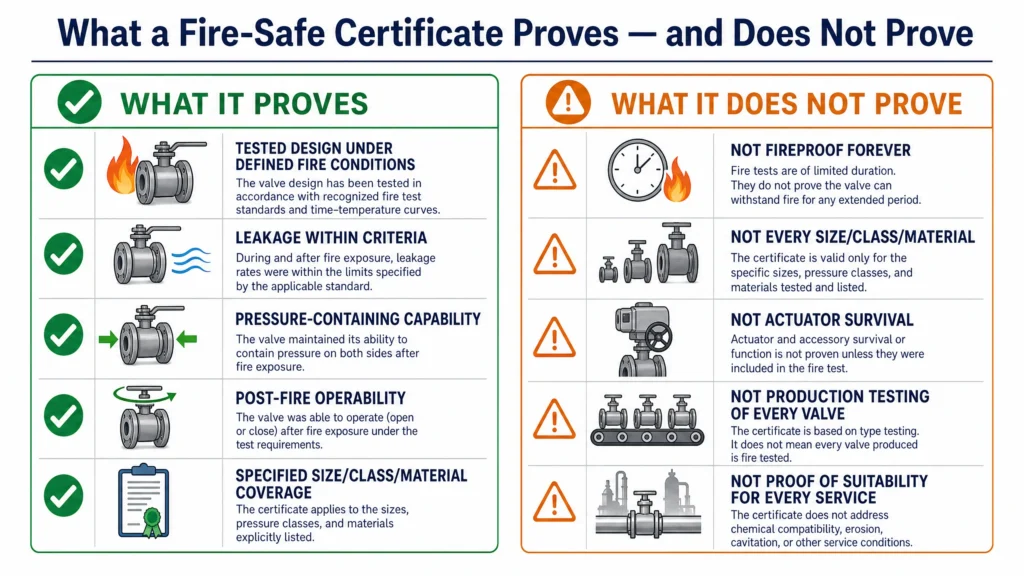
| يمكن أن تثبت الشهادة | لا تثبت الشهادة تلقائيًا |
|---|---|
| استوفى التصميم المختبر معيار اختبار الحريق المحدد | الصمام مقاوم للحريق لأي مدة أو شدة حريق |
| ظل التسرب ضمن المعايير أثناء الاختبار وبعده | يتم تغطية كل حجم ممكن، أو فئة ضغط، أو وصلة طرفية، أو متغير مادة ممكنة |
| احتفظ الصمام بالقدرة على احتواء الضغط في ظروف الاختبار | سيبقى المشغل والملحقات على قيد الحياة ما لم يتم اختباره أو حمايته بشكل منفصل |
| استيفاء قابلية التشغيل بعد الحريق لمتطلبات المعيار | تم اختبار كل صمام إنتاج على حدة من حيث مقاومة الحريق |
| يحتوي التكوين المختبر على أدلة يمكن تتبعها | الصمام مناسب للتآكل أو التآكل أو التآكل أو التبريد أو الخدمة القاسية دون مزيد من المراجعة |
هذا التمييز مهم بشكل خاص بالنسبة لصمامات الإغلاق الآلي في حالات الطوارئ. قد يكون للصمام المكشوف شهادة أمان من الحريق سارية المفعول، ولكن وظيفة الإغلاق الطارئ تعتمد أيضًا على بقاء المشغل، وإمدادات الهواء، والطاقة، وصمامات الملف اللولبي، والكابلات، ومقاومة الحريق، والمنطق، واختبار الإثبات. صمام كارتر اختيار صمام ESD، والتسريب، وزمن السكتة الدماغية الدليل هو رابط داخلي مفيد لربط شهادات الصمامات الآمنة من الحرائق بأداء نظام الإغلاق.
صمامات الفراشة الآمنة من الحرائق: أهمية تصميم المقعد
يمكن أن تكون صمامات الفراشة آمنة من الحرائق، ولكن تفاصيل التصميم مهمة. تعتمد العديد من صمامات الفراشة على المقاعد اللينة للإغلاق المحكم العادي. أثناء الحريق، قد تتحلل المواد غير المعدنية أو تذوب أو تفقد قوة الإغلاق أثناء الحريق. لذلك يحتاج صمام الفراشة الآمن من الحرائق إلى مسار ختم ثانوي أو هندسة ختم احتياطية معدنية احتياطية قادرة على الحد من التسرب بعد تلف الختم اللين الأساسي.
غالبًا ما تظهر صمامات الفراشة مزدوجة الإزاحة عالية الأداء وصمامات الفراشة ثلاثية الإزاحة في المناقشات المتعلقة بالأمان من الحرائق لأن هندسة الإزاحة الخاصة بها يمكن أن تقلل من الاحتكاك وتتيح سلوك إحكام إغلاق ثانوي أكثر موثوقية. صمامات كارتر للصمامات صمام فراشة مزدوج الإزاحة مزدوج الأداء عالي الأداء, صمام فراشة بجلسة معدنية إلى معدنية, و صمام فراشة ثلاثي الإزاحة ثلاثي الضغط الفائق تشرح الموارد سياق التصميم وراء هذا النوع من العزل الشديد للخدمة.
| ميزة التصميم | أهمية السلامة من الحرائق |
|---|---|
| سطح مانع التسرب المعدني الثانوي | يوفر مساراً احتياطياً في حالة تعرض مواد المقعد الناعمة للخطر |
| تغليف الجرافيت أو التغليف المقاوم للحريق | يساعد في الحد من تسرب الساق بعد التعرض لدرجات الحرارة العالية |
| جذع مضاد للانفجار | يساعد في الحفاظ على سلامة حدود الضغط |
| جهاز مضاد للكهرباء الساكنة | يقلل من مخاطر الاشتعال في الخدمة القابلة للاشتعال |
| هندسة الإزاحة | يقلل من تآكل المقعد ويمكن أن يدعم ختمًا أكثر موثوقية في ظل الخدمة الشاقة |
| خطة المشغل/المشغل المناسب/مقاومة الحرائق | يدعم وظيفة الصمام عند الحاجة إلى الأتمتة أثناء حالات الطوارئ |
بالنسبة للعزل الهيدروكربوني الحرج، يجب على المشترين أيضًا مراجعة صمام كارتر فالف دليل التسرب الصفري ثنائي الاتجاه و دليل فئات تسرب الصمامات لتجنب الخلط بين اختبار تسرب المقعد العادي وأداء التسرب في اختبار الحريق.
قائمة مراجعة المشتري: كيفية مراجعة شهادة السلامة من الحرائق
لا ينبغي للمشتريات أن تسأل ببساطة “هل لديك API 607؟ بل السؤال الأفضل هو: ”أرني تقرير اختبار الحريق الذي يثبت أن هذا التصميم الدقيق للصمام، بهذا الحجم/الفئة/المواد أو نطاق التغطية المعتمد، يفي بمعيار المشروع وإصداره المعمول به.“
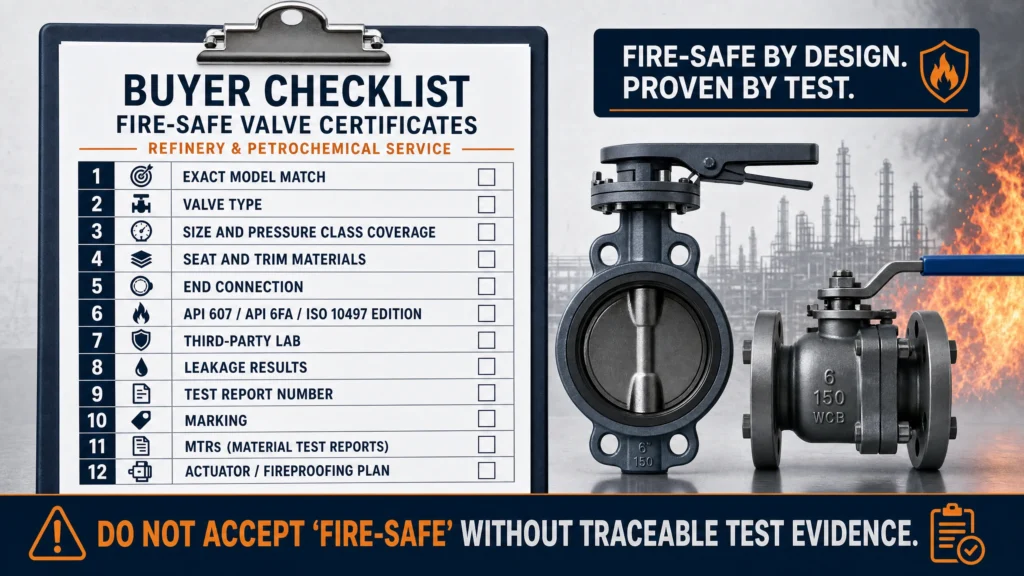
| عنصر القائمة المرجعية | ما الذي يجب التحقق منه |
|---|---|
| طراز الصمام الدقيق | نموذج الشهادة أو السلسلة مطابقة لعرض الأسعار وورقة البيانات |
| نوع الصمام | الفراشة، أو الكرة، أو البوابة، أو البوابة، أو السدادة، أو أي نوع آخر ضمن نطاق الشهادة |
| تغطية الحجم | الحجم المورد مدرج صراحة أو مشمول بقواعد تقرير الاختبار |
| فئة الضغط | يتم تغطية الفئة/التصنيف المقدم من قبل التكوين المختبر |
| خامات المقاعد والزخارف | مقعد ناعم، ودعامة معدنية، وتعبئة جذعية، وحشيات، وشهادة مطابقة الزخرفة |
| نهاية الاتصال | تتطابق البنية ذات الحواف أو الملولبة أو العروة أو الرقاقة أو الملحومة أو مغطاة |
| الإصدار القياسي | يتطابق إصدار API 607/API 6FA/ISO 10497 مع متطلبات المشروع |
| مختبر الاختبار | تم تحديد مختبر طرف ثالث أو سلطة اختبار مقبولة من طرف ثالث |
| بيانات التسرب | تفي نتائج التسرب الداخلي والخارجي بمعايير القبول |
| خطة المشغل | تتم معالجة بقاء الأتمتة أو مقاومة الحرائق بشكل منفصل إذا لزم الأمر |
| التتبع | محاذاة تقارير MTRs والعلامات والرسومات ورقم تقرير الشهادة |
كارتر صمامات كارتر علامات الصمامات وتصنيفها ومعاييرها صفحة مفيدة للتحقق من توافق بيانات لوحة الاسم والوثائق. لاختيار المشروع على نطاق أوسع، كارتر حلول النفط والغاز و فئة صمامات العزل توفير السياق ذي الصلة.
مزالق الشهادات الشائعة
أحد المزالق الشائعة هو قبول شهادة لعائلة صمامات مختلفة لأن أسماء الطرازات تبدو متشابهة. ومن المزالق الأخرى قبول شهادة لنفس الطراز ولكن مادة مقعد مختلفة. وثالثها هو افتراض أن شهادة اختبار الحريق لصمام يعمل يدويًا تثبت أن مجموعة صمامات ESD المشغلة ستعمل خلال الحريق.
المزالق الرابعة هي الخلط بين “آمنة من الحرائق حسب التصميم” و“معتمدة آمنة من الحرائق”. قد يكون لدى المورد تصميم معقول مع تغليف جرافيت ومقاعد معدنية احتياطية، ولكن بدون تقرير اختبار يمكن تتبعه يظل هذا ادعاء تصميمي وليس دليلًا مختبرًا. المأزق الخامس هو تجاهل الإصدار القياسي. قد تكون الشهادة لإصدار أقدم مقبولة في بعض المشاريع القديمة وغير مقبولة في مشاريع أخرى.
تتمثل أكثر ممارسات الشراء أمانًا في إضافة خطوة مراجعة الشهادة قبل إصدار أمر الشراء ومرة أخرى قبل الشحن. إذا كان الصمام ذا مهمة حرجة، قم بإشراك فرق سلامة العمليات والأنابيب والأجهزة وضمان الجودة/مراقبة الجودة في المراجعة بدلاً من ترك الشهادة للمشتريات وحدها.
صياغة المواصفات العملية
يجب أن تنص المواصفات القوية على معيار اختبار الحريق المطلوب والإصدار ونوع الصمام وتوقعات التغطية وحزمة الوثائق. وينبغي أن توضح أيضًا ما إذا كان المشغل والملحقات تتطلب مقاومة للحريق أو مؤهلات منفصلة.
| قسم المواصفات | مثال على مفهوم الصياغة |
|---|---|
| متطلبات اختبار الحريق | “يجب أن يخضع تصميم الصمام لاختبار الحريق وفقًا لمعيار API 607 أو ISO 10497 أو API 6FA أو المعيار المعتمد من المشروع كما هو محدد في ورقة بيانات الصمام.” |
| تغطية الشهادات | “يجب أن تغطي الشهادة الطراز المورد والحجم وفئة الضغط والوصلة الطرفية ومواد المقعد/الحافة.” |
| التوثيق | “يجب على المورد تقديم تقرير كامل عن اختبار الحريق أو شهادة مقبولة أو شهادة اختبار الحريق، واختبارات منتصف المدة، ورسم GA، ومصفوفة الامتثال.” |
| التشغيل | “لا يُفترض أن المشغل والملحقات مختبرة ضد الحرائق ما لم يتم توثيقها على وجه التحديد؛ قدم خطة مقاومة للحريق عند الاقتضاء.” |
| وضع العلامات وإمكانية التتبع | “يجب أن تتماشى علامات الصمامات والرقم التسلسلي مع تقارير الاختبار، وتقارير الاختبارات ومراجعات منتصف المدة وسجلات الفحص.” |
بالنسبة لمشروعات صمامات الفراشة الشديدة، فإن كارتر موجه صمام الفراشة سداسي المركز مقابل موجه صمام الفراشة ثلاثي الإزاحة يمكن أن تساعد المشترين على فهم كيفية تأثير الهندسة على الختم والتآكل وأداء الخدمة القاسية بما يتجاوز الشهادة نفسها.
الخاتمة
API 607 مقابل API 6FA ليست مجرد مقارنة بين المعايير والأسماء. إنها مشكلة في تفسير الشهادة. تثبت شهادة الصمام الآمن من الحرائق أن تكوين الصمام المختبَر يفي بمتطلبات التسرب المحددة واحتواء الضغط وقابلية التشغيل أثناء وبعد اختبار حريق خاضع للرقابة. إنها لا تثبت نجاة غير محدودة من الحرائق، أو تغطية تلقائية لكل حجم/فئة/مادة، أو نجاة المشغل، أو ملاءمته لكل مصفاة أو خدمة بتروكيماوية.
بالنسبة للمشترين، تتمثل أفضل الممارسات في التحقق من المعيار والإصدار، وطراز الصمام الدقيق، والحجم وتغطية فئة الضغط، ومواد المقعد والقطع، والوصلة الطرفية، ونتائج التسرب، ومختبر الاختبار، ورقم التقرير، واستراتيجية المشغل/مقاومة الحريق. يمكن لشركة Carter Valve دعم هذه المراجعة من خلال اختيار صمام الفراشة الآمن من الحرائق، وتصميمات العزل ذات القوالب المعدنية والعزل عالي الأداء، وإرشادات فئة التسرب، والهندسة القائمة على التطبيقات لخدمات الهيدروكربون الحرجة.
الأسئلة المتداولة
ما هو الصمام الآمن من الحرائق؟
الصمام الآمن من الحرائق مصمم ومختبر للحد من التسرب والحفاظ على احتواء الضغط أثناء وبعد التعرض لحريق محدد. وهو ليس مقاومًا للحريق إلى الأبد؛ فهو مؤهل لمعيار اختبار محدد ومدته وضغطه ومعايير قبول التسرب.
ما هو API 607؟
API 607 هو معيار لاختبار الحريق يرتبط عادةً بصمامات ربع الدوران والصمامات ذات المقاعد غير المعدنية. وتصفها قوائم المعايير العامة بأنها طريقة اختبار نوع الحريق لتأكيد القدرة على احتواء الضغط تحت الضغط أثناء وبعد اختبار الحريق.
ما هو API 6FA؟
تم استخدام API 6FA تاريخيًا لاختبار الحرائق لصمامات API 6A وAPI 6D في خدمة الإنتاج وخطوط الأنابيب. تصفه بعض المصادر الحالية بأنه تم سحبه أو دمجه في ممارسة API 607 الأحدث، لذلك يجب على المشترين التحقق من حالة المعيار الرسمي ومتطلبات المشروع.
هل تعني شهادة السلامة من الحرائق أن كل صمام تم شحنه تم اختباره من الحرائق؟
عادةً لا. تعتمد شهادات السلامة من الحرائق عادةً على اختبار النوع لتصميم صمام تمثيلي. وعادةً ما تخضع صمامات الإنتاج لاختبار إنتاج قياسي، وليس اختبار حريق مدمر، ما لم يتطلب المشروع خلاف ذلك صراحةً.
هل يثبت API 607 بقاء المشغل على قيد الحياة؟
ليس تلقائيًا. وتنص ملخصات نطاق API 607 على أن اختبار المشغل بخلاف بعض آليات التروس اليدوية خارج نطاق المعيار. قد تحتاج صمامات ESD المؤتمتة إلى اختبار منفصل للمشغل أو مراجعة تأهيلية منفصلة للمشغل.
هل يمكن أن تغطي شهادة لمقاس معين مقاس آخر؟
في بعض الأحيان، اعتماداً على المعيار والإصدار وتقرير الاختبار وقواعد التغطية. يجب على المشترين عدم افتراض التغطية. يجب أن يكون حجم الصمام المورد وفئة الضغط مدرجين صراحةً أو مشمولين بشكل واضح في التقرير.
ما الذي يجب أن أتحقق من شهادة الصمام الآمن من الحرائق؟
تحقق من المعيار والإصدار، ومختبر الاختبار، ورقم التقرير، وطراز الصمام، ونوع الصمام، ونطاق الحجم، وفئة الضغط، والوصلة الطرفية، ومواد المقعد والحافة، وضغط الاختبار، ونتائج التسرب، ونتائج قابلية التشغيل، وما إذا كانت الشهادة تتطابق مع الصمام المورد.
هل “آمن من الحرائق حسب التصميم” هو نفسه “آمن من الحرائق المعتمد”؟
لا. “آمن من الحرائق حسب التصميم” هو ادعاء تصميمي. يجب أن تعني عبارة “آمن من الحرائق معتمد” أن الصمام قد تم اختباره وتوثيقه وفقًا لمعيار معترف به من قبل هيئة اختبار مقبولة أو طرف ثالث.
المراجع
[2] مواد المشروع - API 607 مقابل API 6FA: معايير اختبار الحرائق
[3] أنظمة التحكم في التدفق SVF - الصمامات الكروية الآمنة من الحرائق: لماذا الاعتماد مهم
[4] صمام درفوس - اختبار السلامة من الحرائق API 6FA و API 607
[5] صمامات NSW - الفرق بين API 607 و API 6FA
[6] صمامات IPC - صمامات آمنة من الحرائق: ما وراء الملصق مع التوافق مع API 607/6FA
[7] صمامات TG - API 607 مقابل معايير اختبار الصمامات الآمنة من الحرائق API 6FA
[8] المعهد الأمريكي للبترول - المعايير
[9] صمام كارتر - دليل اختيار صمام الفراشة للعزل الحرج والخدمة القاسية