






معيار صمام الفراشة API 609 هي مواصفات شراء معهد البترول الأمريكي التي يشيع استخدامها لصمامات الفراشة في مشاريع التكرير والبتروكيماويات والطاقة والكيماويات والأنابيب الصناعية. في لغة المشتري العملية، تساعد API 609 في تحديد ما يجب فحصه لتصميم الصمامات والمواد والأبعاد المواجهة للوجه وتصنيفات الضغط ودرجة الحرارة والفحص والفحص والاختبار.
القرار الأكثر أهمية داخل المعيار هو ما إذا كان الصمام الفئة (أ) أو الفئة ب. تشير الفئة A بشكل عام إلى صمامات الفراشة ذات ضغط العمل البارد المصنفة من قبل الشركة المصنعة، وهي عادةً تصميمات متحدة المركز للمرافق والخدمة العامة. تشير الفئة (ب) إلى صمامات الفراشة المصنفة حسب درجة حرارة الضغط، وهي عادةً ما تكون تصميمات الإزاحة أو عالية الأداء المستخدمة حيث تكون فئة الضغط ودرجة الحرارة وسلامة الإغلاق وسلوك الخدمة القاسية أكثر أهمية.
بالنسبة للمشترين، فإن الاستنتاج المفيد بسيط: “متوافق مع API 609” ليست معلومات كافية لشراء صمام فراشة بأمان. يجب التأكد من الإصدار، والفئة، ونطاق الحجم، والوصلة الطرفية، والبعد المواجه للوجه، وأساس فئة CWP أو ASME، وتصنيف المقعد، وتصنيف الجسم، والمواد، والاختبار، والعلامات، والوثائق. أعلنت API عن الإصدار التاسع من المواصفة القياسية API 609 في عام 2021، مع تاريخ سريان برنامج API Monogram في أكتوبر 2021. وتصف قوائم المواصفات القياسية العامة المواصفة القياسية API STD 609:2021 بأنها نشطة، الإصدار التاسع، وتغطي صمامات الفراشة ذات الحواف المزدوجة والعروة ونوع الرقاقة وصمامات الفراشة ذات نهاية اللحام بالعقب. يشرح هذا الدليل ما يعنيه ذلك بالنسبة لطلبات الشراء الحقيقية.
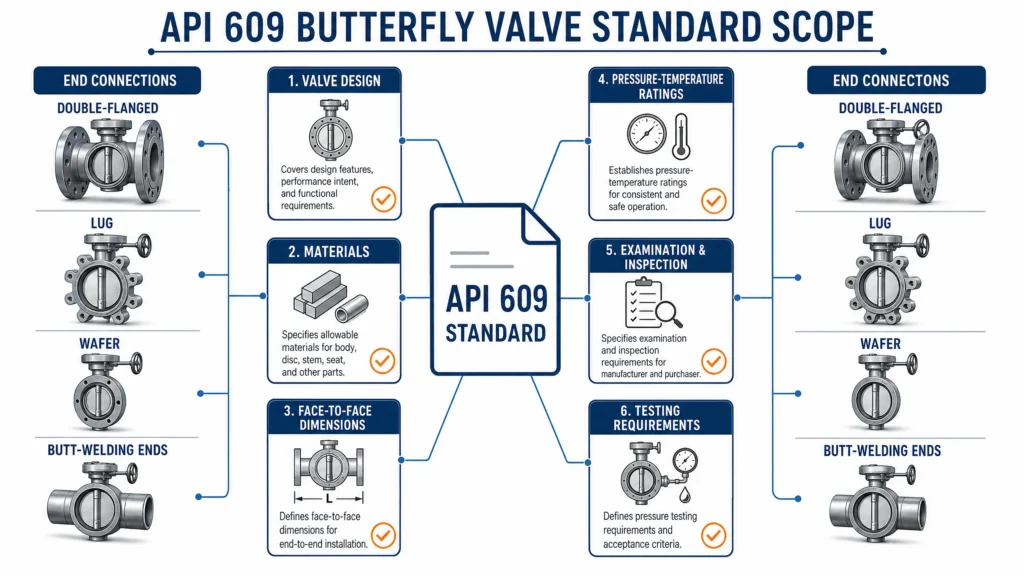
ما يغطيه API 609 - وما لا يحل محله
API 609 ليست علامة تسويقية. إنها مواصفات شراء تخبر المشتري والشركة المصنعة بالحد الأدنى من المتطلبات الفنية التي تنطبق على صمامات الفراشة المغطاة. تنص القوائم العامة لـ API STD 609:2021 على أن المعيار يغطي التصميم، والمواد، وأبعاد الوجه للوجه، وتصنيفات الضغط ودرجة الحرارة، ومتطلبات الفحص والفحص والاختبار بالنسبة لصمامات الفراشة المصنوعة من الحديد الرمادي أو حديد الدكتايل أو البرونز أو الفولاذ أو سبائك النيكل أو مواد السبائك الخاصة.
هذا النطاق واسع، ولكنه ليس مثل القول بأن كل صمام من صمامات API 609 يناسب كل خدمة. يمكن مناقشة كل من صمام الفئة A منخفض الضغط وصمام الفئة B للخدمة الشديدة في إطار API 609، ولكنهما غير قابلين للتبديل. تعمل المواصفة القياسية أيضًا جنبًا إلى جنب مع متطلبات المشروع الأخرى، مثل معايير الشفة، ومعايير الاختبار، وقواعد تصنيف الضغط ودرجة الحرارة، ومواصفات المواد، وفئات التسرب، ومتطلبات السلامة من الحرائق، ومتطلبات الانبعاثات الهاربة، ومعايير المشغل، ومواصفات المستخدم النهائي.
| سؤال المشتري | ما أهمية ذلك |
|---|---|
| ما هو الإصدار المحدد من API 609؟ | قد تشير الرسومات القديمة أو قوالب البائعين إلى إصدار قديم. |
| هل الصمام من الفئة A أم من الفئة B؟ | تحدد الفئة أساس التصنيف وتوقعات التصميم النموذجية وملاءمة الخدمة. |
| ما هو الاتصال النهائي المطلوب؟ | التصاميم ذات الحواف المزدوجة، والعروة، والرقاقة، وتصميمات اللحام بالعقب لها آثار تركيب مختلفة. |
| ما هو البُعد وجهاً لوجه؟ | تتسبب الأبعاد الخاطئة وجهاً لوجه في حدوث مشاكل في التركيب الميداني. |
| ما هي شهادة الاختبار المقدمة؟ | تحتاج مطالبات الامتثال إلى أدلة وليس فقط صياغة الكتالوج. |
| ما هو تصنيف المقعد المطبق؟ | قد يحد تصنيف المقعد أو مانع التسرب من الصمام حتى عندما يكون تصنيف الجسم أعلى. |
كارتر صمامات كارتر أنواع صمام الفراشة دليل تمهيدي داخلي مفيد قبل مقارنة فئات واجهة برمجة التطبيقات. بالنسبة لسياق الأداء العالي والخدمة الشديدة، يمكن للقراء أيضًا مراجعة ما هو صمام الفراشة عالي الأداء؟ وكارتر دليل اختيار صمام فراشة العزل الحرج.
الفئة (أ) مقابل الفئة (ب): الفرق العملي
غالبًا ما يساء فهم الفئة (أ) والفئة (ب) لأنهما يختزلان أحيانًا إلى “صمام رخيص” مقابل “صمام جيد”. هذه ليست العقلية الهندسية الصحيحة. فالفئتان "أ" و"ب" هما مساران مختلفان للمواصفات لمختلف تصميمات الصمامات وظروف الخدمة.
تصف الملخصات الفنية العامة الفئة (أ) كصمامات فراشة ذات ضغط عمل بارد مصنفة من قبل الشركة المصنعة أو CWP، وعادةً ما تكون ذات قرص ومقعد متحدة المركز، وترتبط عادةً بأنماط تثبيت شفة ASME Class 125 أو الفئة 150 في أحجام NPS 2 حتى NPS 48. الفئة ب توصف عادةً بأنها صمامات فراشة مصنفة حسب درجة الحرارة والضغط مع مقعد إزاحة وتكوين قرص غريب الأطوار أو متحدة المركز، مع ملخصات عامة تشير إلى تغطية الحجم مثل NPS 3 حتى NPS 24 للفئات 150 و300 و600. يجب على المشترين التحقق من المتطلبات التعاقدية الدقيقة من المواصفات القياسية الرسمية المشتراة ومواصفات المشروع.
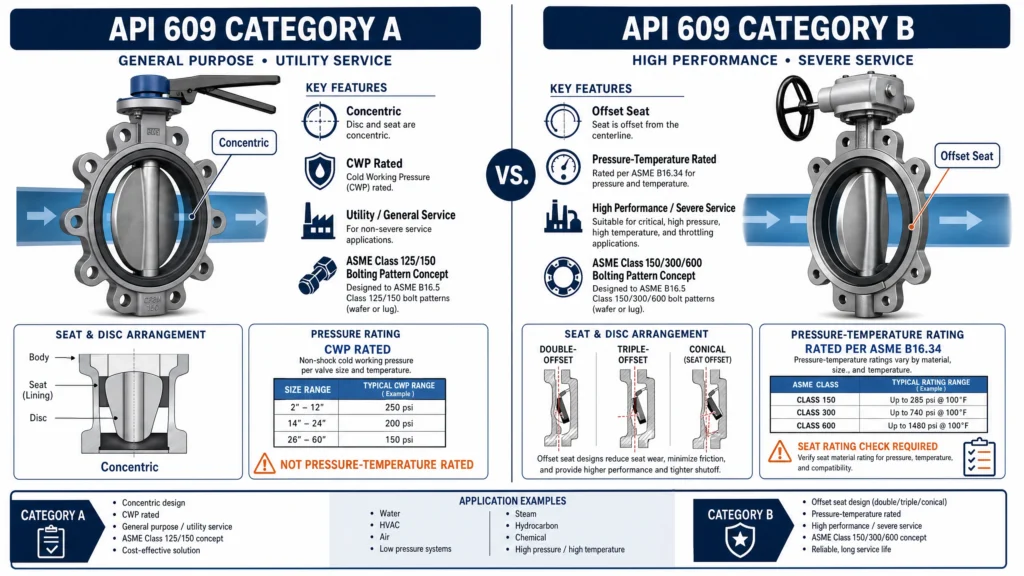
| نقطة المقارنة | API 609 الفئة A | API 609 الفئة B |
|---|---|---|
| مفهوم التصنيف | ضغط العمل البارد المصنف من قبل الشركة المصنعة | تصنيف الضغط ودرجة الحرارة، عادةً على أساس فئة الضغط |
| ارتباط التصميم المشترك | قرص ومقعد متحد المركز | إزاحة المقعد؛ إزاحة مزدوجة أو ثلاثية أو تصميمات عالية الأداء شائعة |
| الخدمة النموذجية | المرافق العامة، والمياه، والهواء، والخدمات منخفضة المخاطر | خدمة التكرير أو المواد الكيميائية أو البخار أو الهيدروكربونات أو الحرارة العالية أو الضغط العالي |
| سلوك المقعد | غالبًا ما تكون مرنة أو مبطنة بالمطاط، مع تلامس تداخل | غالباً ما تكون مصممة لتقليل احتكاك المقعد وتحسين عمر الدورة |
| مخاطر المشتري | سوء التطبيق على الخدمة الشديدة | لا يزال يجب التحقق من تصنيف المقعد، وتصنيف الجسم، وأدلة الاختبار |
| نبذة عن التكلفة | تكلفة اقتناء أقل | تكلفة اقتناء أعلى ولكن غالبًا ما تكون أكثر ملاءمة لدورة حياة أفضل في الخدمة المطلوبة |
يمكن أن تكون الفئة أ مناسبة تمامًا للمهمة المناسبة. لا يحتاج خط مياه المرافق، أو خدمة التدفئة والتهوية وتكييف الهواء، أو نظام الضغط المنخفض غير الخطر إلى نفس الصمام الذي يحتاجه خط عزل المصفاة ذات درجة الحرارة العالية. تصبح الفئة (ب) هي المناقشة الأكثر ملاءمة عندما يحتاج المشتري إلى انضباط تصنيف الضغط ودرجة الحرارة، أو إزاحة المقاعد، أو تحسين عمر الدورة، أو إغلاق أكثر إحكامًا، أو قدرة ضغط تفاضلي أعلى، أو أساس لاختيار صمام فراشة عالي الأداء.
لماذا تعتبر الفئة (ب) مهمة بالنسبة لـ HPBV، والإزاحة الثلاثية، والخدمة الشديدة
غالبًا ما تتم مناقشة صمامات الفراشة عالية الأداء وصمامات الفراشة ثلاثية الإزاحة في سياق الفئة B لأنها مبنية حول هندسة الإزاحة والخدمة المصنفة حسب درجة حرارة الضغط. يقلل صمام الفراشة مزدوج الإزاحة عالي الأداء من احتكاك المقعد مقارنةً بالصمام متحد المركز. ويذهب صمام الإزاحة الثلاثية إلى أبعد من ذلك باستخدام هندسة ختم مخروطية تهدف إلى تقليل الاحتكاك ودعم الختم من المعدن إلى المعدن في الخدمات الصعبة.
كارتر صمامات كارتر صمام فراشة مزدوج الإزاحة مزدوج الأداء عالي الأداء مناسب عندما تكون هناك حاجة إلى عزل دوّار مدمج عالي الأداء. بالنسبة لمتطلبات الضغط العالي ودرجة الحرارة والعزل الحرج، فإن كارتر صمام فراشة ثلاثي الإزاحة ثلاثي الضغط الفائق و صمام فراشة بجلسة معدنية إلى معدنية تساعد الموارد في شرح سبب أهمية الهندسة ومواد المقعد.
لا تعني الفئة ب تلقائيًا أن الصمام مناسب لكل خدمة قاسية. لا يزال المشترون بحاجة إلى التحقق من مادة الهيكل، ومواد القطع، وتصنيف المقعد، واختبار التسرب، وحد درجة الحرارة، وبدل التآكل، وعمر الدورة، والضغط التفاضلي عند الإغلاق، وعزم دوران المشغل، وما إذا كانت المعايير الخاصة بالمشروع تضيف متطلبات تتجاوز API 609. في حالات العزل الحرجة، تعتبر عبارة “الفئة ب” نقطة البداية وليست معيار القبول النهائي.
تاريخ الإصدار: لماذا يجب على المشترين التحقق من الإصدار الحالي
المعايير تتطور. قد لا تعكس مواصفات الشراء المكتوبة قبل خمس سنوات نفس الإصدار الذي يستخدمه المصنعون الحاليون أو المدققون أو فرق ضمان الجودة/مراقبة الجودة في المشروع. أصدرت API إشعارًا في 5 مايو 2021 ينص على أن الإصدار التاسع من المواصفة القياسية API 609 قد نُشر وأن كان تاريخ بدء سريان برنامج API Monogram في أكتوبر 2021. تحدد قائمة المواصفات القياسية العامة API STD 609:2021 على أنها نشطة، الإصدار التاسع، 34 صفحة، وسنة الوثيقة 2021.
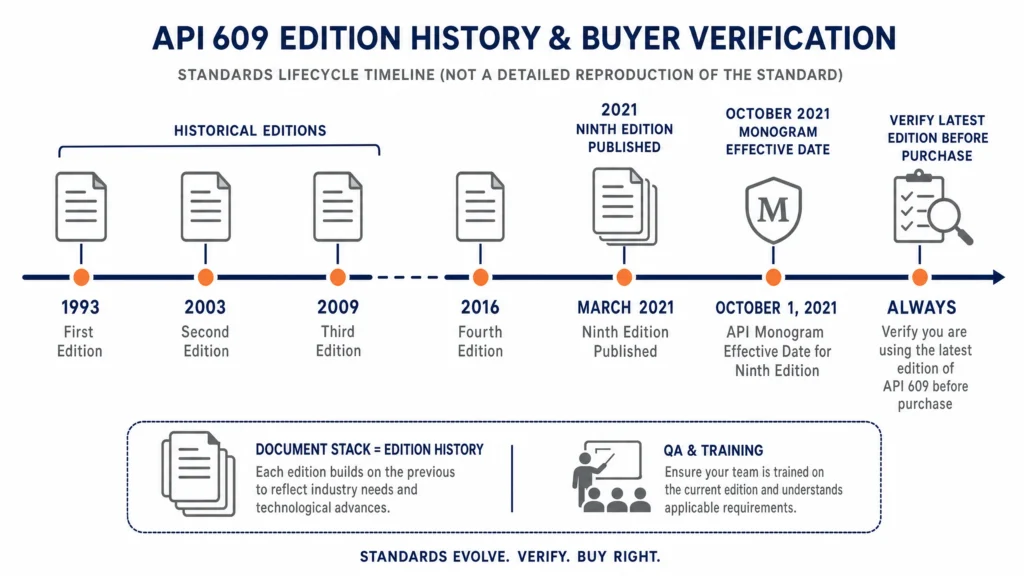
| نقطة تفتيش الإصدار | إجراء المشتري |
|---|---|
| مراجع مواصفات المشروع API 609 | تأكد من سنة الإصدار أو عبارة “أحدث إصدار” مع مالك المشروع. |
| يقول عرض أسعار البائع “متوافق مع API 609” | اسأل عن الإصدار والفئة التي يتم اقتباسها. |
| يتم إعادة استخدام الرسومات من المشاريع القديمة | تحقق من الأبعاد وجهًا لوجه والعلامات ومراجع الاختبار مقابل متطلبات المشروع الحالية. |
| تتم المطالبة بمونوغرام أو شهادة API | طلب الأدلة ذات الصلة بالشركة المصنعة ونطاق المنتج والإصدار. |
| العقد له معايير متضاربة | حل التسلسل الهرمي قبل منح أمر الشراء. |
لغة طلب الشراء الأكثر أمانًا ليست “صمام API 609”. بل تكون أكثر تحديدًا: “يجب أن يتوافق صمام الفراشة مع API 609، [الإصدار المحدد أو أحدث إصدار كما هو محدد تعاقديًا]، الفئة ب، الفئة 300، العروة أو الطرف ذو الحواف المزدوجة كما هو مدرج، مع المواد والأبعاد وجهًا لوجه والاختبار ووضع العلامات والتوثيق وفقًا لورقة بيانات المشروع.” تختلف الصياغة الدقيقة، ولكن المبدأ واحد: إزالة الغموض قبل التصنيع.
يجب على المشترين التعرف على API 609 والمعايير ذات الصلة
API 609 لا يعيش بمفرده. غالبًا ما تشتمل مشاريع صمامات الفراشة على ASME B16.34 وAPI 598 وASME B16.5 وASME B16.10 وASME B16.10 وISO 5208 ووثائق MSS ومعايير السلامة من الحرائق ومعايير الانبعاثات الهاربة ومواصفات المستخدم النهائي. وتنص المواصفة القياسية ASME B16.34 على أنها تغطي تصنيفات الضغط ودرجة الحرارة والأبعاد والتفاوتات والمواد ومتطلبات الفحص غير التدميري والاختبار ووضع العلامات لمختلف تركيبات الصمامات الجديدة، بما في ذلك الصمامات الرقاقة أو عديمة الحواف التي يتم التعامل معها كصمامات ذات حواف في المعيار. ينص معهد البترول الأمريكي API على أن مواصفاته تستند إلى توافق في الآراء ومعتمدة من ANSI، وتهدف إلى دعم السلامة وحماية البيئة والموثوقية في عمليات النفط والغاز.
| مادة ذات صلة | لماذا يجب أن يهتم المشترون |
|---|---|
| واجهة برمجة التطبيقات API 598 | غالبًا ما يرتبط بفحص الصمامات وتوقعات اختبار الضغط في مشتريات صمامات API. |
| ASME B16.34 | تصنيف الضغط ودرجة الحرارة، والمواد، والبناء، والاختبار، وسياق وضع العلامات للعديد من الصمامات. |
| ASME B16.5 / B16.47 | واجهة الشفة وتوافق البراغي. |
| المعيار ASME B16.10 / ISO 5752 | توقعات الأبعاد وجهاً لوجه عند الاقتضاء. |
| ISO 5208 / EN 12266 | قد تظهر لغة معدل التسرب في مواصفات المشاريع الدولية. |
| API 607 أو ISO 10497 | قد يلزم إجراء اختبار السلامة من الحرائق لخدمات هيدروكربونية مختارة. |
| معايير الانبعاثات الهاربة | يمكن إضافة متطلبات التعبئة والتسرب الجذعي من قبل المالك. |
بالنسبة للغة التسريب، فإن دليل كارتر لـ فئات تسرُّب الصمامات بما في ذلك API 598، وFCCI 70-2، وISO 5208 يساعد الفرق على تجنب خلط المعايير التي تقيس أشياء مختلفة في ظروف مختلفة. كارتر علامات الصمامات وتصنيفها ومعاييرها تعتبر المقالة متابعة مفيدة أخرى للمشترين الذين يراجعون لوحات الأسماء وصحائف البيانات.
ما الذي يجب على المشترين التحقق منه قبل الطلب
عادة ما تحدث أخطاء API 609 الأكثر تكلفة قبل تقديم طلب الشراء. يتلقى المشتري عرض أسعار منخفض، ويرى “API 609” في الوصف، ويفترض أن جميع المخاوف الفنية مغطاة. وهذا الافتراض خطير.
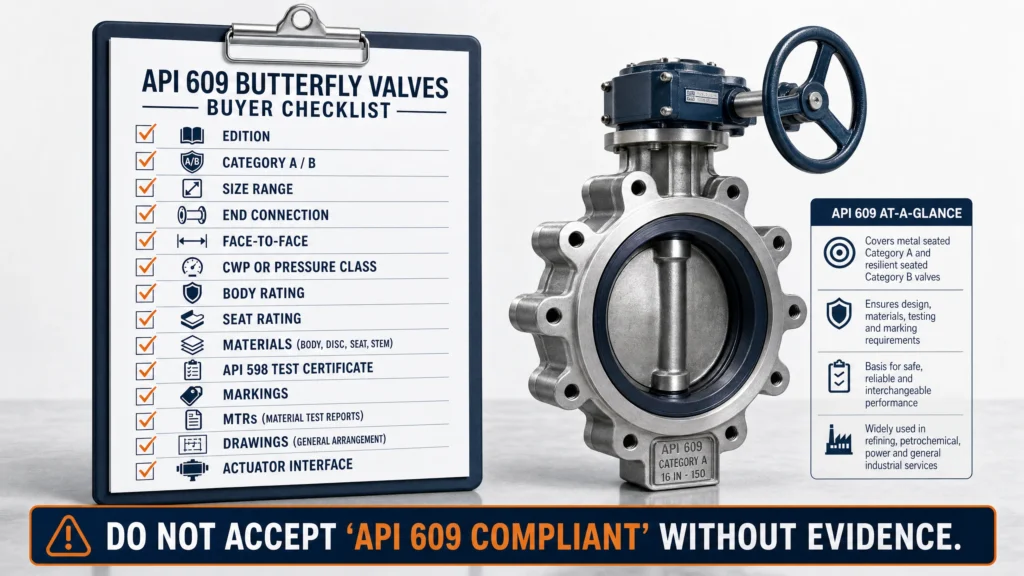
| نقطة تفتيش المشتري | ما يجب طلبه من المورد |
|---|---|
| الإصدار | سنة إصدار API 609 وتأكيدها مقابل مواصفات المشروع |
| الفئة | الفئة (أ) أو الفئة (ب) مذكورة بوضوح في عرض الأسعار وورقة البيانات |
| الحجم والفئة | NPS/DN، وفئة ASME أو CWP، ونمط تثبيت الشفة |
| نهاية الاتصال | رقاقة، أو عروة، أو ذات حواف مزدوجة، أو طرف لحام بالعقب |
| وجهاً لوجه | الأبعاد، والتسامح، والمرجع القياسي |
| تصنيف الجسم | تصنيف الضغط ودرجة الحرارة لمواد الجسم |
| تصنيف المقعد | تصنيف درجة حرارة ضغط المقعد/الختم، خاصة إذا كان أقل من تصنيف الجسم |
| المواد | الهيكل، والقرص، والساق، والساق، والمقعد، والتغليف، والبراغي، والطلاء أو التلبيسات الصلبة |
| الاختبار | اختبار الهيكل، واختبار المقعد، والمقعد الخلفي عند الاقتضاء، وشهادة الفحص/الاختبار |
| وضع العلامات | فئة API 609، والحجم، والفئة/التصنيف، والمادة، واتجاه التدفق إن أمكن، وإمكانية التتبع |
| التوثيق | رسم GA، واستعراضات منتصف المدة، وتقارير الاختبار، وIOM، وبيانات عزم دوران المشغل، وبيان الامتثال |
يجب أن يسأل المشترون أيضًا عما إذا كان الصمام مخصصًا للعزل عند التشغيل/إيقاف التشغيل، أو الاختناق، أو التفريغ الكهرومغناطيسي، أو الخدمة عالية الدورة، أو الخدمة المسدودة، أو السوائل المسببة للتآكل، أو السوائل الكاشطة، أو البخار، أو التفريغ، أو التشغيل في درجات حرارة عالية. لا تجيب فئة API 609 وحدها على أسئلة الخدمة هذه.
مزالق الشراء الشائعة في API 609
المزالق الأولى هي تطبيق الفئة (أ) حيث تتطلب الخدمة بالفعل الفئة (ب) أو تصميمًا هندسيًا للخدمة القاسية. قد يكون صمام المنفعة من الفئة أ ممتازًا في خدمة المياه ويظل الخيار الخاطئ لخدمة الهيدروكربونات أو البخار أو درجات الحرارة العالية أو خدمة العزل الحرجة.
المأزق الثاني هو تجاهل الأبعاد وجهًا لوجه. مشاكل التجهيز الميداني مكلفة لأنها تظهر بعد أن يتم تصنيع الرسومات أو بكرات الأنابيب أو الصمامات بالفعل. يجب أن يحدث التأكيد وجهاً لوجه في مرحلة عرض الأسعار ومرة أخرى أثناء الموافقة على الرسم.
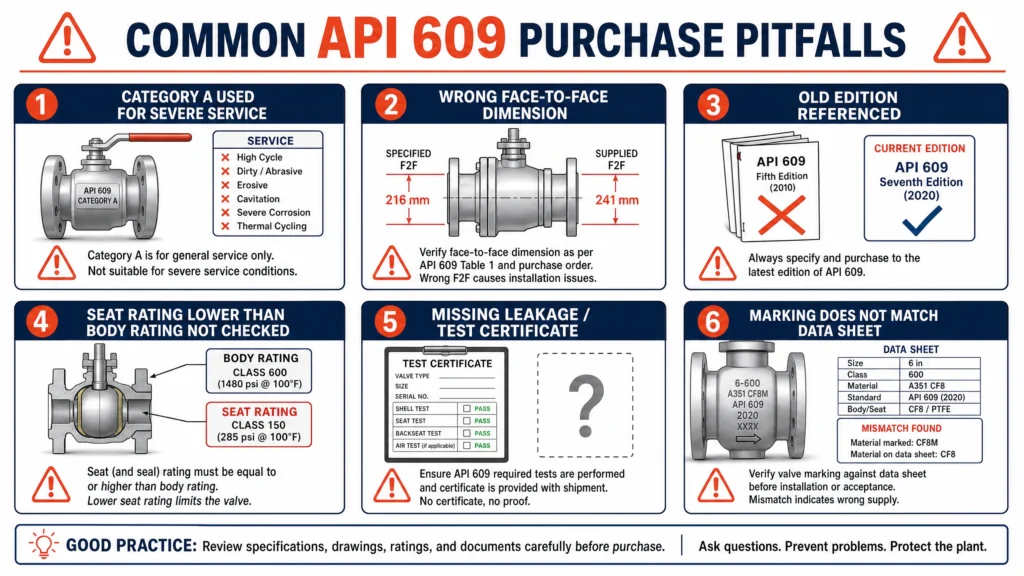
| بيتفول | العواقب | الوقاية |
|---|---|---|
| “متوافق مع API 609” بدون فئة "API 609 | يمكن شراء نوع الصمام الخاطئ | تتطلب الفئة (أ) أو (ب) في ورقة البيانات |
| الإصدار القديم المشار إليه | عدم تطابق ضمان الجودة أو الفحص | تأكيد الإصدار قبل طلب عرض الأسعار ومنح أمر الشراء |
| وجهاً لوجه لم يتم التحقق منها | مشكلة تركيب الأنابيب | مراجعة رسم GA والتفاوتات في الأبعاد |
| تم تجاهل تصنيف المقعد | قد لا يتعامل الصمام مع حالة الضغط-درجة الحرارة المطلوبة | اطلب تصنيف المقعد بشكل منفصل عن تصنيف الجسم |
| شهادة الاختبار مفقودة | لا يوجد دليل على الفحص أو قبول التسرب | طلب مستندات الاختبار قبل الشحن |
| عدم تطابق العلامات | قد يتم تركيب صمام خاطئ | مقارنة لوحة الاسم، وتقارير MTRs، والرسومات، وبند أمر الشراء |
| الفئة ب يفترض أن تكون جاهزة للخدمة الشديدة | مواد غير مطابقة للمواصفات أو تصميم المقعد | إضافة متطلبات درجة الحرارة، والتسرب، والدورة الخاصة بالمشروع |
لن ينزعج المورد الجيد من هذه الأسئلة. في الواقع، يفضل الموردون المنضبطون المتطلبات الواضحة لأنها تقلل من إعادة العمل ونزاعات الضمان والشكاوى الميدانية.
كيفية كتابة مواصفات شراء API 609 أفضل من مواصفات API 609
يجب أن تربط المواصفات العملية بين API 609 والخدمة الفعلية. على سبيل المثال، قد يتطلب صمام فراشة مرفق المعالجة الفئة A، وتصنيف CWP، ومقعد EPDM أو NBR، ووثائق الاختبار الأساسية. قد يتطلب صمام العزل الهيدروكربوني للمصفاة الفئة ب، وتصنيف ASME Class 300، وتصميم مزدوج الإزاحة أو ثلاثي الإزاحة واختبار الأمان من الحريق، ومقعد معدني أو مقعد قائم على PTFE حسب درجة الحرارة، وشهادة اختبار API 598، واختبارات MTRs، وبيانات عزم دوران المشغل.
| قسم المواصفات | مفهوم الصياغة القوية |
|---|---|
| الأساس القياسي | “يجب أن يتوافق الصمام مع API 609، الفئة ب، أحدث إصدار معتمد من المشروع.” |
| الخدمة | “عزل الهيدروكربون، درجة حرارة التشغيل X، الضغط التصميمي Y، الضغط التفاضلي Z.” |
| التقييم | “يجب أن يفي معدل ضغط ودرجة حرارة الجسم بفئة ASME وفئة أنابيب المشروع.” |
| المقعد | “يجب أن يكون تصنيف المقعد مناسبًا لدرجة حرارة الخدمة الكاملة والضغط التفاضلي.” |
| الاختبار | “يجب على المورد تقديم سجلات اختبار التسرب الهيدروستاتيكي وتسرب المقعد وفقًا لمعيار الاختبار المعتمد من المشروع.” |
| وضع العلامات | “يجب أن تتطابق علامات الصمامات مع ورقة البيانات المعتمدة، واختبارات منتصف المدة وشهادة الاختبار.” |
| التوثيق | “تقديم رسومات GA، واستعراضات منتصف المدة، ومصفوفة الامتثال، وIOM، وصحيفة تحجيم المشغل.” |
تدعم شركة Carter Valve هذا النوع من انضباط المواصفات من خلال اختيار صمام الفراشة المصمم هندسيًا، ومراجعة العزل في الخدمة الشديدة، وأنظمة الصمامات الجاهزة للتشغيل. بالنسبة للمستخدمين النهائيين الذين يقارنون بين تصميمات الإزاحة، فإن المقال عن صمامات الفراشة سداسية المركز مقابل صمامات الفراشة ثلاثية الإزاحة يشرح لماذا تصبح الهندسة مهمة في أداء الختم الحرج والتآكل.
الفئة (أ) أو الفئة (ب): إطار عمل قرار المشتري
يجب أن يبدأ قرار الفئة بالمخاطر وليس بالسعر. إذا كان الصمام يعمل في المياه النظيفة أو التدفئة والتهوية وتكييف الهواء أو الهواء المضغوط أو خدمة المرافق العامة منخفضة الضغط، فقد تكون الفئة أ هي الخيار العملي والاقتصادي. إذا كان الصمام في خدمة التكرير أو البتروكيماويات أو البخار أو الكيماويات أو المواد الكيميائية أو الضغط العالي أو درجات الحرارة العالية أو الدورية أو التآكل أو التآكل أو التآكل أو التفريغ الكهرومغناطيسي أو خدمة العزل الحرجة، فعادةً ما تكون الفئة ب هي الفئة التي تستحق التقييم التفصيلي.
| حالة الخدمة | الفئة (أ) على الأرجح؟ | الفئة ب على الأرجح؟ |
|---|---|---|
| مياه نظيفة، ضغط منخفض | في كثير من الأحيان نعم | عادة لا يكون ضرورياً إلا إذا كان معيار المشروع يتطلب ذلك |
| التدفئة والتهوية وتكييف الهواء أو المرافق العامة | في كثير من الأحيان نعم | في بعض الأحيان، إذا كانت هناك حاجة إلى تصنيف أعلى أو مواد خاصة |
| بخار أو زيت ساخن | عادةً لا يوجد | في كثير من الأحيان نعم، مع مراجعة درجة حرارة المقعد/المادة |
| العزل الهيدروكربوني | عادةً لا يوجد | في كثير من الأحيان نعم، بالإضافة إلى مراجعة التسرب ومراجعة السلامة من الحرائق |
| الخدمة الكيميائية | يعتمد على الضغط والمواد | في كثير من الأحيان نعم للخدمة المسببة للتآكل أو الخطرة |
| دورة عالية | محدودة حسب التصميم وارتداء المقعد | مرشح أفضل إذا كان تصميم الإزاحة والمواد مناسبة |
| العزل الحرج | نادرًا ما يكفي وحده | الفئة باء بالإضافة إلى متطلبات التسرب/الاختبار الخاصة بالمشروع |
بالنسبة لخدمات المصنع التي يكون فيها التسرب غير مقبول، فإن مقالة كارتر عن تسرب صفري ثنائي الاتجاه في الخدمة الشديدة سياقًا إضافيًا حول سبب وجوب دعم مطالبات الإغلاق بشروط اختبار وأدلة تصميمية.
الخاتمة
يعتبر API 609 معيارًا أساسيًا لشراء صمام الفراشة من معايير API 609، ولكن لا ينبغي للمشترين التعامل معه كبديل من سطر واحد للمراجعة الهندسية. الأسئلة الحاسمة هي ما إذا كان الصمام الفئة (أ) أو الفئة (ب), وما هي الطبعة المحددة، وما هي الوصلة الطرفية والبُعد المواجه للوجه المنطبق، وما إذا كان الصمام مصنفًا في درجة حرارة الضغط أو درجة حرارة الضغط، وما إذا كان المقعد والجسم والمواد والعلامات وشهادات الاختبار تدعم الخدمة الفعلية.
بالنسبة لفرق المشتريات والهندسة والمشتريات والإنشاءات وهندسة المصانع، فإن سير العمل الأكثر أمانًا هو كتابة الفئة والإصدار وشروط الخدمة ومتطلبات التسرب ومتطلبات الاختبار وحزمة الوثائق في طلب تقديم العروض وطلب الشراء. يمكن لشركة Carter Valve دعم مناقشات API 609 ذات الصلة بصمامات الفراشة عالية الأداء، وتصميمات العزل الثلاثية الإزاحة والسداسية المركزية، وإرشادات فئة التسرب، ومراجعة علامات الصمام، واختيار الخدمة الشديدة القائمة على التطبيق.
الأسئلة المتداولة
ما هو API 609 لصمامات الفراشة؟
API 609 هو معيار معهد البترول الأمريكي API 609 يستخدم كمواصفات شراء لصمامات الفراشة المغطاة. وتصفها القوائم العامة بأنها تغطي التصميم، والمواد، والأبعاد المواجهة للوجه، وتصنيفات الضغط ودرجة الحرارة، ومتطلبات الفحص والفحص والاختبار للعديد من تركيبات ومواد صمامات الفراشة.
ما هو الفرق بين الفئة أ والفئة ب من API 609 والفئة ب؟
توصف الفئة (أ) عادةً بأنها صمامات فراشة ذات ضغط عمل بارد مصنفة من الشركة المصنعة، وعادةً ما تكون تصميمات متحدة المركز للمرافق والخدمات العامة. توصف الفئة (ب) عادةً بأنها صمامات فراشة مصنفة حسب درجة حرارة الضغط، وغالبًا ما تكون ذات تصميمات مقاعد متوازنة تستخدم للخدمات ذات الأداء العالي أو الخدمات الأكثر تطلبًا.
هل الفئة (ب) من API 609 أفضل دائمًا من الفئة (أ)؟
لا، الفئة (ب) ليست “أفضل” لكل استخدام؛ فهي أكثر ملاءمة لبعض الخدمات ذات تصنيف الضغط ودرجة الحرارة العالية والأداء العالي. يمكن أن تكون الفئة (أ) الخيار الاقتصادي الصحيح لخدمة المرافق النظيفة ذات الضغط المنخفض.
ما هو الإصدار الحالي من API 609؟
تشير القوائم العامة إلى أن API STD 609:2021 هو الإصدار التاسع النشط، وقد أعلنت API عن الإصدار التاسع في عام 2021 مع تاريخ سريان برنامج API Monogram في أكتوبر 2021. يجب على المشترين التحقق دائمًا من أحدث إصدار من خلال قنوات API أو قنوات المواصفات القياسية الرسمية قبل الشراء.
هل تتضمن API 609 متطلبات الاختبار؟
تصف القوائم العامة API 609 بأنها تغطي متطلبات الفحص والفحص والاختبار. من الناحية العملية، يجب على المشترين طلب شهادات اختبار محددة وتوضيح معايير الاختبار ذات الصلة مثل API 598 أو معايير التسرب الخاصة بالمشروع حيثما ينطبق ذلك.
هل يمكن استخدام صمام API 609 من الفئة A في خدمة التكرير؟
ويعتمد ذلك على الخدمة، ولكن الفئة (أ) ترتبط عمومًا بالتطبيقات ذات المخاطر المنخفضة والضغط المنخفض على غرار المرافق. أما بالنسبة للمصافي الهيدروكربونية أو البخار أو درجات الحرارة العالية أو التفريغ الكهرومغناطيسي أو خدمة العزل الحرجة، فعادة ما يقوم المشترون بتقييم الفئة ب ومتطلبات المشروع الإضافية.
ما الذي يجب أن يطلبه المشترون مع عرض أسعار صمام فراشة API 609؟
اسأل عن الإصدار، والفئة، والحجم، وفئة الضغط أو CWP، والوصلة الطرفية، والبعد المواجه للوجه، وتصنيف الجسم، وتصنيف المقعد، والمواد، وشهادات الاختبار، والعلامات، ومقاييس MTRs، ورسومات GA، وبيانات عزم دوران المشغل، ومصفوفة التوافق مع مواصفات الشراء.
هل عبارة “متوافق مع API 609” كافية لطلب الشراء؟
لا، فالعبارة غامضة جداً في حد ذاتها. يجب أن يحدد طلب الشراء الفئة، والإصدار، وشروط الخدمة، والمواد، وتصنيف الضغط ودرجة الحرارة، ومتطلبات التسرب/الاختبار، والوثائق، ونقاط تعليق الفحص.
المراجع
[1] API - معيار API 609، إشعار تحديث الإصدار التاسع، 5 مايو 2021
[2] BSB Edge - تفاصيل معيار API STD 609:2021 القياسي API STD 609:2021
[3] صمامات ZECO - الاختلافات بين صمامات الفراشة من الفئة A والفئة B من API 609
[4] ASME - B16.34 الصمامات: ذات حواف وملولبة وملولبة وملحومة الأطراف
[5] المعهد الأمريكي للبترول - المعايير
[6] صمامات JH - API 609 الفئة B مقابل A.
[7] صمام كارتر - دليل اختيار صمام الفراشة للعزل الحرج والخدمة القاسية
[8] صمام كارتر - فئات تسرب الصمامات: api 598، Fci 70-2، ISO 5208