





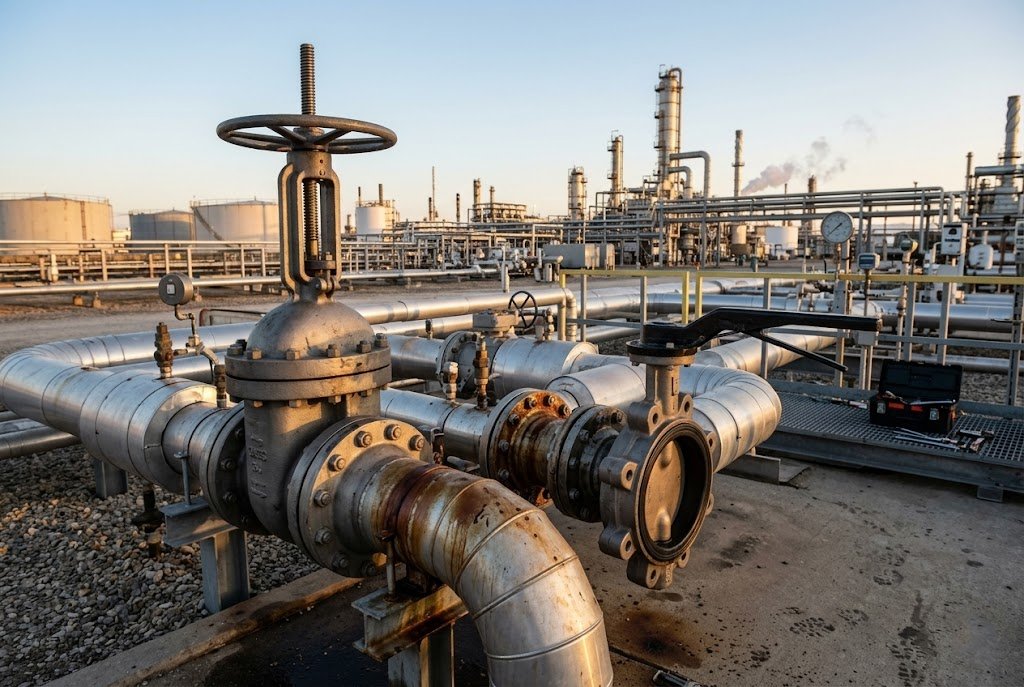
التكلفة الإجمالية للملكية مقابل صمام البوابة مقابل صمام الفراشة هو قرار عزل المصفاة الذي يتجاوز سعر طلب الشراء. فغالبًا ما يتم تقييم صمام البوابة نظرًا لمسار تدفقه الكامل، وتاريخه المألوف في المصفاة، وانخفاض الضغط المنخفض عند فتحه بالكامل. وغالبًا ما يتم تقييم صمام الفراشة المصمم هندسيًا، وخاصةً صمام الفراشة ثلاثي الإزاحة المعدني أو التصميم متعدد المراكز، بسبب حجمه الصغير، ووزنه المنخفض، وتشغيله الأسرع، والتشغيل الآلي الأسهل، وعبء التركيب الأقل. الاستنتاج العملي واضح: بالنسبة لخدمة عزل المصفاة، فإن الصمام الأقل تكلفة من حيث التكلفة - أي الصمام الذي يقلل من مخاطر دورة الحياة - تكلفة الشراء، والتركيب، والتشغيل، والتسرب، والصيانة، ووقت التحول، وفقدان الطاقة، ووقت التعطل - وليس بالضرورة الصمام الأقل سعرًا في البداية.
عادةً ما يتم تأطير تكلفة التكلفة الإجمالية للملكية للصمامات على أنها تكلفة الاقتناء بالإضافة إلى تكلفة التشغيل بالإضافة إلى تكلفة المخاطر، بما في ذلك الصيانة وقطع الغيار والطاقة والتسرب ووقت التوقف غير المخطط له. في مجال التكرير، يمكن أن تهيمن تكلفة المخاطر على الحساب لأن صمام العزل المتسرب أو المضبوط أو الذي يصعب صيانته قد يؤخر عملية التحول أو يمدد فترة توقف الوحدة أو يخلق مخاوف بشأن احتواء الهيدروكربون. تشير API إلى أن معاييرها الخاصة بالنفط والغاز تم تطويرها لتعزيز السلامة وحماية البيئة والموثوقية التشغيلية، بينما تغطي المواصفة ASME B16.34 تصنيفات درجة حرارة الضغط والمواد والاختبار ووضع العلامات ومتطلبات البناء للعديد من أنواع الصمامات. تحوّل هذه المقالة هذه المبادئ إلى سير عمل عملي للمقارنة بين صمامات البوابة وصمامات الفراشة في خدمة عزل المصفاة.
لماذا يختلف التكلفة الإجمالية لصمام عزل المصفاة عن صمام التكرير
عادةً ما يقضي صمام العزل في المصفاة معظم حياته مفتوحًا بالكامل أو مغلقًا بالكامل. يبدو ذلك بسيطًا إلى أن تكون هناك حاجة إلى الصمام أثناء الإغلاق، أو عزل كسر الخط، أو صيانة المضخة، أو حدث معالجة المحفز، أو خروج البخار، أو نقل الهيدروكربون، أو إجراء طارئ. في تلك اللحظة، لا تكون التكلفة الحقيقية للصمام هي سعر فاتورته؛ بل ما إذا كان الصمام يغلق، ويغلق، ويمكن تشغيله بأمان، ويمكن صيانته دون تمديد المسار الحرج.
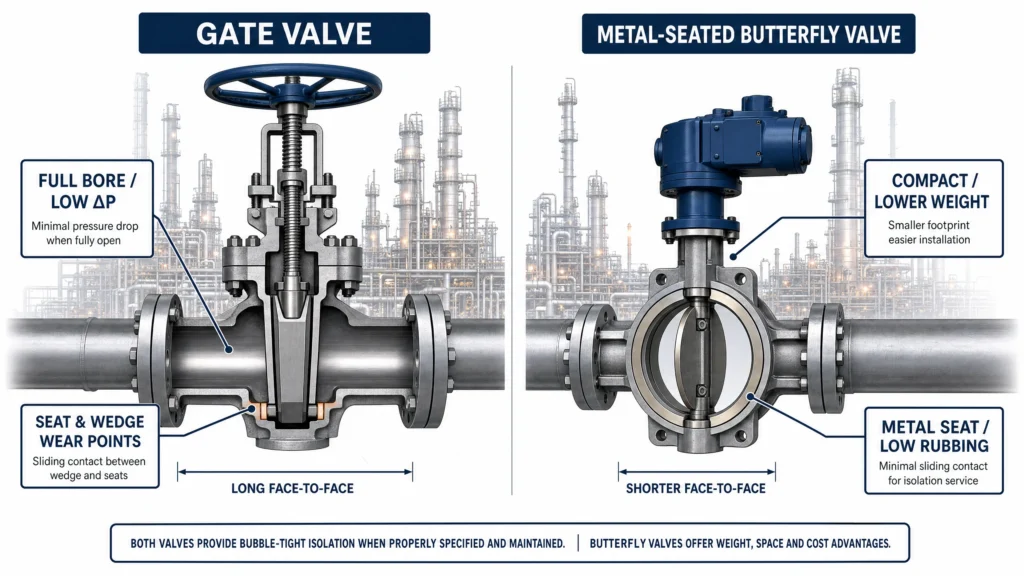
يمكن أن تكون كل من صمامات البوابة وصمامات الفراشة خيارات عزل مشروعة في المصفاة. توفر صمامات البوابة تجويفًا مستقيمًا وهي مألوفة في فئات الأنابيب الهيدروكربونية. توفر صمامات الفراشة جسمًا أقصر، ووزنًا أقل، وعزم دوران أقل للمشغل في العديد من الأحجام الكبيرة، وأتمتة أسهل. ومع ذلك، تختلف صمامات الفراشة السلعية عن صمامات الفراشة للخدمة الشديدة. صمامات كارتر للصمامات دليل اختيار صمام فراشة العزل الحرج يعرّف العزل الحرج على أنه الاستخدامات التي يجب أن يفي فيها التسرب بتوقعات محددة للضيق أو عدم التسرب أو عدم التسرب على الإطلاق، والخدمة الشديدة على أنها ظروف تنطوي على درجة حرارة مرتفعة أو درجة حرارة مبردة أو تآكل أو تدوير متكرر أو ضغط تفاضلي مرتفع.
هذا التمييز أساسي بالنسبة للملكية الفكرية. قد يكون صمام الفراشة منخفض التكلفة ذو القشرة اللينة منخفض التكلفة ذا قيمة منخفضة في الخدمة الهيدروكربونية الساخنة. قد يقلل صمام الفراشة ذو القفل المعدني المحدد بشكل صحيح من تكلفة دورة الحياة في عزل المصفاة ذات التجويف الكبير لأنه يقلل من الوزن وجهد التركيب وتكلفة الأتمتة ومعالجة التحول. قد لا يزال صمام البوابة هو الحل الصحيح في الخدمات التي تهيمن فيها قابلية العزل في التجويف الكامل، أو الحد الأدنى من الانسداد، أو متطلبات فئة الأنابيب التقليدية.
ما تشمله التكلفة الإجمالية للملكية
التكلفة الإجمالية للملكية ليست شعارًا محاسبيًا. إنها قائمة مرجعية هندسية تساعد الفرق على تحديد ما يحدث بعد شراء الصمام. وبالنسبة لصمامات عزل المصافي، فإن النموذج الأكثر فائدة هو: تكلفة التكلفة الإجمالية للملكية = تكلفة الاقتناء + تكلفة التركيب + تكلفة التشغيل + تكلفة الصيانة + تكلفة وقت التعطل/المخاطر.
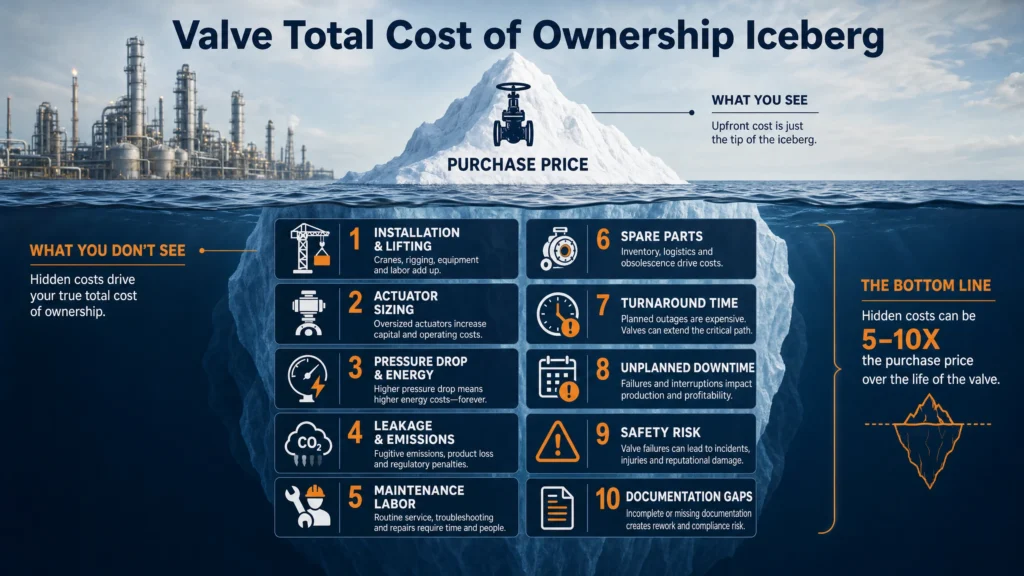
| عنصر التكلفة الإجمالية للملكية | أهمية ذلك في خدمة عزل المصفاة |
|---|---|
| سعر الشراء | تكلفة مرئية، ولكن غالبًا ما تكون أقلية من التعرض لدورة الحياة |
| التركيب والرفع | يمكن أن تتطلب صمامات البوابة الكبيرة دعامات أثقل ورافعات ووقت مناولة أطول |
| التشغيل | يؤثر عزم الدوران أو الدفع، وزمن السكتة الدماغية، وحركة التعطل، وملحقات الأتمتة على تكلفة الحزمة |
| انخفاض الضغط | غالبًا ما تكون صمامات البوابة كاملة التجويف منخفضة ΔP؛ أقراص الفراشة تخلق بعض العوائق |
| التسرب والانبعاثات | يمكن أن يؤدي تسرب المقعد أو تسرب الجذع إلى فقدان الهيدروكربونات ومخاوف تتعلق بالسلامة وأعمال الإصلاح |
| عمالة الصيانة | تتراكم تكلفة التعبئة والمقاعد وعلب التروس والسيقان والمشغلات ووقت الفحص |
| المسار الحرج للتحول إلى المسار الحرج | يمكن أن يكون الصمام الذي يؤخر العزل أو التعمية أو الإصلاح أو الإعادة مكلفًا للغاية |
| وقت تعطل غير مخطط له | غالبًا ما تشير أدبيات تكلفة التكلفة الإجمالية للملكية لدى البائعين إلى وقت التعطل في التكرير أو الطاقة كمحرك رئيسي للتكلفة |
| التوثيق | يمكن أن يؤدي عدم وجود تقارير استعراضات منتصف المدة أو تقارير الاختبار أو شهادات التسرب إلى تأخير القبول والتدقيق |
الخطأ الذي أراه في أغلب الأحيان هو مقارنة صمامات البوابات وصمامات الفراشة حسب سعر الشراء فقط. وهذا يرجح كفة العطاء الأرخص من حيث المظهر المتوافق، ولكنه يخفي عواقب الوزن والوصول ووقت الإصلاح وهامش عزم الدوران والتحقق من التسرب واستراتيجية قطع الغيار.
نقاط قوة صمام البوابة ومقايضات التكلفة الإجمالية للملكية
يستخدم صمام البوابة بوابة إسفينية أو بوابة متوازية تتحرك بشكل عمودي على التدفق. وعند فتحها بالكامل، فإنها توفر مسار تدفق دون عائق في الغالب. وهذا أمر ذو قيمة حيثما يجب تقليل انخفاض الضغط إلى أدنى حد، أو حيثما تكون فئة الأنابيب مبنية حول العزل الكامل، أو حيثما يكون لدى فرق الصيانة عقود من الخبرة في التصميم.
وغالبًا ما تكون صمامات البوابة مرشحة بقوة في فئات خطوط التكرير التقليدية، وخدمة الهيدروكربونات عالية الحرارة، وعزل البخار، والتطبيقات التي يكون فيها التدفق الكامل التجويف مهمًا. ولا يكمن ضعفها في أنها غير موثوقة بحكم تعريفها. ولكن ضعفها هو أن تكلفة دورة حياتها يمكن أن ترتفع بشكل حاد عندما يصبح حجمها ووزنها وشوطها الطويل وصيانة الجذع/التعبئة وتآكل مقعد الإسفين ودفع المشغل كبيرًا.
| قوة صمام البوابة TCO | القلق بشأن صمام البوابة TCO |
|---|---|
| مسار تدفق كامل التجويف مع انخفاض ضغط منخفض عند الفتح | الأحجام الكبيرة ثقيلة وتتطلب المزيد من المناولة والدعم |
| الإلمام بتصميم المصفاة وممارسات الصيانة | يمكن أن يؤدي طول الشوط وارتفاع الجذع المتزايد إلى تعقيد الأتمتة والوصول |
| عزل جيد عند الحفاظ على حالة المقعد والإسفين | يمكن أن يصبح الوتد والموجهات والمقاعد والتعبئة نقاط صيانة |
| غالبًا ما تتماشى مع فئات الأنابيب الثابتة | قد يستغرق الإصلاح أو الاستبدال عمالة كثيفة أثناء عملية الاستبدال |
| مناسبة للعديد من الخدمات ذات درجات الحرارة العالية | ليست مثالية لركوب الدراجات المتكرر إذا أصبح التآكل أو التآكل مشكلة |
بالنسبة للخدمات التي بها تلوث شديد، أو فحم الكوك، أو غرامات المحفزات، أو التشوه الحراري، يجب تقييم الأسطح المنزلقة لصمام البوابة ومنطقة المقعد بعناية. قد يصبح صمام البوابة الذي لا يمكن أن يستقر بالكامل بسبب الترسبات مشكلة تسرب في أسوأ وقت ممكن.
نقاط قوة صمام الفراشة ومقايضات التكلفة الإجمالية للملكية
يستخدم صمام الفراشة قرص دوار. في الأحجام الكبيرة، يكون الجسم أقصر وأخف وزنًا بكثير من صمام البوابة المماثل. وهذا يمكن أن يقلل من جهد الرفع، وحمل دعم الأنابيب، وعمالة التركيب، وحجم المشغل، والمساحة المطلوبة حول الصمام. هذه الوفورات مهمة في مصافي التكرير حيث تكون رفوف الأنابيب مزدحمة ونوافذ الدوران قصيرة.
أفضل صمامات الفراشة العازلة للتكرير ليست صمامات مياه عامة. فهي عادةً ما تكون عالية الأداء، أو مزدوجة الإزاحة أو ثلاثية الإزاحة أو متعددة المراكز ذات تصميمات معدنية متعددة المراكز يتم اختيارها لدرجة الحرارة الفعلية والضغط وفئة التسرب وتردد الدورة والوسائط. مقالة كارتر فالف عن صمامات الفراشة ذات الجلسات المعدنية إلى المعدنية يوضح أن المقاعد المعدنية تصبح مهمة عندما تتجاوز درجات الحرارة المرتفعة أو الوسائط العدوانية أو متطلبات التسرب الصارمة حدود المقاعد اللينة المصنوعة من اللدائن المرنة أو PTFE.
| قوة صمام الفراشة TCO | القلق بشأن صمام الفراشة TCO |
|---|---|
| صغير الحجم وأخف وزناً في الأقطار الكبيرة | يبقى القرص في مسار التدفق ويسبب بعض الفقد في الضغط |
| أتمتة أسهل وشوط أقصر | يجب أن يتطابق تصميم المقعد مع درجة الحرارة والوسائط ومتطلبات التسرب |
| يمكن أن يؤدي انخفاض وزن التركيب المنخفض إلى تقليل تكاليف الدعم والرفع | قد لا تنجو تصاميم السلع الأساسية من الخدمة القاسية في المصفاة |
| تشغيل سريع يدعم العزل الآلي ووظائف التفريغ الكهرومغناطيسي الإلكتروني | يجب أن يتضمن عزم دوران المشغل عوامل الانفصام، و ΔP، ودرجة الحرارة، والتقادم |
| يمكن أن تدعم التصميمات ذات القوالب المعدنية العزل في درجات الحرارة العالية | يتطلب معايير اختبار واضحة ومعايير واضحة لقبول التسرب |
بالنسبة لعزل المصفاة، تكون ميزة صمام الفراشة في التكلفة الإجمالية للملكية أقوى عندما يكون الخط كبيرًا، ويجب أن يكون الصمام مؤتمتًا، والمساحة محدودة، ومعالجة التحول مهمة، ويمكن أن يلبي التصميم ذو القضبان المعدنية المثبتة متطلبات التسرب. كارتر منصة صمام فراشة سداسية المركز و الجيل التالي من صمام الفراشة السداسي المركزي السداسي ذات صلة عندما تتطلب الخدمة احتكاكًا منخفضًا وإغلاقًا مستقرًا وإغلاقًا شديدًا للخدمة.
مصفوفة خدمات التكرير: أين تتغير محركات التكلفة الإجمالية للملكية
يتغير الاختيار الصحيح للصمام حسب خدمة المصفاة. يمكن أن يكون الصمام الاقتصادي في مياه المرافق خيارًا خاطئًا في خدمة الهيدروكربون الساخن أو خدمة وحدة المعالجة الحرارية الكاملة. الصمام الممتاز للعزل النظيف ذي التجويف الكبير قد لا يتحمل ترسبات فحم الكوك أو غرامات المحفزات المتآكلة بدون مواد خاصة وتلبيسات صلبة.
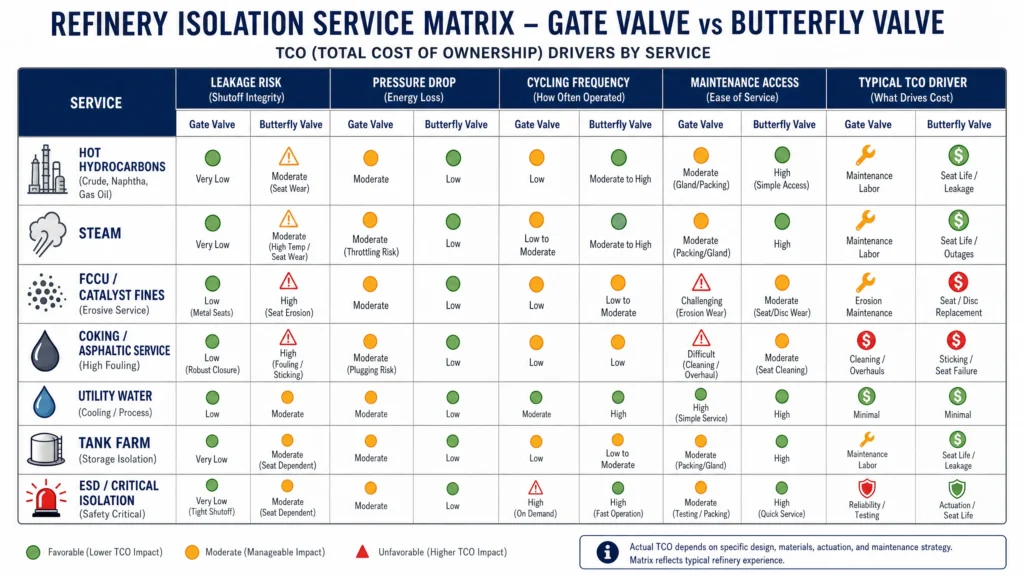
| خدمة التكرير | اعتبارات التكلفة الإجمالية للملكية في صمام البوابة | اعتبارات التكلفة الإجمالية للملكية لصمام الفراشة |
|---|---|---|
| عزل الهيدروكربون الساخن | مألوفة وكاملة التجويف، ولكن صيانة محرك التعبئة وحالة المقعد مألوفة | قد يقلل التصميم ذو القاعدة المعدنية من الوزن وتكلفة التشغيل الآلي إذا تم تحقيق هدف التسرب |
| عزل البخار | تعد صمامات البوابة شائعة، ولكن التعبئة طويلة الساق والدورة الحرارية أمران شائعان | يمكن أن تعمل المقاعد المعدنية ثلاثية الإزاحة أو متعددة المراكز حيث يتم التعامل مع حدود درجة الحرارة |
| غرامات FCCU/الغرامات المحفزة | قد تعاني الأسطح المنزلقة من التآكل أو المواد الصلبة | تصبح صلابة القرص/المقعد والهندسة المقاومة للتآكل أمرًا بالغ الأهمية |
| خدمة الفحم/الأسفلت | يساعد التدفق كامل التجويف على التدفق، لكن الترسبات يمكن أن تمنع الإغلاق | قد يكون التلطخ حول القرص/المقعد مصدر قلق؛ تاريخ الصيانة ضروري |
| مياه المرافق/المياه المعالجة | قد تكون صمامات البوابة مقبولة ولكنها ثقيلة في الأحجام الكبيرة | غالبًا ما توفر صمامات الفراشة تكلفة تركيب أقل وأتمتة أسهل |
| عزل مزرعة الخزان | قد يسود العزل الكامل والممارسة الراسخة | يمكن أن يقلل الاكتناز ذو القطر الكبير من الدعامات وتكلفة المشغل |
| ESD/العزل الحراري/العزل الحرج | تعد موثوقية الإغلاق واختبار الإثبات أمران أساسيان | يمكن للشوط القصير والأتمتة تقليل زمن الاستجابة إذا كان التصميم شديد الخدمة |
بالنسبة لوحدة العناية المركزة FCCU وخدمات التآكل الساخن، فإن دليل كارتر ذي الصلة على تآكل صمام FCCU، وتصميم ثلاثي الإزاحة، والتسطيح الصلب هو قراءة تالية مفيدة. لقبول التسرب، كارتر دليل فئات تسرب الصمامات يساعد الفرق على تعريف “الإغلاق المحكم” بمصطلحات قابلة للقياس بدلاً من اللغة غير الرسمية.
انخفاض الضغط وتكلفة الطاقة
تُعد فتحة صمام البوابة ذات التجويف الكامل ميزة حقيقية حيثما يكون انخفاض الضغط تكلفة تشغيل رئيسية. عندما يظل الصمام مفتوحًا لسنوات في خط التدفق العالي، قد يؤدي حتى فقدان الضغط الدائم الصغير إلى زيادة طاقة المضخة أو الضاغط. إن صمام الفراشة، لأن القرص يظل في مسار التدفق، يكون لديه عمومًا انسداد أكثر من صمام البوابة المفتوح بالكامل.
ومع ذلك، لا ينبغي تقييم انخفاض الضغط بمعزل عن انخفاض الضغط. إذا كانت عقوبة انخفاض الضغط صغيرة بالنسبة إلى الوفورات في الوزن والتركيب والأتمتة والصيانة، فقد يظل صمام الفراشة المصمم هندسيًا أقل من حيث التكلفة الإجمالية للملكية. وعلى العكس من ذلك، إذا كان الخط يعمل بشكل مستمر بتدفق عالٍ وتهيمن تكلفة الطاقة عليه، فقد يظل صمام البوابة كامل التجويف الخيار الأفضل لدورة الحياة.
النهج العملي هو حساب كليهما. تقدير فرق انخفاض الضغط عند التدفق العادي والحد الأقصى للتدفق، وتحويله إلى تكلفة الطاقة السنوية، ثم مقارنة هذه القيمة مقابل وفورات التركيب والصيانة. وهذا أكثر فائدة من افتراض أن أيًا من نوعي الصمامات أرخص دائمًا.
التسرب والانبعاثات وسلامة الإغلاق
في عزل المصفاة، لا تتمثل تكلفة التسرب في فقدان المنتج فقط. بل يمكن أن يؤثر على إعداد العمل الساخن، والتركيب الأعمى، وإزالة التلوث من الوحدة، والإبلاغ البيئي، وشكاوى الروائح، وتحميل الشعلات، وسلامة العاملين. يمكن للصمام الذي يتسرب عبر المقعد أثناء العزل أن يؤخر الصيانة حتى لو كان قابلاً للتشغيل ميكانيكيًا.
يحدد ASME B16.34 الاختبار ووضع العلامات من بين الموضوعات التي يتم تغطيتها لبناء الصمامات، بينما يؤكد برنامج معايير API على عمليات النفط والغاز الآمنة والموثوقة. من حيث المشتريات، هذا يعني أن ورقة البيانات يجب أن تحدد معيار الاختبار، ووسيط الاختبار، وضغط الاختبار، وقبول التسرب، واختبار الغلاف، واختبار المقعد، وأي متطلبات للانبعاثات الهاربة.
| سؤال متعلق بالتسرب | لماذا يغير التكلفة الإجمالية للملكية |
|---|---|
| هل التسرب الصفري مطلوب أم تسرب المقعد القياسي فقط؟ | تحديد ما إذا كانت صمامات السلع مقبولة أم لا |
| هل السائل خطر أو قابل للاشتعال أو ساخن أو سام؟ | يزيد من تكلفة التسرب والإصلاح وفشل العزل |
| هل سيتم استخدام الصمام للتعمية أم لإعداد الدخول؟ | يمكن أن يؤدي تسرب المقعد إلى تأخير الوصول الآمن للصيانة |
| هل يدور الصمام بشكل متكرر؟ | قد يهيمن تآكل المقعد على تكلفة دورة الحياة |
| هل التحكم في الانبعاثات الهاربة مطلوب؟ | يصبح تصميم التعبئة والتغليف، وتشطيب الساق، والاختبار مهمين |
مقالة كارتر فالف على تسرب صفري ثنائي الاتجاه مهم بشكل خاص عندما يجب الحفاظ على أداء الإغلاق في كلا اتجاهي التدفق.
التركيب، والتشغيل، ووقت الاستجابة
لا يتم شراء صمامات التكرير الكبيرة فقط؛ بل يتم رفعها ومحاذاتها ودعمها وعزلها وأتمتتها واختبارها وإزالتها أو صيانتها لاحقًا. قد يتطلب صمام البوابة خلوصًا رأسيًا أكبر للساق المرتفعة وقدرة رفع أكبر بسبب وزن الجسم. قد يقلل صمام الفراشة من هذه الأعباء ولكنه يتطلب تحجيمًا دقيقًا لعزم دوران المشغل وحماية المقعد.
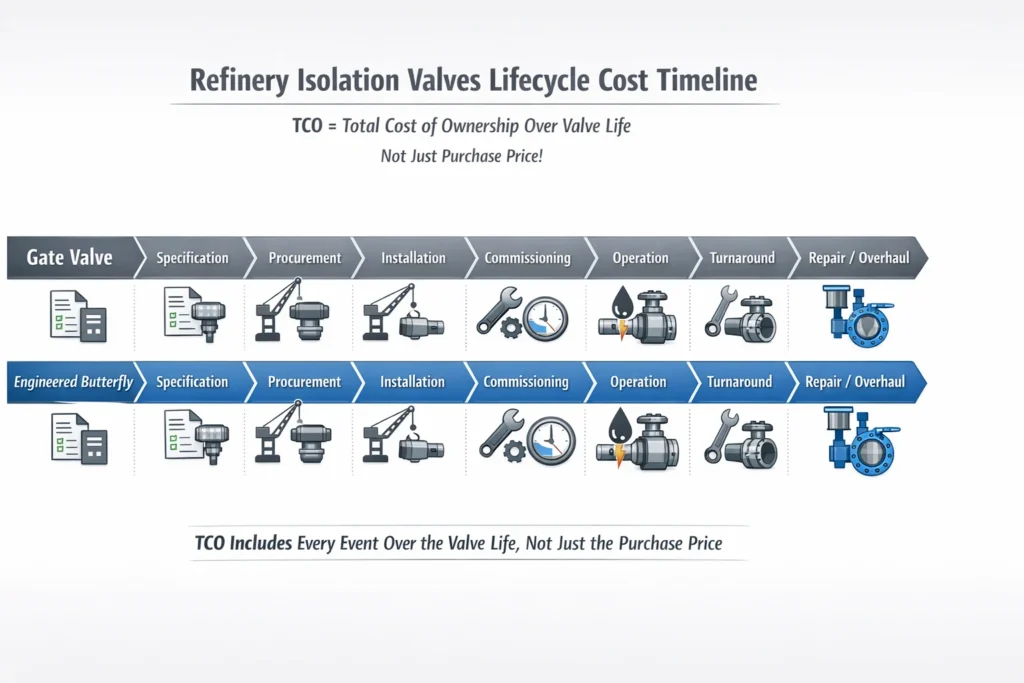
| مرحلة دورة الحياة | سؤال عن التكلفة الإجمالية للملكية الفكرية |
|---|---|
| المواصفات | هل التسرب ودرجة الحرارة و ΔP وتردد الدورة والمعايير محددة؟ |
| المشتريات | هل تتم مقارنة العطاءات على أساس تكلفة حزمة الصمام، وليس سعر الصمام العاري فقط؟ |
| التركيب | ما هي متطلبات الرفع والدعم والمحاذاة والوصول؟ |
| التكليف | هل تم توثيق تسرب المقعد، وعزم الدوران، والشوط، ومعايرة المشغل؟ |
| العملية | ما هي تكاليف انخفاض الضغط والانبعاثات والفحص التي تتراكم سنويًا؟ |
| التحويل | هل يمكن صيانة الصمام أو إزالته دون تأخير المسار الحرج؟ |
| الإصلاح/الإصلاح | هل المقاعد، والتغليف، والمحامل، والمحامل، والمشغلات قابلة لإعادة البناء والتخزين؟ |
إذا كان الصمام مؤتمتًا، يمكن أن يصبح تحجيم المشغل تكلفة خفية. تتطلب صمامات البوابة قوة دفع على مدى شوط خطي طويل. تتطلب صمامات الفراشة عزم دوران، خاصةً عند الانفصال والجلوس. صمامات كارتر تحجيم المشغل لصمامات الفراشة يشرح لماذا يجب تضمين عزم الدوران الانفصالي وعامل الأمان وظروف الخدمة بدلاً من الاعتماد على القيم الاسمية فقط.
إطار عمل نموذجي عملي للمثال على التكلفة الإجمالية للملكية الفكرية
تجنب التظاهر بأن رقم دولار واحد ينطبق على كل مصفاة. بدلاً من ذلك، قم ببناء نموذج التكلفة الإجمالية للملكية لكل فئة صمام. يجب أن يتضمن نموذج بسيط مدته 10 سنوات سعر الشراء، وتكلفة التركيب، وحزمة المشغل، وأحداث الصيانة المتوقعة، وقطع الغيار، والطاقة المقدرة لإسقاط الضغط، وساعات العمل المخطط لها، ووقت التعطل المرجح بالمخاطر.
| فئة التكلفة | مدخلات تقدير صمام البوابة | مدخلات تقدير صمام الفراشة |
|---|---|---|
| سعر الشراء | الهيكل، الزخرفة، فئة الضغط، الوصلات الطرفية | الجسم، وهندسة المقعد، وفئة الضغط، وفئة التسرب |
| التركيب | الوزن، والرفع، والدعم، والخلوص من الجذع | أقصر وجهاً لوجه، وأقل وزناً، ومتطلبات المحاذاة |
| التشغيل | علبة التروس أو دفع المشغل الخطي | عزم دوران المشغّل الدوّار وإجراء الفشل |
| الطاقة | انخفاض ضغط الصمام المفتوح المنخفض | فقدان الضغط المرتبط بالقرص عند التدفق الطبيعي |
| الصيانة | التعبئة، والوتد، والمقعد، والساق، وعلبة التروس | المقعد، وحافة القرص، والمحامل، والتعبئة، والمشغل |
| مخاطر التوقف عن العمل | بوابة عالقة، تسرب في المقعد، وقت إصلاح طويل | تلف المقعد، زيادة عزم الدوران، تصميم خاطئ للخدمة |
| التوثيق | امتثال API/ASME، وسجلات الاختبار | اختبار التسرب، والتحقق من المقعد المعدني، وبيانات عزم الدوران |
في العديد من الخدمات ذات التجويف الكبير، يفوز صمام الفراشة المصمم هندسيًا عندما تهيمن تكاليف التركيب والأتمتة والتحول. في بعض خطوط المعالجة كاملة التدفق، يفوز صمام البوابة عندما يهيمن فقدان الطاقة أو متطلبات التجويف الكامل أو تقاليد الخدمة. ليس الهدف من TCO هو جعل صمامات الفراشة تفوز في كل مرة. بل هو جعل القرار مرئيًا.
الأخطاء الشائعة في تحليل التكلفة الإجمالية للملكية في صمام البوابة مقابل صمام الفراشة
الخطأ الأول هو مقارنة صمام الفراشة السلعي بصمام بوابة من فئة التكرير. هذه ليست مقارنة عادلة. إذا كانت الخدمة قاسية، قارن صمام بوابة الخدمة القاسية بصمام فراشة ذو خدمة قاسية.
الخطأ الثاني هو تجاهل تكلفة التحول. فالصمام الذي يستغرق وقتًا أطول في إزالته أو إصلاحه أو محاذاة أو اختباره يمكن أن يكلف في حالة انقطاع واحد أكثر مما تم توفيره عند الشراء.
الخطأ الثالث هو استخدام لغة تسرب غامضة. وينبغي ربط عبارة “التسرب المحكم الفقاعي” و“التسرب الصفري” بمعيار وضغط اختبار ووسيط اختبار ومعيار قبول.
الخطأ الرابع هو التعامل مع الوزن كتفصيل بسيط. في الأحجام الكبيرة، يغير الوزن معدات الرفع، وتصميم الدعم، ووقت التركيب، والتعرض للسلامة.
الخطأ الخامس هو نسيان قطع الغيار. يمكن أن يصبح الصمام منخفض التكلفة ذو المقاعد أو التعبئة ذات المقاعد أو التعبئة ذات الملكية الطويلة الأمد باهظة الثمن عندما تكون الوحدة في انتظار قطع الغيار.
قائمة مراجعة القرارات الخاصة بخدمة عزل المصفاة
إن قائمة مراجعة القرارات الجيدة تجعل فرق الهندسة والصيانة والمشتريات والسلامة تجيب على نفس الأسئلة قبل تقديم الطلب.
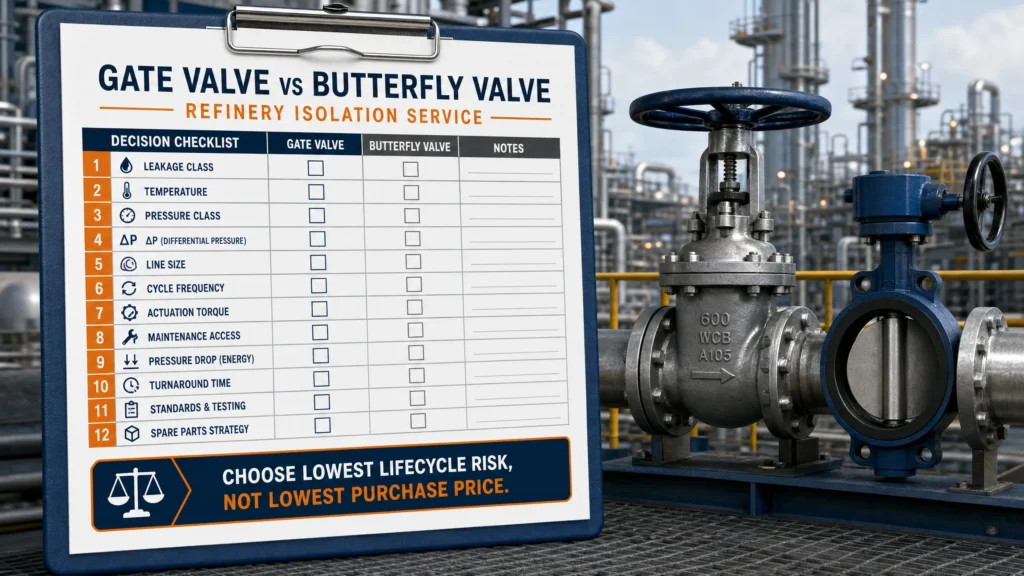
| عنصر القائمة المرجعية | ما يجب تحديده قبل الاختيار |
|---|---|
| شدة الخدمة | السوائل، ودرجة الحرارة، والضغط، والمرحلة، والتآكل، والتآكل، والتلوث، والدوران |
| نتيجة العزل | ماذا يحدث إذا تسرب الصمام أو التصق أو تعذر تشغيله؟ |
| فئة التسرب | API 598، أو ISO 5208، أو EN 12266، أو المتطلبات الخاصة بالمشروع |
| حجم الخط ووزنه | الوزن المثبت، وخطة الرفع، ودعم الأنابيب، والوصول إلى الصيانة |
| انخفاض الضغط | تكلفة طاقة التدفق العادي وتأثير العملية |
| التشغيل | يدوي، تروس، كهربائي، هوائي، هوائي، هيدروليكي، ESD، وضع الفشل، زمن الشوط |
| المواد والطبقة الصلبة | مواد المقعد/القرص/الحافة/الساق مطابقة للخدمة |
| استراتيجية الصيانة | الفحص على الخط، والإصلاحات الدورية، واستبدال المقاعد، وقطع الغيار |
| التوثيق | اختبارات منتصف المدة، والاختبار الهيدروليكي، واختبار المقعد، وشهادة التسرب، وسجلات عزم الدوران/الضربة |
| نموذج التكلفة الإجمالية للملكية | مقارنة تكلفة دورة الحياة على مدى العمر التشغيلي المتوقع، وليس فقط النفقات الرأسمالية |
بالنسبة للقراء الذين يقارنون بين خيارات الفراشات المصممة هندسياً، فإن كارتر موجه صمام الفراشة سداسي المركز مقابل موجه صمام الفراشة ثلاثي الإزاحة و صمام فراشة ثلاثي الإزاحة ثلاثي الضغط الفائق صفحات توفر سياقاً تقنياً إضافياً.
الخاتمة
أفضل إجابة على صمام البوابة مقابل صمام الفراشة لخدمة عزل المصفاة يعتمد على محركات التكلفة الإجمالية للملكية الأكثر أهمية في خط معين. تظل صمامات البوابة خيارات قوية حيثما يهيمن التدفق الكامل، وانخفاض الضغط المنخفض، والممارسات الراسخة في المصفاة. وتصبح صمامات الفراشة المصممة هندسيًا ذات قدرة تنافسية عالية حيث يهيمن الحجم الكبير والوزن والأتمتة والتشغيل السريع والوصول إلى الصيانة وكفاءة التحول.
ويتمثل سير العمل الصحيح في تحديد شدة الخدمة، وتحديد متطلبات التسرب، ومقارنة حزم التركيب والتشغيل، وحساب طاقة إسقاط الضغط، وتقدير أحداث الصيانة، وتعيين مخاطر تعطل واقعية. يمكن لشركة Carter Valve دعم هذا التحليل من خلال صمامات فراشة العزل الحرجة، وتصميمات صمامات الفراشة ذات العزل الحرجة، وتصميمات المقاعد من المعدن إلى المعدن، ومنصات الخدمة الشديدة ذات الستة مراكز، وتوجيه المشغل، والمراجعة الهندسية القائمة على التطبيق لمهام عزل المصفاة.
الأسئلة المتداولة
هل صمام البوابة أم صمام الفراشة أفضل لعزل المصفاة؟
وليس أي منهما أفضل عالميًا. غالبًا ما تكون صمامات البوابة مفضلة للعزل كامل التجويف ومنخفض الضغط. وغالبًا ما تكون صمامات الفراشة المصممة هندسيًا أفضل حيث يقلل الحجم الصغير والوزن المنخفض والتشغيل الآلي الأسهل والتشغيل الأسرع من تكلفة دورة الحياة.
ما هي التكلفة الإجمالية لملكية الصمام؟
يشمل التكلفة الإجمالية للملكية للصمامات سعر الشراء، والتركيب، والتشغيل، والطاقة الناتجة عن انخفاض الضغط، والصيانة، وقطع الغيار، والتسرب، والانبعاثات، ووقت التحول، والتوثيق، ومخاطر التوقف عن العمل على مدى عمر الصمام التشغيلي.
هل صمامات الفراشة مناسبة لخدمة عزل المصفاة؟
نعم، إذا كانت مصممة للخدمة. قد يتطلب العزل الشديد في المصفاة صمامات فراشة عالية الأداء، أو ذات قواطع معدنية أو ثلاثية الإزاحة أو متعددة المراكز بدلاً من التصميمات السلعية ذات القواطع اللينة.
لماذا غالبًا ما يكون لصمامات البوابة انخفاض ضغط منخفض؟
عند فتحه بالكامل، يوفر صمام البوابة تجويفًا مستقيمًا تقريبًا، وبالتالي تكون إعاقة التدفق منخفضة. وهذا يمكن أن يقلل من فقدان الطاقة في الخدمات المستمرة عالية التدفق.
لماذا يمكن أن يكون لصمامات الفراشة تكلفة تركيب أقل؟
عادةً ما تكون صمامات الفراشة أقصر وأخف وزنًا من صمامات البوابة ذات الأحجام الكبيرة. وهذا يمكن أن يقلل من تكاليف الرفع والدعم والتركيب والتشغيل ومناولة الصيانة.
ما هو أكبر خطأ في التكلفة الإجمالية للملكية عند مقارنة صمامات البوابة وصمامات الفراشة؟
الخطأ الأكبر هو مقارنة سعر الشراء فقط. فالصمام الأرخص سعرًا قد يكلف أكثر إذا كان يتسرب، أو يتطلب صيانة متكررة، أو يؤخر عملية التحول، أو يحتاج إلى مشغل أكبر، أو يفتقر إلى وثائق الاختبار المناسبة.
هل يجب أن تكون صمامات عزل المصفاة صفرية التسرب؟
ليس دائمًا، ولكن يجب أن يكون للعزل الحرج شرط تسرب محدد. وإذا كان التسرب الصفري أو الإغلاق المحكم للفقاعات مطلوباً، يجب أن يشير الشرط إلى معيار الاختبار والضغط والوسيط ومعيار القبول.
كيف يجب أن تقارن المشتريات بين عروض صمام البوابة وصمام الفراشة؟
قارن بين حزم الصمامات الكاملة: جسم الصمام، والقطع، وتصميم المقعد، والمشغل، والاختبار، والوثائق، ووزن التركيب، وقطع الغيار، والصيانة المتوقعة، ومخاطر دورة الحياة. لا تقارن أسعار الصمامات العارية وحدها.
المراجع
[1] JH Valve - التكلفة الإجمالية لامتلاك الصمامات (TCO): لماذا تكلف الصمامات الرخيصة أكثر
[2] المعهد الأمريكي للبترول - المعايير
[3] ASME - B16.34 الصمامات: ذات حواف وملولبة وملولبة وملحومة الأطراف
[4] صمام كارتر - دليل اختيار صمام الفراشة للعزل الحرج والخدمة القاسية
[5] صمام كارتر - صمامات الفراشة ذات الفلاتر المعدنية إلى المعدنية
[6] صمام كارتر - تحجيم المشغل لصمامات الفراشة
[7] صمام كارتر - تآكل صمام FCCU، والإزاحة الثلاثية ودليل الواجهة الصلبة